
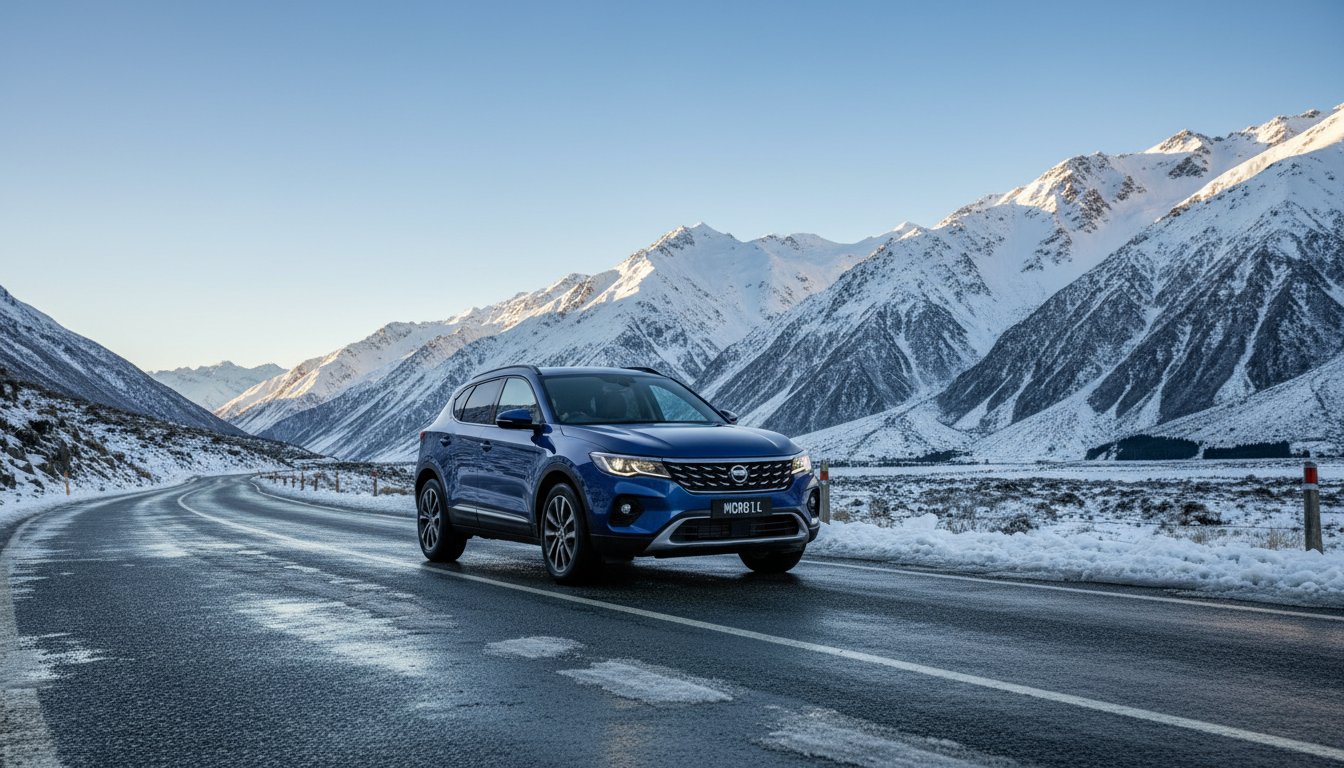
Imagine pulling over on the Crown Range Road this July only to realize you don't know how to fit your snow chains while the temperature drops toward zero. It's a stressful scenario that many visitors face when they aren't prepared for the unique challenges of winter driving New Zealand. Waka Kotahi data shows that weather-related incidents can spike by over 15% during the coldest months, making preparation your best tool for a smooth trip. You probably already know that our alpine passes are breathtaking, but they require a specific set of skills and a high level of respect.
We understand that the thought of black ice or narrow, winding roads can feel overwhelming. That's why we've created this guide to help you master the art of navigating our winter landscape with confidence. You'll gain the knowledge needed to handle rental equipment and follow a clear list of pre-drive checks based on local expert advice. We will walk you through the essential safety checklist and provide practical tips to ensure your journey is seamless and safe from start to finish.
Key Takeaways
- Learn how to use real-time tools like MetService and the NZTA Journey Planner to stay ahead of changing weather and road closures.
- Discover how to identify and safely navigate hidden hazards like black ice and loose winter grit on shadowed corners and bridges.
- Understand when snow chains are legally required and why practicing your fitting technique is vital for a stress-free trip.
- Master the essential skills for winter driving new zealand roads by exploring expert advice for navigating high-risk routes like the Desert Road.
- Find out how choosing a winter-optimized SUV and a seamless hire process can remove the complexity from your Kiwi road trip.
Pre-Departure Checklist: Preparing for Your NZ Winter Road Trip
Preparation is the foundation of a safe journey. Before you hit the road, a few minutes of planning can prevent hours of delays. New Zealand's road network includes over 11,000 kilometers of state highways, many of which cross high-altitude passes where conditions change in minutes. Mastering winter driving new zealand starts with your pre-trip routine. At Drivenz, we prioritize your peace of mind by ensuring you have the right information before you even turn the key.
Digital Tools for Winter Navigation
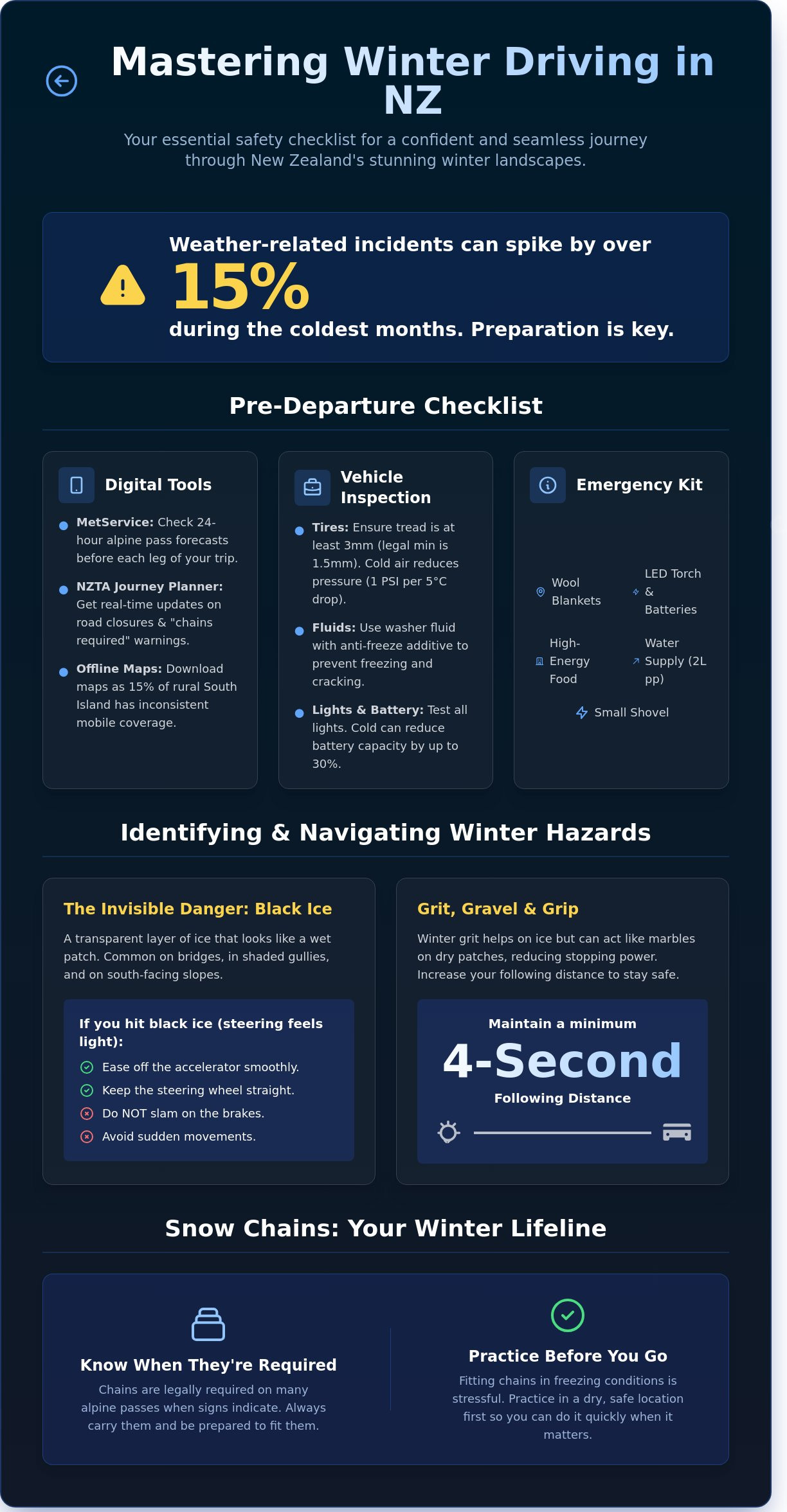
The MetService app is an essential tool for any winter traveler. It provides 24-hour forecasts specifically for alpine passes like Arthur’s Pass and the Crown Range. You should check this app before every leg of your trip. Pair this with the Waka Kotahi (NZTA) Journey Planner. It offers real-time updates on road closures or "chains required" warnings. Data from 2023 shows that mobile coverage remains inconsistent in roughly 15% of rural South Island areas. Download offline maps on Google Maps or Maps.me to ensure you aren't left without guidance when the signal drops in remote valleys.
Vehicle Inspection Basics
Check your tires first. Cold air causes tire pressure to drop by roughly 1 PSI for every 5 degrees Celsius decrease in temperature. Under-inflated tires significantly reduce your grip on icy surfaces. While the legal minimum tread depth is 1.5mm, safety experts recommend at least 3mm for winter driving new zealand. Don't forget your windshield washer fluid. Ensure it contains a dedicated anti-freeze additive. Standard water freezes at 0 degrees, which can crack your reservoir or leave you blind when road salt and slush spray onto your glass. Finally, test all headlights and fog lights. You must be visible from at least 100 meters in low-visibility conditions. If your battery is more than three years old, have it tested, as cold weather can reduce its cranking capacity by up to 30%.
Essential Emergency Supplies
Pack for the unexpected. If a road closes due to a sudden snowstorm, you might be waiting several hours for a snow plow or recovery vehicle. A well-stocked kit keeps a minor delay from becoming a serious problem. Your vehicle should always carry these basics:
- Heavy wool blankets or high-rated sleeping bags for every passenger.
- LED torches with a fresh set of spare batteries.
- High-energy food such as nuts, protein bars, and chocolate.
- Water supply: At least 2 liters of water per person.
- Small shovel: Useful for clearing snow from around your tires if you're parked overnight.
By taking these practical steps, you move from being a reactive driver to a proactive one. This simple checklist removes the stress of the unknown, letting you focus on the stunning winter scenery instead of worrying about the logistics of the road.
Identifying and Navigating New Zealand Winter Hazards
Driving through the South Island or the central North Island plateau requires more than just a steady hand. The environment changes quickly. One moment you're on dry asphalt, and the next you're managing low-grip surfaces. Understanding the specific risks of winter driving new zealand roads ensures you stay in control throughout your journey. New Zealand highways often transition from coastal sea levels to high-altitude passes within an hour, creating a volatile mix of weather patterns.
The Science of Black Ice
Black ice isn't actually black. It's a transparent layer of ice, often less than 1mm thick, that forms when moisture freezes on the road surface. Because it's clear, it looks exactly like a wet patch of road. You'll encounter this most frequently in shaded gullies, on bridges, or on south-facing slopes where the winter sun fails to reach the tarmac. If your steering suddenly feels light or "floaty," you've likely hit ice. Don't slam on the brakes. Instead, ease off the accelerator, keep the steering wheel straight, and let the vehicle glide until you regain traction. Sudden movements are the primary cause of winter accidents.
Handling Variable Road Surfaces
Road maintenance crews often apply winter grit to help tires find purchase. While this crushed rock is helpful on frozen stretches, it creates a "marbles" effect on dry sections of the road. This reduces your stopping power significantly and can lead to windshield chips. To stay safe, you must maintain a 4-second following distance. This gap provides the reaction time needed if the car ahead loses grip or kicks up loose stones. Following the official winter driving tips provided by Waka Kotahi is the best way to prepare for these shifting conditions.
New Zealand's infrastructure also includes hundreds of one-lane bridges. These structures freeze faster than the surrounding road because cold air circulates both above and below the bridge deck. When visibility is poor due to fog or sun glare, slow down well before the approach. Look for the rectangular blue sign to see if you have the right of way, but always be prepared to stop if an oncoming driver hasn't seen you. If you prefer a modern vehicle equipped with the latest safety tech to handle these hazards, consider a flexible car subscription for your next trip. This ensures you're driving a reliable, well-maintained model designed for modern road safety.
Low winter sun angles between 10:00 AM and 3:00 PM create intense glare, especially on wet roads after a morning frost. This glare can hide oncoming traffic or pedestrians entirely. Keeping your windshield reservoir filled with a proper de-icing additive is a simple but effective way to maintain clear sightlines when the sun is at its most punishing. Proper visibility is your best defense when navigating the unpredictable nature of the Kiwi winter.
The Essential Guide to Snow Chain Hire and Usage
Mastering snow chains is a non-negotiable part of winter driving new zealand. You'll encounter specific signage on alpine passes like the Crown Range or Arthur’s Pass. When you see a "Chains Must Be Carried" sign, it's a legal requirement to have them in your vehicle. If the sign changes to "Chains Must Be Fitted," you must stop at the next safe area to install them. Waka Kotahi NZ Transport Agency staff often patrol these routes to ensure compliance and safety.
Always fit chains to your driving wheels. For front-wheel drive cars, these go on the front tires to provide both traction and steering control. Rear-wheel drive vehicles require them on the back. Once fitted, maintain a maximum speed between 40km/h and 50km/h. Exceeding 50km/h risks snapping the metal links or causing significant damage to the vehicle's suspension. Practice fitting your chains in a dry, flat driveway before your trip begins. Spending 15 minutes practicing at home prevents an hour of frustration on a freezing mountain side.
Snow Chain Basics for Rental Cars
Drivenz provides snow chains with compact SUVs and sedans to ensure you're prepared for sudden alpine weather shifts. We select chains specifically for each vehicle model. This is vital for hatchbacks because smaller wheel arches offer limited clearance; a chain that's too bulky will strike the inner wheel well. Use the "Two-Finger" tension test to verify the fit. If you can fit more than two fingers between the chain and the tire, it's too loose. Tighten the adjusters until the fit is snug against the rubber.
When and Where to Fit Chains
Don't stop in the middle of the traffic flow. Look for designated "Chain Bays," which are widened shoulder areas designed for safe fitting. If you hear a consistent "clack-clack" sound or feel heavy vibration through the steering wheel, your chains are likely loose or misaligned. Stop in a safe spot immediately to re-tension them. You must remove your chains as soon as you reach clear, black tarmac. Driving on dry roads with chains destroys the metal links and can cause a tire blowout within 5 to 10 kilometers. This proactive approach is a core part of safe winter driving new zealand.
- Check signage: Look for yellow diamond or rectangular signs on mountain passes.
- Identify drive wheels: Know if your vehicle is FWD, RWD, or AWD before you start.
- Speed control: Never exceed 50km/h while chains are engaged.
- Clearance: Ensure the chain doesn't touch brake lines or suspension components.
Regional Winter Routes: From Auckland to Christchurch
Winter driving New Zealand conditions change rapidly depending on which island you're exploring. While the North Island offers volcanic plateaus, the South Island presents rugged alpine passes that demand respect and preparation. Understanding these specific routes ensures your journey remains hassle-free and safe.
North Island Winter Hubs
The drive from Auckland to the Central Plateau is a popular winter pilgrimage for skiers and snowboarders. Most of the journey is straightforward motorway driving, but the environment shifts once you reach the Desert Road on SH1. This section peaks at 815 meters above sea level near Waiouru. It's notorious for sudden black ice and heavy fog that reduces visibility to near zero. You'll often see the gates close here during southerly blasts, forcing a long detour through National Park or Raetihi.
For these trips, a compact SUV is an ideal choice. It offers the necessary stability for the high-altitude passes and the ground clearance required for the steep access roads leading to the Iwikau and Turoa ski fields. Choosing a modern vehicle with updated safety features takes the stress out of these shifting conditions.
South Island Alpine Challenges
South Island routes are technically demanding and require a higher level of vigilance. Departing Christchurch for the West Coast via SH73 takes you toward Arthur's Pass. You'll encounter steep grades and the Otira Viaduct, which requires steady handling in icy conditions. For those traveling between Christchurch and Queenstown, the Lindis Pass on SH8 is a vital connection. It sits at an elevation of 971 meters and frequently experiences heavy snowfalls that can trap unprepared drivers. Mastering winter driving New Zealand routes means knowing when to take the coastal path instead of the mountains.
The Crown Range Road between Wanaka and Queenstown is the most challenging stretch. It's the highest main road in the country at 1,076 meters. Local authorities often make snow chains mandatory here, and you'll find checkpoints to ensure compliance. If weather reports look grim, choosing the coastal SH1 route instead of inland passes like the Lewis Pass (SH7) is a smarter move. It's lower in altitude and far less likely to face full closures during a storm.
Stay safe on the road with a reliable vehicle that fits your itinerary. Explore our flexible car subscription options to find the perfect match for your winter adventure.
Why Drive NZ is Your Ideal Winter Mobility Partner
Preparing for winter driving New Zealand requires more than just a map; it needs a reliable vehicle and dedicated local support. Drive NZ provides a seamless experience that removes the complexity of car hire. Our modern fleet is maintained to high standards, ensuring your journey across the Southern Alps or through the central North Island remains safe and efficient. We focus on transparency, providing you with the tools and confidence to handle changing road conditions without stress.
The Right Vehicle for the Season
Choosing the correct car changes your entire travel experience. While hatchbacks work well for city driving, our compact SUVs offer the extra ground clearance needed for snowy alpine passes. We recommend the SUV for South Island tours where road conditions fluctuate quickly. For visitors staying 30 days or longer, our car subscription model offers a flexible alternative to traditional long-term rentals. This approach gives you the freedom of a personal vehicle without the rigid contracts of the past. Picking up your car at Christchurch airport means you're on the road toward Mt Hutt or Queenstown within minutes of landing. This location is strategically placed to get you to the slopes faster.
Stress-Free Winter Support
Safety remains our priority. Every rental includes access to 24/7 roadside assistance, so help is always one phone call away if you encounter issues on the road. We also offer a straightforward snow chain hire process. Our team provides clear advice on how to fit them, ensuring you don't feel overwhelmed when the snow starts to fall. Mastering winter driving New Zealand is easier when you have the right equipment and local Kiwi expertise to guide your itinerary. We understand which routes are prone to ice and which are best for a smooth journey.
Transparency defines our business. You won't find hidden winter surcharges or confusing insurance jargon here. We use a clear, what-you-see-is-what-you-get pricing model that builds trust from the moment you book. Our comprehensive mobility solutions include:
- Modern fleet: Compact SUVs and sedans optimized for diverse terrain and cold starts.
- Expert guidance: Seamless snow chain hire with practical, hands-on fitting advice.
- Total protection: Transparent insurance options and 24/7 support for complete peace of mind.
- Local knowledge: Insightful tips from Kiwis who live and drive in these conditions every day.
Hit the Road with Confidence This Winter
Mastering winter driving new zealand starts with the right vehicle and local knowledge. You've learned how to inspect your tires and why carrying snow chains is essential for high-altitude passes like the 900-meter Crown Range Road. Safety requires constant awareness of black ice and sudden weather shifts across the country's 1,600-kilometer length. Preparedness is your best asset when navigating the South Island's alpine terrain or the North Island's volcanic plateau.
Drivenz makes your journey seamless with 24/7 Roadside Assistance included in every booking. We provide snow chain hire for all models, ensuring you're equipped for alpine conditions without any guesswork. With convenient pickup points at Auckland and Christchurch airport locations, your transition from the terminal to the driver's seat is fast and reliable. Our modern fleet is maintained to handle the unique demands of the Kiwi winter, giving you the confidence to explore every scenic corner. We're here to support your trip every step of the way.
Explore our winter-ready fleet and book your NZ adventure. Enjoy the crisp air and stunning landscapes of a New Zealand winter.
Frequently Asked Questions
Do I really need snow chains for a rental car in New Zealand?
Yes, you definitely need snow chains if you plan to travel through alpine regions like the Southern Alps. Waka Kotahi (NZ Transport Agency) often makes carrying chains a legal requirement on high-altitude passes such as Arthur’s Pass (SH73) and the Lindis Pass (SH8). If you don't have them when "Chains Must Be Carried" signs are active, police can prevent you from continuing your journey or issue a fine.
Is it safe for tourists to drive in the South Island during winter?
It's safe as long as you're prepared for the specific challenges of winter driving New Zealand roads present. Most main highways are well-maintained, but black ice frequently forms when temperatures drop below 0°C. You should increase your following distance to at least four seconds and check the Waka Kotahi Journey Planner for real-time updates before you start your engine each morning.
What happens if a mountain pass is closed during my trip?
You'll need to wait for the road to be cleared or find an alternative route. Road closures on major passes like the Crown Range can last anywhere from two hours for standard snow clearing to over 24 hours during heavy storms. Always carry extra snacks, blankets, and a full tank of fuel in case you're diverted or delayed by a sudden weather event.
Can I drive a compact hatchback to the ski fields?
You can drive a hatchback, but it's often more difficult than using an SUV. About 90% of New Zealand ski field access roads are unsealed gravel tracks that become very slippery in the snow. While a front-wheel-drive hatchback can make the climb with snow chains, the low ground clearance increases your risk of getting stuck in deep slush or ruts.
What is the speed limit when driving on icy roads in NZ?
There's no specific legal speed limit for ice, but you must drive at a safe speed for the conditions. While the posted limit might be 100km/h, experts recommend dropping to 30km/h or 40km/h if you suspect black ice is present. If you have snow chains fitted to your tires, you must never exceed 50km/h to avoid damaging the vehicle or the chains themselves.
Are winter tires standard on New Zealand rental cars?
No, most rental fleets in New Zealand use all-season tires rather than specialized winter tires. These tires are legal and functional for most conditions, but they don't offer the same grip as winter rubber in freezing temperatures. This makes carrying snow chains an essential part of winter driving New Zealand safety, as they provide the necessary traction when the road surface becomes frozen.
What should I do if I see a "Grit" truck on the road?
Slow down immediately and maintain a following distance of at least three car lengths. These trucks spread small stones to create traction on ice, and these stones can easily crack your windscreen if you're following too closely. Don't try to overtake a grit truck while it's actively spreading, as the driver will usually pull over once they've reached a safe stopping point.
How much extra does it cost to hire snow chains?
Rental companies usually charge a daily fee or a fixed price per hire for snow chains. Based on current industry data, you can expect to pay between $10 and $20 per day, with many providers capping the total cost at around $100 for longer rentals. It's a vital safety investment that's significantly cheaper than the cost of a tow truck or an insurance excess claim.


