

The biggest rental car isn’t always the most comfortable choice for a New Zealand holiday. Choosing a rental car for a comfortable NZ holiday means matching the vehicle to your passengers and luggage while keeping it manageable for your plans. More space than you need can make driving and parking less straightforward, particularly when your itinerary includes city stops in Auckland or Christchurch.
It’s sensible to consider whether a compact hatchback will suit your group, whether an intermediate sedan offers a better fit, or whether a compact SUV is right for your plans. The answer depends on your passengers, bags, route and season. Journeys can take longer than expected on winding rural roads, so a relaxed itinerary matters as much as the vehicle.
This guide compares the practical considerations for each category and shows how to shortlist a car for your holiday. You’ll also find tips for planning realistic driving days from Auckland or Christchurch, and guidance on when snow chains may be relevant for winter or alpine travel.
Key Takeaways
- Comfort comes from balancing passenger space, luggage, driving ease and flexibility, not simply choosing the largest vehicle.
- Compare compact hatchbacks, intermediate sedans and compact SUVs by how well each suits your group, bags and planned route.
- Use your passenger count, luggage and accommodation changes to narrow down a rental car for a comfortable NZ holiday.
- Map your route and estimate luggage before shortlisting vehicle categories, then build in realistic drive times and breaks.
- Drive NZ offers these practical vehicle categories and snow-chain hire for different holiday plans.
What makes a rental car comfortable for a New Zealand holiday?
Comfort means finding the right balance of space, ease and flexibility for the trip you’re taking. A rental car for a comfortable NZ holiday should suit the people travelling, the luggage they’re bringing and the roads on your itinerary, rather than simply being the biggest vehicle available. A car that works well for a short city trip may feel different when everyone and their bags are aboard for a longer drive.
Think through how you’ll use the car each day. Will you drive between destinations, or mostly make short trips from one base? Will you carry the same bags throughout, or load and unload frequently as you change accommodation? These details affect how easily you can settle in, organise belongings and start each leg without a difficult repack.
A suitable car can support a relaxed holiday, but it can’t remove the effects of road or weather conditions. New Zealand routes can include winding or narrow roads, and changing weather can affect a journey. Leave enough time for driving and breaks. Treat the car as one part of a comfortable travel plan, not a guarantee that every leg will feel effortless.
Which details shape comfort on a self-drive holiday?
Start with the number of passengers and the amount of luggage each person will bring. A group with several large bags has different space priorities from a couple travelling light. If you’ll change accommodation often, consider how regularly you’ll need to access and repack your belongings. Cabin space may matter more on regular longer drives than on short trips around Auckland or Christchurch.
Separate practical needs from preferences. Enough room for the people and bags is essential; a particular look or feel may simply be a preference. Be realistic about both, then compare vehicle categories without assuming a larger car will automatically make the trip easier. The aim is a comfortable fit, not unused space.
Why the itinerary matters as much as the car
A city stay may involve short journeys and parking, while a mixed-region holiday can mean longer stretches between stops. A route that includes alpine areas brings different seasonal considerations. The overview of Tourism in New Zealand gives useful context on the range of destinations and activities visitors may plan around, but your own route and pace should guide the car choice.
Season and planned activities matter, too. If your holiday includes winter travel near alpine areas, include conditions and equipment in your planning. Drive NZ offers snow chains for hire. They’re one practical consideration, not a substitute for allowing extra time or adjusting plans if conditions make driving more demanding. A compact hatchback, intermediate sedan or compact SUV may each suit a different combination of route, passengers and luggage.
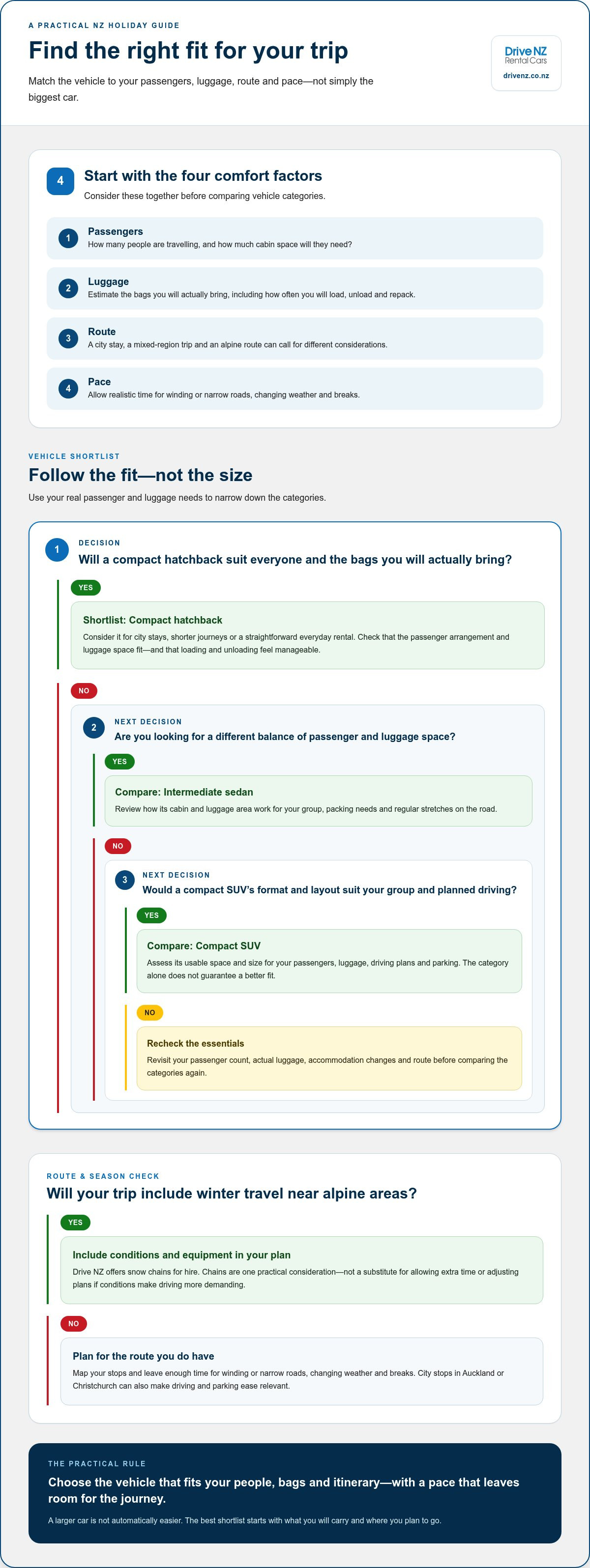
Passengers, luggage, pace and route are the four factors that shape how comfortable a rental car feels on your holiday. Consider them together before deciding which category fits. This keeps the choice focused on your real travel needs, whether your plans begin in Auckland, Christchurch or elsewhere in New Zealand.
Compare rental car types for a comfortable NZ holiday
Each category can suit a different travel style, but the label alone won’t tell you whether a car fits your group and bags. Use this comparison to make a shortlist, then weigh the passenger space, luggage arrangement and everyday use against your actual plans. A rental car for a comfortable NZ holiday is the one that fits your trip, not the one that sounds most substantial.
| Vehicle category | Trip profile to consider | Space priorities | Ease-of-use consideration |
|---|---|---|---|
| Compact hatchback | City stays, shorter journeys or travellers who want a straightforward everyday rental. | Check that the passenger arrangement and luggage space suit everyone and their bags. | A practical category to compare if you want a compact-feeling option. Think through how easy loading and unloading will be. |
| Intermediate sedan | Travellers looking for a different balance of passenger and luggage space for a mixed holiday. | Consider how the cabin and luggage area work for your group’s packing needs. | Compare its overall layout with the other categories, especially if you’ll spend regular stretches on the road. |
| Compact SUV | Groups who want to assess another vehicle format against their passenger needs and itinerary. | Review the usable space for both people and luggage rather than assuming the category guarantees a better fit. | Consider whether its size and layout feel appropriate for your planned driving and parking. |
When a compact hatchback can suit your trip
A compact hatchback can be a practical choice if you want a straightforward everyday rental and your group and packing list fit the category. Before settling on it, picture everyone travelling with the bags you’ll actually bring, not an idealised lighter load. If you’ll change accommodation often, consider whether loading, unloading and accessing luggage will feel manageable throughout the trip.
When to compare an intermediate sedan or compact SUV
An intermediate sedan is worth comparing if you want to assess a different balance of space for passengers and belongings. A compact SUV is another option to consider in light of your group and route, not an automatic requirement for ordinary roads. Look at how each category’s layout suits your day-to-day needs. The NZ Transport Agency Waka Kotahi is a useful official reference for New Zealand transport and road-safety information as you plan.
Choose a category based on trip needs, not assumptions about size. Make a shortlist based on how many people are travelling, what they’ll bring and how you’ll use the car each day. Then compare the available category details. Drive NZ’s car rental categories include compact hatchbacks, intermediate sedans and compact SUVs.
Match your rental car to your passengers, luggage and holiday route
A useful shortlist starts with the details of your own trip, not a vehicle label. Count everyone travelling, estimate the bags you’ll bring and consider how often you’ll move between places. Then compare the compact hatchback, intermediate sedan and compact SUV against those needs. This makes it easier to choose a rental car for a comfortable NZ holiday without assuming one category will suit every group.
Choose for the people and luggage travelling
Count passengers first, then think about the bags each person is likely to bring. Include bulky items such as sports or outdoor equipment in your estimate, but don’t assume they’ll fit a particular car. When comparing categories, use the published passenger and luggage capacity details for the vehicle you plan to book. Planning ahead can prevent a tight fit once everyone and everything is ready to go.
Consider how your group will use the space, too. A couple with compact bags may have different priorities from a small group carrying larger cases. If you’re travelling with children or bringing equipment for planned activities, think about what needs to stay accessible during the drive, not just what can be packed away.
- City-focused stay: If you’re starting in Auckland and expect mostly short trips, a compact hatchback may be a practical category to compare, provided its published capacity suits your passengers and bags.
- Longer holiday with more luggage: A group travelling between regions may want to compare the intermediate sedan and compact SUV as well, looking closely at each category’s published space details.
- Bulky activity gear: List the equipment before choosing. If it takes up substantial space, include it in your capacity check rather than hoping it will fit around the luggage.
Choose for the pace and places on your itinerary
A city-focused visit often involves a different pattern of use from a trip spanning several regions. More time on the road can make the cabin layout and room for belongings more noticeable, while frequent stops may make easy access to luggage a priority. Let your expected daily pace help shape the shortlist, rather than choosing a category based on a single leg of the journey.
A Christchurch start may be part of a broader South Island plan, so consider the overall length and rhythm of your trip instead of selecting a car for one destination alone. If you’re changing accommodation often, you may pack and unpack repeatedly; a practical luggage arrangement can save effort each time. Whether you’re planning a city break or a longer regional journey, match the car to the whole plan.
As you narrow down the options, Drive NZ’s fleet guide, Auckland travel guide and Christchurch road-trip guide can help connect vehicle categories with the way you plan to travel. Check the published capacity details for your booked category, then make your choice based on the group, luggage and route you’ve actually planned.
Plan the practical details that keep a rental holiday comfortable
A little preparation can make the car feel like a better fit from the first day. Use this simple sequence before finalising your plans:
- Map the trip. Note your starting point, overnight stops and approximate driving days.
- Estimate luggage. Group bags and any bulky activity equipment so you can assess the full load.
- Shortlist vehicle categories. Compare compact hatchbacks, intermediate sedans and compact SUVs against your passenger and luggage needs.
- Review booking details. Check the stated capacity for your selected category and read the rental information relevant to your plans.
This turns “Which car feels right?” into a practical decision based on how you’ll use it. A rental car for a comfortable NZ holiday should leave enough room for your group and belongings while suiting the journey you’ve planned.
Prepare for luggage, stops and changing plans
Group your luggage before departure, then compare the complete load with the selected category’s stated capacity. Include bags you may collect or use along the way, not only what you’ll need on the first day. Keep frequently needed travel items easy to reach, and avoid packing every available space just because it’s there. That leaves more flexibility if your plans or packing change.
Build breathing room into the itinerary. Rather than filling each day with long drives and tightly timed stops, allow time for breaks and unexpected delays. A flexible pace can make a day feel more manageable, especially when you’re travelling with children or adjusting to a new route. If you change accommodation often, consider how regularly you’ll need to unpack and repack. Simple, accessible packing can reduce the daily hassle.
Account for winter and alpine travel
Season and route can affect what preparation makes sense. If your holiday includes winter driving or alpine areas, consider whether snow chains are relevant to your journey. Drive NZ offers snow chains for hire, providing an option to include in preparations for applicable winter travel. Their relevance depends on the route and conditions, so don’t treat them as a substitute for sensible planning.
For specific information, use the dedicated snow-chain guide for focused guidance on chains, and the tourist safety checklist for broader travel preparation. These resources can help you think through the details without crowding your main itinerary with every practical consideration. Keep the overall plan realistic, and allow room to adapt if conditions affect your day.
Drive NZ rental car options cover compact hatchbacks, intermediate sedans and compact SUVs. Compare the categories against your route and luggage needs as you plan your holiday.
Choose Drive NZ for a practical, comfortable holiday car
A good choice comes from matching the car category to your passengers, luggage and itinerary, then leaving enough room in your plans for the journey itself. Drive NZ Rental Cars offers three categories to compare: compact hatchbacks, intermediate sedans and compact SUVs. Each gives you a different starting point for choosing a vehicle that fits your holiday rather than relying on assumptions about which size is best.
Use your checklist to weigh the details that matter most. How many people are travelling? What bags or activity equipment are coming along? Will you mostly make short trips, or spend regular stretches on the road? These answers help turn a broad search into a practical shortlist. Compare the stated capacity details for your selected category before making your decision.
Find the Drive NZ vehicle category that fits
A compact hatchback, intermediate sedan and compact SUV are distinct categories, not a ranking from least to most comfortable. Consider the hatchback for a straightforward everyday option, compare the sedan if you want a different balance of space, and include the compact SUV if its format suits your group and plans. The best match is the one that works for your actual passenger and luggage needs.
Use the Drive NZ fleet guide to compare the vehicle-selection options against your checklist. Keep your itinerary in view, too: a city-focused stay may involve different needs from a holiday with regular longer drives or frequent accommodation changes. A clear comparison helps you focus on fit, without choosing more vehicle than the trip calls for.
Take the next step with a clear shortlist
Drive NZ Rental Cars is a privately owned New Zealand rental operator serving travellers through Auckland and Christchurch. As you shape your plans, let your route and travel needs guide the category you choose. Compare passenger and luggage requirements with the trip you have in mind, including whether you’ll make short city trips or drive between regional stops.
If your holiday includes winter or alpine travel, snow chains are available for hire and can be part of your preparation. Consider them alongside your route and season rather than assuming they’re needed for every trip. The aim is to make decisions that suit the journey you’ve planned.
Compare the compact hatchback, intermediate sedan and compact SUV against your people, bags and itinerary, then browse Drive NZ rental options to find a category that fits your holiday plans.
Make your holiday plans feel ready to go
The right car choice can give your New Zealand holiday a smoother starting point. Before you decide, picture an ordinary day on your trip: who’s travelling, what you’ll carry and how much time you want to spend on the road. That practical check can help you choose a rental car for a comfortable NZ holiday without second-guessing whether you’ve chosen more vehicle than you need.
Keep your shortlist nearby as you browse. Focus on the category that fits your plans, and use the stated vehicle details to make a considered choice. If winter travel is part of your itinerary, include snow-chain planning in your preparations too.
Browse Drive NZ rental car options and compare the categories for your Auckland or Christchurch plans. Choose the vehicle that fits your passengers, luggage and itinerary.
Frequently Asked Questions
Is a compact rental car comfortable for a New Zealand holiday?
Yes, a compact car can be comfortable if it suits your group and the way you’ll travel. Before choosing, picture everyone seated with the luggage you’ll actually bring, including any bags you’ll keep close at hand. A compact category may be a practical match for a lighter load and shorter daily drives, but compare the specific vehicle’s published capacity rather than relying on the category name alone.
Do I need to rent an SUV to travel around New Zealand?
No, an SUV isn’t automatically necessary for a New Zealand holiday. Consider your planned route, passengers and luggage before deciding whether a compact SUV suits your needs better than a hatchback or sedan. A city-focused visit may call for different priorities from a trip with varied stops and more belongings. Choose based on fit and itinerary, not on the assumption that one body style is right for every journey.
Can I hire snow chains with a rental car from Drive NZ?
Yes, Drive NZ offers snow chains for hire. They may be relevant if your winter plans include alpine areas, so consider the season and route while organising your rental. Chains are a travel preparation item, not a reason to ignore changing conditions or route guidance. For a winter journey, keep your plans flexible and use focused snow-chain and road-safety guidance to prepare for the specific trip.
What should I consider when choosing a rental car for luggage?
Consider the number, size and shape of your bags, plus any equipment you plan to carry. Lay out the actual luggage together before travelling rather than estimating from memory. A large suitcase and bulky outdoor gear, for example, may take up space differently from several smaller bags. Compare the load with the booked vehicle category’s published luggage details, and leave room for items you’ll need during the journey.
Is it better to start a New Zealand rental holiday in Auckland or Christchurch?
Choose the starting city that best fits the places you want to visit and the direction of your plans. Auckland can suit a North Island-focused holiday, while Christchurch can be a practical starting point for a South Island itinerary. If your plans span both islands, consider the travel arrangements between them before settling on a starting point. A simple map of overnight stops can help you spot unnecessary backtracking.
How can I make a long New Zealand driving holiday more comfortable?
Keep driving days manageable and avoid treating every stop as a fixed appointment. Plan breaks where you can pause, stretch and reset before continuing, and avoid scheduling an arrival so tightly that a delay makes the day stressful. Before setting off, make sure essential travel items are easy to reach and that the cabin isn’t crowded with loose belongings. A little flexibility can make a long day feel more considered.
Should I choose a rental car based on the number of passengers or luggage?
Consider both, because the car needs to accommodate your travelling group and the belongings coming with them. Start with the passenger count, then check whether the complete luggage load fits the selected category’s published capacity. The tighter constraint should guide your shortlist. A smaller group carrying bulky cases, for example, may need to compare options differently from a larger group travelling with compact bags. Don’t assume one factor can stand in for the other.


