

What if looking like a local on New Zealand roads has less to do with speed and more to do with being predictable? If you’re wondering how to look like a local driving in New Zealand, it’s understandable to feel unsure about unfamiliar layouts, when to give way, or whether you’re holding up traffic. Calm, courteous habits matter more than trying to match someone else’s pace.
This guide explains the everyday cues that make driving smoother for everyone. You’ll learn how to approach narrow, winding roads, handle one-lane bridges, signal clearly, and choose a safe place to pull over when you need a break or want to let traffic pass.
We’ll also cover practical trip routines, from allowing extra time to checking road conditions before setting out. New Zealand drives on the left, and road rules can change, so use the current official New Zealand Road Code and Waka Kotahi traffic updates as you plan. With a suitable vehicle for your itinerary and a little preparation, you can settle into the rhythm of the road without rushing.
Key Takeaways
- Learn how to look like a local driving in New Zealand by making calm, clear decisions rather than matching other drivers’ speed.
- Use road signs and safe gaps to guide your choices at passing lanes, roundabouts, intersections, and one-lane bridges.
- Build a quick pre-drive routine around your route, weather, road conditions, rest breaks, and vehicle controls.
- Allow more time than map estimates suggest, and plan realistic driving days instead of rushing to meet a schedule.
- Choose a compact hatchback, intermediate sedan, or compact SUV to suit your passengers, luggage, route, and comfort needs.
How to Look Like a Local Driving in New Zealand Starts with Predictable Habits
Local-feeling driving comes from calm, clear, rule-following decisions, not speed or bravado. If you’re learning how to look like a local driving in New Zealand, give other road users time to understand what you’re doing. Signal before changing direction, leave a safe gap, and make patient choices instead of trying to match a faster driver.
Confident local-style driving means being steady, courteous, and easy to predict while following the rules. That gives others more time to respond, especially when the road or traffic pattern is unfamiliar.
What does it mean to drive like a local in New Zealand?
Think smooth, not aggressive. Use your indicators before turning or changing lanes, keep a safe following distance, and avoid sudden braking or last-second manoeuvres. If you’re unsure what to do, slow down safely and read the signs rather than making a rushed move.
It helps to distinguish between three types of road behaviour:
- A legal rule: A requirement in the current road rules or indicated by a sign. Follow it, even if another driver appears to do something different.
- A courteous habit: A considerate choice, such as leaving room for others when it’s safe. It supports smoother traffic but doesn’t replace a rule.
- An unsafe shortcut: A risky manoeuvre, such as copying another driver through a confusing situation or squeezing into a gap. Don’t treat it as local etiquette.
Local customs never override posted signs or the New Zealand Road Code. For background on the manual and its role in setting out driving guidance, see the New Zealand Road Code. For the rules that apply to your trip, check the current official guidance from NZTA.
Set your expectations before the first drive
Traffic keeps left in New Zealand, so give yourself time to adjust before heading into busy streets or unfamiliar intersections. Roads may also feel different from those at home, particularly where layouts change or the route narrows. Plan a relaxed first trip, keep navigation instructions simple, and don’t rush to make up time if you miss a turn.
A little preparation can make those first decisions easier. Review the New Zealand tourist driving safety checklist before setting out. Then focus on one task at a time: keep left, read signs early, and leave enough space to respond calmly.
Follow New Zealand's Traffic Rhythm Without Rushing
Keeping traffic flowing doesn’t mean driving at the pace of the person behind you. Keep left where appropriate, maintain a safe following distance, and avoid unnecessary lane changes. On unfamiliar roads, a steady position gives you more time to read signs and respond to bends, traffic, or changing conditions.
Stay predictable, leave space, and never rush to satisfy another driver. If someone behind you seems impatient, keep your attention on the road and wait for a safe, legal opportunity to let them pass. Your job is to make a sound decision, not to speed up or pull over abruptly.
How should you handle faster traffic and passing lanes?
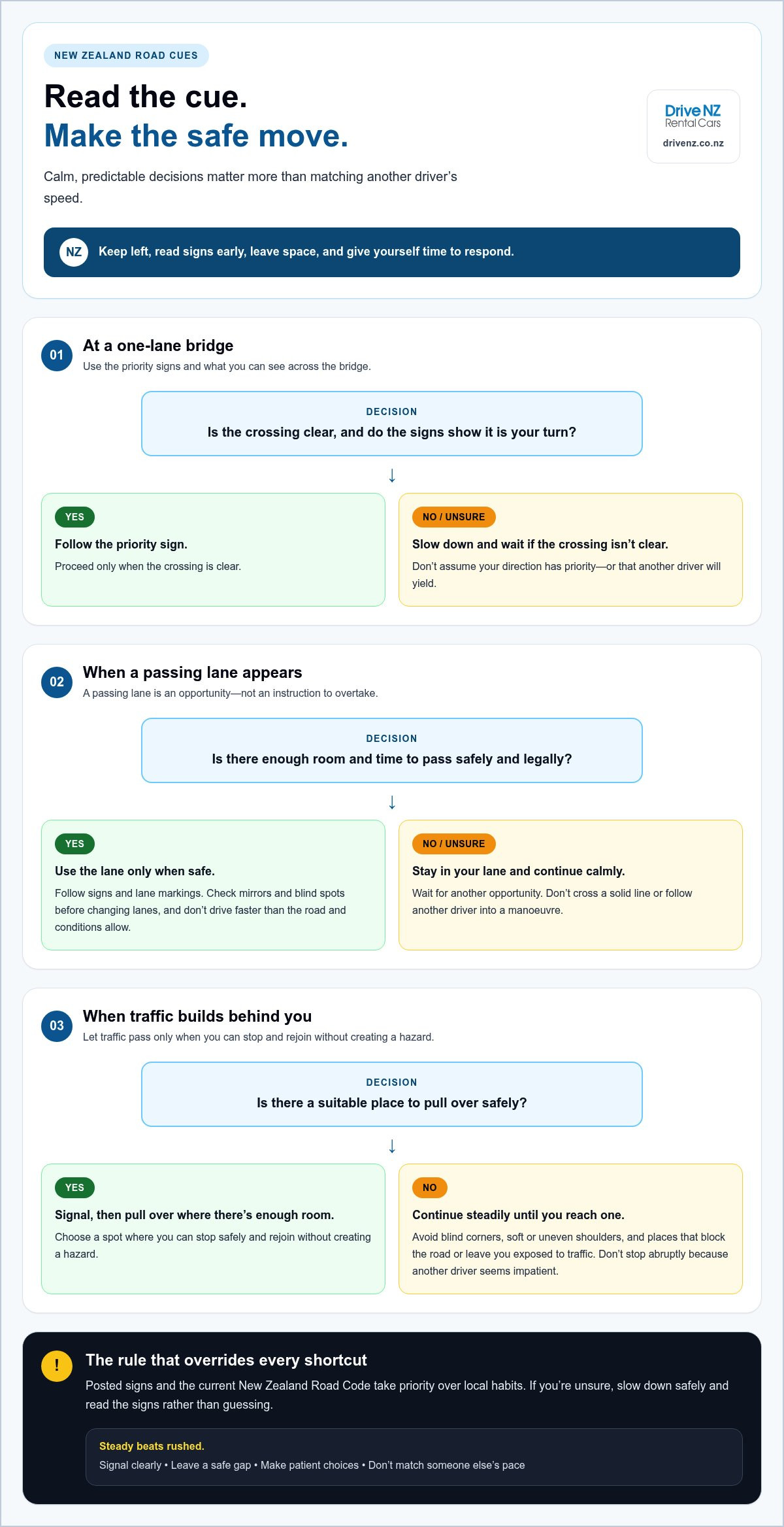
Passing lanes are signed sections that give traffic an opportunity to pass more safely. Follow the signs and lane markings, and move into a passing lane only when it’s safe. Keep left where appropriate, check your mirrors and blind spots before changing lanes, and don’t accelerate beyond what the road and conditions allow.
If you’re unsure whether there’s enough room or time to pass, stay in your lane and continue calmly. The passing opportunity can wait. Don’t cross a solid line, follow another driver into a manoeuvre, or treat a passing lane as permission to drive faster than feels safe.
What courteous driving looks like on narrow roads
On a narrow rural road, a suitable stopping place can give following traffic room to pass. Look well ahead, signal your intention, and pull over only where there’s enough room to stop safely and rejoin the road without creating a hazard. If there’s no suitable place, continue steadily until you reach one.
A shoulder may be soft, uneven, or too narrow for a safe stop. Avoid stopping on blind corners, where other drivers may not see you in time, or anywhere that blocks the road or leaves you exposed to traffic. If you’re unsure about a road rule or sign, consult the current New Zealand tourist driving safety checklist and official NZTA guidance rather than guessing.
This is a practical part of how to look like a local driving in New Zealand: make room when it’s safe, but don’t let pressure dictate your choices. If you’re planning a road trip, browse compact hatchbacks, intermediate sedans, and compact SUVs to compare vehicle categories for your passengers, luggage, and route.
Read Local Road Cues: One-Lane Bridges, Roundabouts, and Rural Roads
Road layouts can change quickly between city streets and rural routes. Use the signs and road markings in front of you rather than guessing what another driver will do. This is a practical part of how to look like a local driving in New Zealand: read the cue, make a measured decision, and leave enough time to respond.
| Road situation | Cue to notice | Safe response | What not to assume |
|---|---|---|---|
| One-lane bridge | Priority signs at the approach and visibility across the bridge | Slow down, follow the sign, and wait if the crossing isn’t clear | That your direction has priority, or that another driver will yield |
| Roundabout | Lane arrows, signs, other traffic, and indicator signals | Choose a lane early and signal clearly as you follow the marked layout | That every roundabout has the same lanes or exits |
| Intersection | Stop or give-way signs, road markings, signals, and approaching traffic | Follow the controls and proceed only when it’s safe | That a familiar-looking junction follows the same pattern as one at home |
| Changing speed limit | Posted speed-limit signs and road conditions | Adjust to the signed limit and drive to the conditions | That the limit stays the same after a town, roadworks, or a new sign |
Approach one-lane bridges and narrow crossings carefully
Read the bridge signs before you reach the crossing. They indicate which direction has priority, so don’t infer it from the size or position of another vehicle. Slow down and check whether the bridge is clear. If you can’t see through the crossing or traffic is already on it, wait in a safe place and follow the signs and current official guidance.
Make your intentions clear at roundabouts and intersections
In Auckland, a busy urban junction may involve marked lanes, traffic signals, and several nearby turns. In Christchurch, a route out of the city may soon lead to quieter intersections with different layouts. In either setting, use lane arrows and signs to choose your path, and signal so other road users can read your intentions. Don’t copy a vehicle that appears to disregard a marking.
For the exact rules on indicators, lane use, and giving way, check the current NZTA guidance and New Zealand Road Code before driving. Rules and road layouts matter more than assumptions based on what seems familiar. If you’re planning a South Island drive, this Christchurch road-trip guide offers useful route-planning context.
Simple Pre-Drive Routine for New Zealand Roads
A short check before you set off can reduce last-minute decisions once you’re in traffic. Use this five-step routine to make each drive more manageable, especially when your route crosses from a city into unfamiliar rural roads.
- Check your route. Review the day’s destination and likely stops. Map times are estimates, not promises: narrow, winding roads, traffic, and breaks can all add time.
- Check the weather. Look at current forecasts for the places you’ll travel through, not just where you’re starting. Conditions can change along the route.
- Check road signs and updates. Before departure, check official NZTA traffic information for closures, incidents, and roadworks. Pay attention to signs as you drive, since conditions and limits may change.
- Check your rest needs. Plan breaks and a realistic day’s distance. If you feel tired or find the drive more demanding than expected, stop at a suitable safe place and rest.
- Check the vehicle controls. While parked, locate the indicators, lights, wipers, and demisters. Adjust your seat and mirrors, and make sure you know how to access the fuel cap before joining traffic.
Plan for conditions, not just distance
Leave room in your schedule for slower sections, stops, traffic, and changing weather. Check official road and weather updates before setting out, then reassess if conditions shift. For winter travel, check route-specific official guidance for any chain requirements or restrictions. If chains are needed for your route, prepare before you reach difficult conditions and follow the relevant instructions. Don’t assume every alpine or winter road has the same requirements.
Get comfortable with the car before joining traffic
Take a few minutes while parked to familiarise yourself with the controls. Test the indicators, lights, wipers, and demisters, and confirm that your seating position and mirrors give you a clear view. If you’re unsure about a control, check the vehicle information before moving off rather than trying to work it out on the road.
The right vehicle category can also make the day more comfortable. Compare a compact hatchback, intermediate sedan, or compact SUV based on your passengers, luggage, route, and driving confidence. A practical plan and a familiar setup are useful parts of how to look like a local driving in New Zealand.
Ready to match your vehicle to your itinerary? Explore rental cars for your New Zealand trip.
Choose a Practical Rental and Put Local-Feeling Driving into Practice
The vehicle you choose can help make a trip feel more manageable, but the best fit depends on your plans. Think about how many people are travelling, how much luggage you’ll carry, the routes on your itinerary, and what feels comfortable to drive. A city stay with day trips may call for different space and luggage needs than a longer journey between destinations.
Choose a vehicle that supports a calm trip
Drive NZ Rental Cars offers compact hatchbacks, intermediate sedans, and compact SUVs. Compare these categories against your passengers, bags, planned roads, and comfort needs rather than choosing on appearance alone. There’s no single category that suits every itinerary. A practical match helps you focus on the drive instead of managing a setup that doesn’t fit your travel plans.
Before deciding, picture a typical day: where you’ll park, how much luggage you’ll load, and whether you’ll spend more time in town or travelling between places. Keep the choice grounded in your itinerary. Drive NZ Rental Cars’ practical vehicle options include compact hatchbacks, intermediate sedans, and compact SUVs.
Your first-drive checklist for Auckland, Christchurch, and beyond
Before moving off, take a moment to settle in, whether you’re starting in Auckland, Christchurch, or somewhere else. Use this quick check:
- Seat and mirrors: Adjust them while parked so you can reach the controls and see clearly.
- Route: Review your first turns and set up navigation before joining traffic.
- Indicators: Locate the controls and confirm you know how to signal.
- Traffic direction: Remind yourself that vehicles keep left in New Zealand.
- Road cues: As you go, slow down when needed, read signs, and choose a safe, predictable response.
Then return to the habits that make how to look like a local driving in New Zealand feel achievable: follow signs and markings, signal clearly, leave space, and stay patient. You don’t need to imitate another driver or rush to keep up. A suitable vehicle and a steady approach can help you feel more settled as the route changes from city streets to unfamiliar roads.
Set Off Ready for a More Confident New Zealand Drive
Looking local isn’t about copying other drivers or keeping up with traffic. It’s about making clear, predictable choices: follow signs and markings, signal in good time, leave space, and stay patient when a road or junction feels unfamiliar. A simple pre-drive check and a realistic itinerary can help you feel more settled from the first turn.
That’s the practical answer to how to look like a local driving in New Zealand: be calm, courteous, and guided by current road rules. Choose a vehicle category that fits your passengers, luggage, route, and comfort needs. Drive NZ Rental Cars offers compact hatchbacks, intermediate sedans, and compact SUVs. Snow chains are also available for hire for winter travel, when route-specific guidance and preparation matter.
Ready to plan your trip? Explore practical rental cars for your New Zealand trip and choose a vehicle category that suits your plans. Take your time, trust the signs, and enjoy the road ahead with confidence.
Frequently Asked Questions
How do I drive like a local in New Zealand?
To learn how to look like a local driving in New Zealand, focus on calm, predictable choices rather than copying another driver’s speed or habits. Keep left, signal clearly, leave a safe following distance, and read signs early. Allow extra time while you adjust to unfamiliar roads, and don’t rush through a situation you’re unsure about. Courtesy helps traffic flow, but current road rules always take priority. Check official NZTA guidance before you depart.
Is it difficult for tourists to drive in New Zealand?
Tourists can make the adjustment easier by preparing for left-side driving, unfamiliar road layouts, and longer travel times than a map may suggest. Your first drive may feel demanding, so choose a manageable route, learn the vehicle controls while parked, and build in breaks. Conditions vary by region and season. You don’t need to rush to feel confident. Steady, predictable decisions and time to adapt are more useful than trying to match local traffic pace.
Can I stop to let faster traffic pass in New Zealand?
You can let following traffic pass when there’s a safe, suitable place to pull over and stopping won’t create a hazard. Don’t stop on a blind corner, a narrow shoulder, or another unsafe roadside area. If there’s no appropriate place, continue calmly until one becomes available. Follow road signs and current official guidance, and don’t let pressure from another driver push you into stopping or manoeuvring somewhere unsafe.
What should I do at a one-lane bridge in New Zealand?
Slow down and read the signs before you reach a one-lane bridge. Use the signs and road controls to determine which direction should proceed, and wait if the crossing isn’t clear. Don’t assume you have priority based on another driver’s movement or position. Bridge controls can vary, so follow the instructions at that crossing and check current NZTA explanations if you’re unsure how to interpret the signs.
Do New Zealand drivers always use passing lanes the same way?
Passing lanes are identified by signs and road markings, so follow the instructions for the section you’re driving on. Use a passing lane only when it’s safe and permitted. It isn’t a reason to speed, make a rushed lane change, or overtake when visibility or road conditions make it unsafe. If you can’t pass confidently, stay patient, maintain a safe position, and continue at a speed suited to the conditions.
How can I feel confident driving from Auckland or Christchurch into the countryside?
Plan a realistic route from Auckland or Christchurch, check current road and weather updates, allow extra time, and schedule breaks. Rural roads can feel different from city streets, so read signs early and adjust your driving to visibility and conditions. Before setting off, get familiar with your rental vehicle while it’s parked. Confidence comes from preparation and measured decisions, not assumptions about how local drivers behave on every road.
Do I need snow chains for winter driving in New Zealand?
Whether you need chains depends on your route, the weather, and current road controls, so there isn’t one requirement for every winter journey. Check official route conditions before travelling, and learn how to fit and use chains safely if they’re needed. Drive NZ Rental Cars offers snow chains for hire. Follow route-specific guidance and don’t assume that conditions or chain requirements are the same across different roads.


