

Why does a "budget" rental car price often double by the time you actually sign the paperwork? It's a frustrating experience that many travelers face when they haven't accounted for the hidden costs of car rental NZ. You might start your holiday search looking for a compact hatchback or a compact SUV, only to find that the advertised daily rate is just a fraction of the final bill. Between 15% GST, premium location fees, and various surcharges, that initial deal can quickly become a source of unnecessary stress.
We agree that your New Zealand road trip should be about the stunning landscapes, not about stressful financial surprises at the pickup desk. This guide will help you master the art of reading the fine print so your 2026 travel budget stays exactly where you planned. We'll provide a clear checklist of potential fees, explain New Zealand specific charges like Road User Charges (RUCs), and clarify how to handle insurance excess that can range from $2,500 to $5,000. You'll gain the confidence to identify truly transparent providers and ensure your journey across the North and South Islands is smooth, efficient, and predictable.
Key Takeaways
- Learn how to identify "loss leader" pricing strategies that make initial search results appear lower than the final cost.
- Discover the specific hidden costs of car rental NZ that apply to airport pickups and diesel vehicle usage.
- Understand the relationship between insurance excess and credit card bonds to avoid unexpected holds on your travel funds.
- Master local secrets for managing toll roads and fuel policies to keep your 2026 itinerary on budget.
- Gain the confidence to choose a provider that offers transparent quotes for compact hatchbacks and SUVs without unexpected surcharges.
The "Cheap" Car Rental Trap: Why the Daily Rate is Only Half the Story
Walking up to a rental counter shouldn't feel like a high-stakes negotiation. For many travelers, it’s the most stressful part of their holiday. You’ve spent weeks planning the perfect route, only to be met with a list of charges you never saw during your initial search. This happens because many global aggregators use a "loss leader" strategy. They lead with a price that looks impossible to beat, then rely on the hidden costs of car rental NZ to make the booking profitable at the last minute. A Car rental industry overview reveals that while this is a standard global practice, it creates significant friction for the modern traveler who values speed and transparency.
We define hidden costs as any mandatory fee or highly recommended charge that wasn't clearly displayed in your first quote. In 2026, the baseline for a fair rental agreement is simple: honesty from the first click. You shouldn't need to dig through layers of terms and conditions to find out what you'll actually pay for your compact hatchback or SUV. A transparent provider ensures the price you see is the price you pay, allowing you to focus on the road ahead rather than the balance on your credit card. This shift toward clarity helps you plan with confidence, knowing your travel budget is going toward your experiences rather than unexpected paperwork.
The Difference Between Mandatory Fees and Optional Extras
Distinguishing between what you must pay and what you can decline is vital for staying on budget. Mandatory fees include things like the 15% Goods and Services Tax (GST) and premium location surcharges. Optional extras usually cover equipment like GPS units or snow chains. However, in New Zealand, some "optional" items feel mandatory. If you're heading into the Southern Alps during winter, snow chains aren't just an extra; they're a requirement for safety and legal compliance on certain mountain passes. Total Cost of Hire is the only metric that matters when comparing different providers.
Why NZ Geography Impacts Your Rental Bill
New Zealand's unique shape and island geography mean many travelers want to drive the entire length of the country. If you pick up an intermediate sedan in Auckland and leave it in Christchurch, you'll likely face a one-way fee. These charges reflect the logistical cost of moving vehicles back to their original base, often involving ferry crossings and staff time. Rural roads and gravel tracks also contribute to vehicle wear, which is why some companies include specific maintenance fees in their fine print. You can find more detail on these regional price variations in our 2026 pricing guide.
5 Common Hidden Costs of Car Rental in NZ You Need to Know
Understanding the specifics of your agreement is the best way to avoid the hidden costs of car rental NZ. While some fees might seem like arbitrary additions, most have a specific purpose or origin. By identifying these five common charges early, you can build a more accurate travel budget and avoid that sinking feeling when the final bill arrives. Transparency is the key to a stress-free journey through our beautiful landscapes.
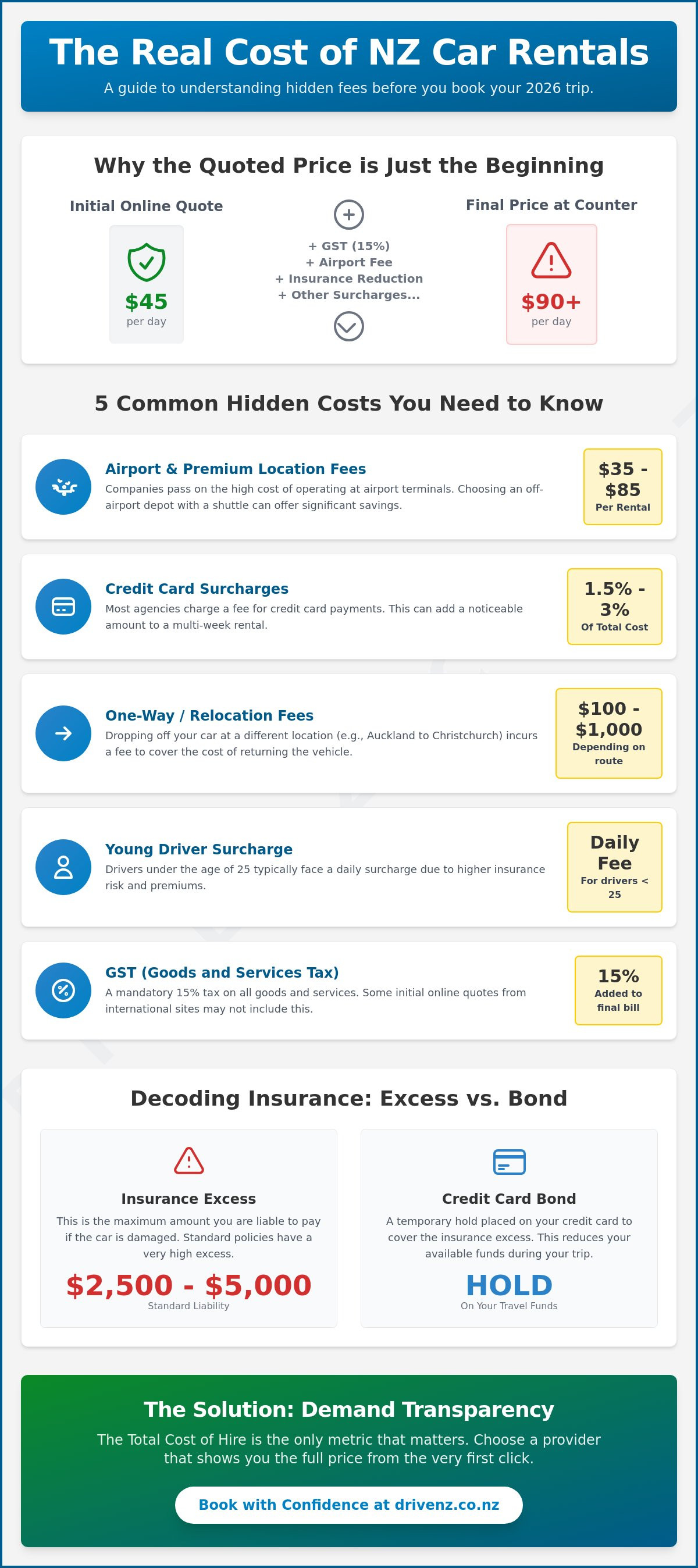
Airports like Auckland and Christchurch are the primary gateways for international visitors. However, picking up your vehicle directly at the terminal often incurs a "Premium Location Fee." This isn't a random charge from the rental company; it’s a way to recover the high costs of operating on airport land. You’ll often find that choosing a provider with an off-airport depot and a quick shuttle service can save you between $35 and $85 per rental.
Most New Zealand rental agencies apply a surcharge for credit card payments, typically ranging from 1.5% to 3%. When you're paying for a multi-week hire, this adds up quickly. Check if there are alternative payment methods or if your chosen provider includes these fees in their initial quote to keep your costs predictable.
New Zealand is a long, narrow country. Most people want to travel from North to South. This creates a vehicle imbalance, meaning companies often have to pay to ship cars back to their original location. If you drop off your car at a different branch, expect a relocation fee that can range from $100 to as high as $1,000 depending on the season and distance.
If you’re under 25, you’ll likely face a daily surcharge. This reflects the higher insurance premiums associated with younger drivers. Always verify the age brackets in the terms, as some companies have different rules for those under 21 compared to those aged 21 to 24. Knowing these details ahead of time prevents surprises at the counter.
Decoding the NZ Airport Surcharge
Airports charge rental companies significant levies for the convenience of terminal-side desks and parking. These costs are almost always passed on to the consumer. For the best value, look for providers located just a few minutes away from the main gates. These modern hubs offer the same efficiency without the premium price tag. Following the NZ Transport Agency guidelines will help you understand your rights and responsibilities regarding these and other rental conditions.
The Diesel Trap: Understanding Road User Charges
In New Zealand, diesel vehicles are subject to Road User Charges (RUCs). Unlike petrol vehicles, where the tax is included in the pump price, diesel users pay per 1,000 kilometers driven. Some rental companies bill this at the end of your trip, which can be a nasty surprise for the unprepared. To keep things simple, many travelers prefer our petrol-powered compact hatchbacks or SUVs, where the fuel cost is exactly what you see at the station. At Drive NZ, we believe in total transparency, so we ensure any potential RUCs are clearly explained upfront. If you want a rental experience without the guesswork, you can view our transparent pricing online today.
Decoding the Fine Print: Insurance Excess and Liability Explained
Insurance is the area where the phrase "cheap" usually falls apart. When you see a low daily rate, it almost always includes a standard insurance excess that can range from $2,500 to $5,000. This is the amount you are liable for if the car is damaged, regardless of who is at fault. It's one of the most significant hidden costs of car rental NZ because most travelers don't realize how much financial risk they are carrying until they reach the counter. Choosing between standard cover and a full waiver is a balance between your daily budget and your peace of mind.
Many people rely on third-party travel insurance or credit card coverage to save money. While these policies are useful, they don't change the rental company's terms. If an accident happens, the rental provider will charge your credit card for the full excess amount immediately. You then have to claim that money back from your insurance provider later. This process can take weeks, leaving a massive hole in your holiday budget while you wait for a refund. Understanding this distinction helps you decide if paying for a daily reduction fee, which typically ranges from $35 to $65, is worth the upfront cost to avoid a potential $5,000 bill.
What "Basic Insurance" Actually Covers in NZ
Standard insurance in New Zealand isn't as comprehensive as you might expect. Basic cover often excludes damage to the windscreen, tyres, and underbody of the vehicle. These are the most common areas of damage on local roads. If you're driving on gravel or through areas with loose road metal, a chipped windscreen is a real possibility. Some policies also exclude single-vehicle accidents or damage caused while driving on restricted roads. Reviewing our safety checklist will give you a better idea of the road conditions that make comprehensive cover a smart choice.
The "Hidden" Bond: A Cash Flow Killer
The bond is a separate issue from the daily rental price, but it impacts your wallet just as heavily. Even if you have third-party insurance, the rental company will "freeze" a bond on your credit card that matches the excess amount. This can be thousands of dollars. It isn't a charge, but it reduces your available credit limit, which can prevent you from booking hotels or paying for dinners. Always check your credit limit before you arrive at the counter to ensure you have enough space for this hold. Most full-cover options reduce this bond to zero, allowing you to keep your travel funds accessible throughout your trip.
Local Secrets to Avoiding Extra Charges on NZ Roads
Mastering the local road rules is about more than just safety. It’s a direct way to protect your wallet from the hidden costs of car rental NZ. While many travelers focus on the big-ticket items like insurance, it's often the smaller, operational details that cause the most frustration. Understanding how fuel, tolls, and environmental factors work in New Zealand will help you maintain control over your budget from the moment you leave the depot until you return the keys.
Fuel policies are a prime example of where clarity matters. In 2026, the "Full-to-Full" policy remains the most transparent and cost-effective option for travelers. You receive the car with a full tank and return it the same way, paying only for the fuel you actually use at local pump prices. In contrast, "Pre-paid Fuel" options often charge you for a full tank upfront at a supposedly discounted rate. However, unless you return the car with a completely empty tank, you’re essentially gifting the remaining fuel back to the company. We always recommend the full-to-full approach to keep your expenses predictable.
Cleaning fees are another area where expectations can differ. New Zealand is famous for its rugged beauty, and a trip through the South Island often involves a bit of dust or sand. Most companies expect a reasonable amount of "road grime." However, "excessive dirt"—such as deep mud in the upholstery, fish smells, or significant sand buildup—usually triggers a professional detailing fee. A quick five-minute vacuum at a local service station before you return the car can save you a much larger cleaning bill later.
The NZ Toll Road Administration Fee
New Zealand has three main toll roads: the Northern Gateway (north of Auckland), the Tauranga Eastern Link, and Takitimu Drive. These are all "free-flow" tolls, meaning there are no booths to stop at. Cameras scan your plate, and you're expected to pay online. While a single trip costs around $2.50, failing to pay within five days results in a notice being sent to the vehicle owner. When this happens, rental companies often charge an administration fee of $30 or more to process the paperwork. We encourage all our customers to pay their tolls proactively online to avoid these unnecessary surcharges. If you're planning your route now, you can book your vehicle with full price transparency and ask our team about the best way to manage tolls during your trip.
Snow Chains and Alpine Requirements
If you're visiting during the winter months, especially in the South Island, mountain passes like the Milford Road or the Crown Range often require you to carry chains by law. Police checkpoints are common when snow is forecast. If you're caught without them when the "Chains Must Be Carried" signs are active, you face significant fines or the cost of a tow truck if you get stuck. Arranging for snow chain hire at the start of your trip is a small investment that prevents a major financial and safety headache. It's much cheaper to have them in the boot and not use them than to need them and be left stranded on an alpine pass.
Transparent Car Hire: How Drive NZ Rental Cars Eliminates the Guesswork
Choosing the right partner for your road trip is the most effective way to avoid the hidden costs of car rental NZ. We built our business model on a "No Hidden Costs" philosophy because we know that transparency creates trust. When you receive a quote from us, you’re seeing the actual amount you will pay at the counter. We’ve removed the layers of complexity often found with global aggregators, replacing them with a straightforward, modern service designed for the contemporary traveler who prizes speed and honesty.
Our fleet is specifically curated to provide maximum value for New Zealand conditions. We focus on reliable, high-demand categories that suit our roads and your budget. Whether you choose a compact hatchback for city hopping, an intermediate sedan for long-distance comfort, or a compact SUV for those extra bags, you’re getting a vehicle priced for its actual utility. We don't deal in luxury supercar hire or motorhomes. By specializing in these core categories, we keep our operations efficient and our pricing predictable for every customer.
Dealing with a Kiwi-owned business in Auckland and Christchurch means you get more than just a car. You get local support from a team that understands the nuances of driving in Aotearoa. We’ve also simplified our insurance options to be completely jargon-free. You won't find pages of technicalities designed to confuse you. Instead, we offer clear choices that let you decide exactly how much liability you want to carry, ensuring you feel empowered rather than overwhelmed by the fine print.
Why Local Knowledge Saves You Money
Our team provides practical advice before you even leave the depot. We’ll walk you through the specifics of local fuel policies and explain exactly how to manage tolls for the Northern Gateway or Tauranga Eastern Link. This proactive approach helps you avoid those $30 administration fees we discussed earlier. Because we focus on standard vehicle categories, you won't find inflated markups or surprise maintenance levies. Booking directly with us ensures you access the best 2026 rates and receive the most accurate information for your journey.
Ready for Your NZ Adventure?
The key takeaway for any successful road trip is that transparency equals a stress-free experience. By understanding the hidden costs of car rental NZ, you’ve already taken the biggest step toward protecting your holiday budget. Now, you can focus on the sights of the South Island or the beaches of the North with total confidence. If you're starting your journey in the "City of Sails," be sure to check our Auckland guide for more city-specific tips. Visit our fleet page today to get a transparent, all-inclusive quote and start your New Zealand adventure without the guesswork.
Drive with Confidence and Clarity
Planning a New Zealand road trip should be an exciting experience. By identifying the hidden costs of car rental NZ, you've equipped yourself with the knowledge to stay on budget. You now understand how to navigate airport surcharges, manage toll roads online, and choose insurance options that won't freeze your holiday funds. This preparation ensures your focus remains on the stunning landscapes of the North and South Islands rather than unexpected charges at the rental counter.
At Drive NZ, we believe your journey deserves a partner that values honesty as much as you do. We've been Kiwi-owned and operated since 2005, providing transparent pricing with no hidden surprises from our convenient Auckland and Christchurch locations. Whether you need a compact hatchback for city exploring or a compact SUV for mountain adventures, we make the process simple and stress-free. Book a transparent car rental with Drive NZ today and enjoy the peace of mind that comes with a truly local service. We look forward to helping you explore the very best of New Zealand.
Frequently Asked Questions
What are the most common hidden costs of car rental in New Zealand?
The most common hidden costs of car rental NZ include 15% GST, premium location fees at major airports, and Road User Charges for diesel vehicles. You might also encounter one-way relocation fees if you drop the car off in a different city, or daily surcharges for additional drivers. These costs are often omitted from the initial daily rate shown on global booking sites.
Do I have to pay for insurance if I already have travel insurance?
No, you aren't legally required to purchase the rental company’s excess reduction if you have your own travel insurance. However, the provider will still hold a bond on your credit card that matches their standard excess. If damage occurs, you'll need to pay the rental company first and then claim that amount back from your travel insurance provider later.
How much is the average credit card bond for a rental car in NZ?
A standard credit card bond usually matches the insurance excess, which typically ranges from $2,500 to $5,000 in New Zealand. This amount is held as a "frozen" transaction on your card rather than a direct charge. It ensures the company can cover the deductible if the vehicle is damaged, so you should ensure your credit limit can accommodate this hold before you arrive.
Are there extra fees for picking up a car at Auckland Airport?
Yes, picking up a car at Auckland Airport terminals usually incurs a premium location fee ranging from $35 to $85. This charge covers the costs the rental company pays to the airport for terminal space and parking facilities. Choosing a provider with an off-airport depot and a shuttle service is a practical way to avoid this specific surcharge.
What happens if I drive on a toll road in a rental car?
If you drive on a toll road, you should pay the fee online within five days to avoid a steep administration charge from the rental company. While the toll itself is approximately $2.50, companies often add a $30 fee for processing the unpaid notice they receive from the transport agency. Proactive payment through the official government website is the best way to keep costs low.
Is it cheaper to rent a car in Auckland or Christchurch?
Rental rates are driven more by seasonality than by the specific city. During the low season from June to August, a standard compact car can cost between $45 and $55 per day in either location. In the peak summer months, prices for the same vehicle can jump to over $150 per day regardless of whether you start in Auckland or Christchurch.
What is a Road User Charge (RUC) and will I have to pay it?
A Road User Charge is a distance-based tax applied to diesel vehicles in New Zealand. If you rent a diesel car, you may be billed for these charges per 1,000 kilometers driven during your trip. Petrol vehicles have these taxes included in the pump price, which is why many travelers find petrol compact hatchbacks easier for budgeting.
Are there hidden fees for drivers under 21 in NZ?
Drivers under 21 or 25 usually face a daily young driver surcharge to cover higher insurance premiums. This fee typically ranges from $5 to $30 or more per day depending on the rental provider's specific policy. Always check the age brackets in the terms and conditions to ensure this cost is factored into your total travel budget.


