

For solo travel in New Zealand, intercity buses are generally the cheapest way to travel between destinations; a rental car gives you more control over stops and timing. The Intercity bus versus rental car choice for a solo traveller in NZ can change when vehicle costs are shared or access to places matters more than the fare alone.
That trade-off is easy to underestimate. Bus travel can keep transport costs down, but you’ll need to arrange accommodation, activities and onward connections separately. With a rental car, you control your schedule, but you cover the vehicle cost unless you’re travelling with others. Neither option suits every route.
This guide compares practical costs for solo travellers and groups, explains when a car can provide more direct access, and considers how South Island winter conditions may affect your decision. It also looks at time spent travelling and the effect of booking activities separately. Use it to match your route, budget and travel preferences with the option that fits.
Key Takeaways
- For a solo trip, compare the bus fare with the full cost of driving, plus accommodation, activities and onward transport.
- Travelling with others can make a rental car more cost-effective when you share the vehicle costs.
- South Island winter conditions may make bus travel appealing if you’d rather avoid driving on roads where snow is possible.
- Choose a car when flexible stops or places beyond practical bus routes matter more than keeping transport simple.
Winter driving and alpine road considerations
Winter can change the trade-off between a scenic drive and a simpler travel day. On the South Island, snow may affect roads, so a bus can suit travellers who prefer not to drive in those conditions. A rental car gives you control over stops, but you’re responsible for driving and choosing your route.
Rental car age rules in New Zealand are set by the rental terms. You need a valid licence, and whether you need an international driving permit depends on the licence’s language and format. Check these requirements before planning a driving itinerary around Queenstown, Wanaka or another South Island stop.
Popular point-to-point coach routes usually have at least one service per day. Schedules, journey times, luggage rules and booking policies vary by route and operator, so compare the specific legs in your itinerary. Bus travel may involve waiting for the next departure; driving lets you choose when to leave.
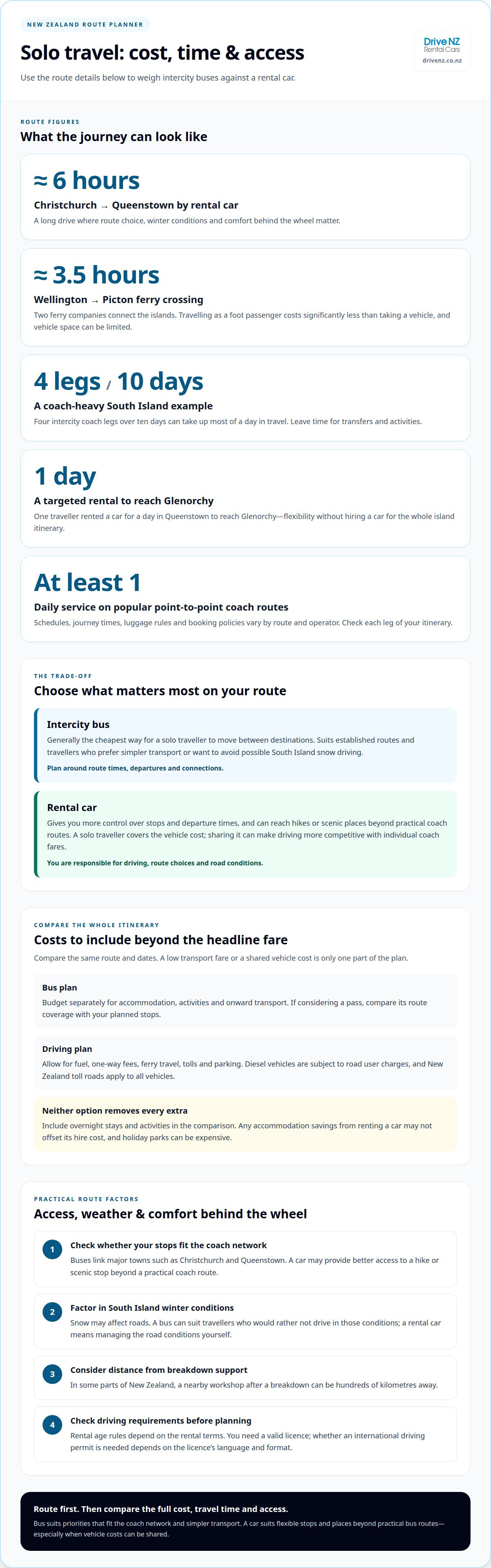
Consider the route, not just the vehicle. Driving from Christchurch to Queenstown takes about 6 hours by rental car, and in some parts of New Zealand, a nearby workshop after a breakdown can be hundreds of kilometres away. Those distances make winter road conditions and your comfort behind the wheel practical factors, not just scenic details.
| Option | Winter driving | Schedule and access | Best fit |
|---|---|---|---|
| Intercity bus | Avoids driving through possible South Island snow | Route times shape the itinerary | Travellers prioritising simpler transport |
| Rental car | Requires you to manage road conditions | More control over stops and departure time | Travellers prioritising flexibility |
Choose the bus if avoiding winter driving is your priority. Choose a car if flexible stops matter more and you’re comfortable driving the route.
Rental car versus coach costs for solo travellers and groups
Compare the full itinerary, not just the fare or rental cost. The intercity bus versus rental car choice for a solo traveller in New Zealand depends on group size, route and how much local transport you’ll need.
Bus Fares and Pass Costs
Coach fares cover passenger travel, while passes bundle travel across selected routes. For one traveller, public transport is generally the cheapest way to move between New Zealand destinations, but accommodation, activities and onward transport need separate budgeting. A pass may simplify planning across several legs, but compare its coverage with your planned stops. The intercity bus versus rental car decision for a solo traveller in NZ should account for these trip costs, not just the main journey.
Additional Rental-Car Costs
A driving budget can include fuel, one-way fees, ferry travel, tolls and parking. New Zealand toll roads apply to all vehicles. Across Cook Strait, a foot-passenger fare costs significantly less than taking a vehicle, and vehicle space can be limited. These costs can change the comparison for an itinerary between the islands.
For a solo traveller, one person covers the vehicle cost. With a group, sharing that cost can make driving more competitive with individual coach fares. Compare the same route and dates, then include fuel, overnight stays and activities. Any accommodation savings from a rental car may not offset its hire cost, and holiday parks can be expensive.
Diesel vehicles in New Zealand are subject to road user charges. When estimating each option, map your route and include applicable one-way charges and parking alongside transport and activity costs. Then compare the overall plan, including time spent reaching places beyond direct coach connections.
For a car-based itinerary, explore rental-car options alongside your route and group-size calculation.
Do you need a rental car in New Zealand's South Island?
Intercity buses can work well when your South Island itinerary follows established routes. Rental cars can also travel between New Zealand’s North and South Islands by Cook Strait ferry, although vehicle space can be limited.
Destinations Reachable by Intercity Bus
Intercity coaches suit travellers linking major towns without driving. Popular point-to-point routes usually have at least one service per day, making stops such as Christchurch and Queenstown accessible by bus. On a South Island holiday with four intercity coach legs over ten days, however, travel can take up most of a day. Allow time for transfers and activities instead of treating each stop as a quick connection.
Rental-Car Access to Destinations
A rental car can provide better access when a hike starts or scenic stops sit beyond a practical coach route. In Queenstown, a traveller rented a car for one day to reach Glenorchy. A short, targeted rental like this can add flexibility without requiring a car for the entire island itinerary. A car also lets you choose when to leave each stop instead of planning every day around coach departures.
In Auckland, passengers can tag on and off city buses using a credit or debit card, a convenient option for getting around the city. That system doesn’t replace intercity transport. Across Cook Strait, the ferry crossing between Wellington and Picton takes around 3.5 hours; two ferry companies connect the islands, and travelling as a foot passenger costs significantly less than taking a vehicle.
Kiwi Experience is another bus option to consider when planning routes. Compare its proposed stops with the places you want to visit, especially if hiking or smaller South Island destinations shape your plans. Guided bus tours can bundle transport, accommodation, some activities and meals into one upfront price, unlike arranging each part separately.
Choose buses when your priority stops fit the coach network and you’re comfortable planning connections. Consider a car for specific gaps, such as reaching Glenorchy from Queenstown, rather than assuming you need the same transport option every day.
Where does a rental car offer better access than buses in New Zealand?
A car is most useful when a planned stop lies beyond a straightforward coach route or requires several connections. On the South Island, compare the access needed for each attraction before deciding whether to drive the whole itinerary or add a shorter car leg.
Hooker Valley Track, Glenorchy, Milford Sound, Doubtful Sound, Lake Manapouri and Lake Pukaki are examples of places travellers have reached using group tours when bus access was difficult. A rental car gives you more control over departure times and stops along the way. That flexibility can help you plan a day around a walk, viewpoint or scenic detour instead of a fixed coach timetable.
Treat access as a route-planning question, not simply a choice between buses and a car. Mark the towns where intercity coaches stop, then identify the attraction or trailhead you want to reach. If the remaining connection involves a tour or another transfer, compare that plan with driving directly from your accommodation. A mixed approach may suit you best: take coaches between major centres, then drive the part of the itinerary that needs more flexibility.
Milford Sound and Doubtful Sound also show why the attraction itself matters. Reaching a destination can involve more than getting to a town; the journey may require additional transport or a planned tour. For Lake Manapouri or Lake Pukaki, consider how much time you want at each stop and whether you’d value choosing your own arrival and departure times. Plan realistic driving days rather than adding remote stops simply because they look close on a map.
For solo travellers, weigh the extra access against covering the full vehicle cost. Groups can share the cost, while a solo traveller may prefer a coach for the main route and a car only where it provides access to a priority stop. List your must-see places, check which legs buses cover and identify the gaps before choosing an approach.
Plan a rental-car route around the places you most want to reach.
Drive NZ Rental Cars: Compact Hatchback
Drive NZ Rental Cars offers a Compact Hatchback for travellers who want the flexibility of their own vehicle. If your Auckland or Christchurch plans include stops beyond practical bus connections, driving can make it easier to shape each day around your plans.
Choose a Compact Hatchback, Intermediate Sedan or Compact SUV to suit your trip. For winter travel, Snow Chains are also available to hire. These options can help match your transport to your itinerary, whether you’re travelling between towns or planning scenic stops along the way.
A rental car won’t suit every solo traveller. If your plans follow coach routes and keeping transport costs down is the priority, buses may be the better fit. If independent travel and direct access matter more, explore Drive NZ’s vehicle options for your route. Choose a vehicle and plan your Auckland or Christchurch pick-up with Drive NZ Rental Cars.
Turn your travel plans into a workable route
Before booking transport, sketch your New Zealand itinerary by day. Mark where you want the freedom to stop or change plans, then decide which journeys can follow a bus timetable. This turns the Intercity bus versus rental car decision for a solo traveller in NZ into a practical route choice, not a guess based on one fare.
Next, consider how you want each travel day to feel. A planned coach journey leaves you free from driving, while a car can support a schedule built around your own stops. If neither option fits every leg, plan transport around each part of the trip rather than forcing one choice across the whole route.
Drive NZ Rental Cars has vehicle options for travellers whose plans call for independent driving. Explore vehicle options and take the next step towards a New Zealand trip shaped around your priorities.
Frequently Asked Questions
What is the cheapest way to travel around New Zealand?
Public transport is generally the cheapest way to travel between destinations in New Zealand. To estimate your overall budget, add coach fares and transfers, then account separately for accommodation, activities and local transport. For a trip linking Auckland and Christchurch, also consider how you’ll cover the distance between the islands. A low transport fare may not mean the lowest total trip cost if activities require extra travel.
Can you get to Milford Sound without a car?
You can visit Milford Sound without driving by joining a guided tour that includes transport. Tours can make places that are difficult to reach by bus part of a planned outing, rather than requiring you to organise each connection yourself. Consider how the tour’s departure point fits your accommodation and other plans. This option suits travellers who want to avoid driving themselves.
How do total bus and rental-car costs compare for a solo traveler on popular New Zealand routes?
For a solo traveller, buses often cost less for intercity transport, while one person covers a rental car’s cost. Compare the same route and dates, then include accommodation, activities and transport at each stop. A car may simplify some outings, but its cost can outweigh any accommodation savings. If you’re travelling with companions who can share the vehicle cost, the comparison may favour driving.
What are the pros and cons of intercity buses versus renting a car for a solo traveler in New Zealand?
Buses can keep transport costs down and let you travel between towns without driving, but departure times shape your schedule. A rental car gives you more control over stops and timing, though you’re responsible for driving and route planning. For example, a solo visitor could take buses between main destinations and arrange separate transport for a specific outing. Your priorities determine which trade-off matters more.
How do intercity bus schedules, travel times, luggage rules, and booking policies work in New Zealand?
Popular point-to-point routes usually have at least one service per day, but schedules, journey times, luggage rules and booking policies vary by route and operator. Bus departures can mean waiting, and a trip with several coach legs may take up much of a day.


