

A red brake warning light is not one to ignore. On a Toyota, it needs immediate attention because braking is safety-critical. If you’re asking, “what do dashboard symbols mean on a Toyota Yaris?”, start with the light’s colour, then check the symbol and any message on the display.
It’s understandable to feel unsure when a warning appears, especially if the car still seems to drive normally. Colour offers a useful first clue: red signals an urgent condition, while yellow often means something needs checking. The meaning also depends on the symbol and how the Yaris responds.
This guide explains what brake, charging-system and electric power steering warnings can indicate, and what to do when one appears. It also explains why symbols can vary by Yaris model year and equipment, so you can decide whether to stop safely or arrange an inspection soon.
Key Takeaways
- A red brake warning needs immediate attention; an ABS light can point to a fault in the anti-lock braking or Brake Assist system.
- A charging-system or power-steering warning can affect how the vehicle operates, so note whether the light stays on after restarting.
- Use the symbol, its colour and any dashboard message together; the exact icons can vary by Yaris model year and equipment.
- When safely parked, record the warning and whether it’s steady or flashing to help identify the next step.
Can I drive with my brake system warning light on my Toyota?
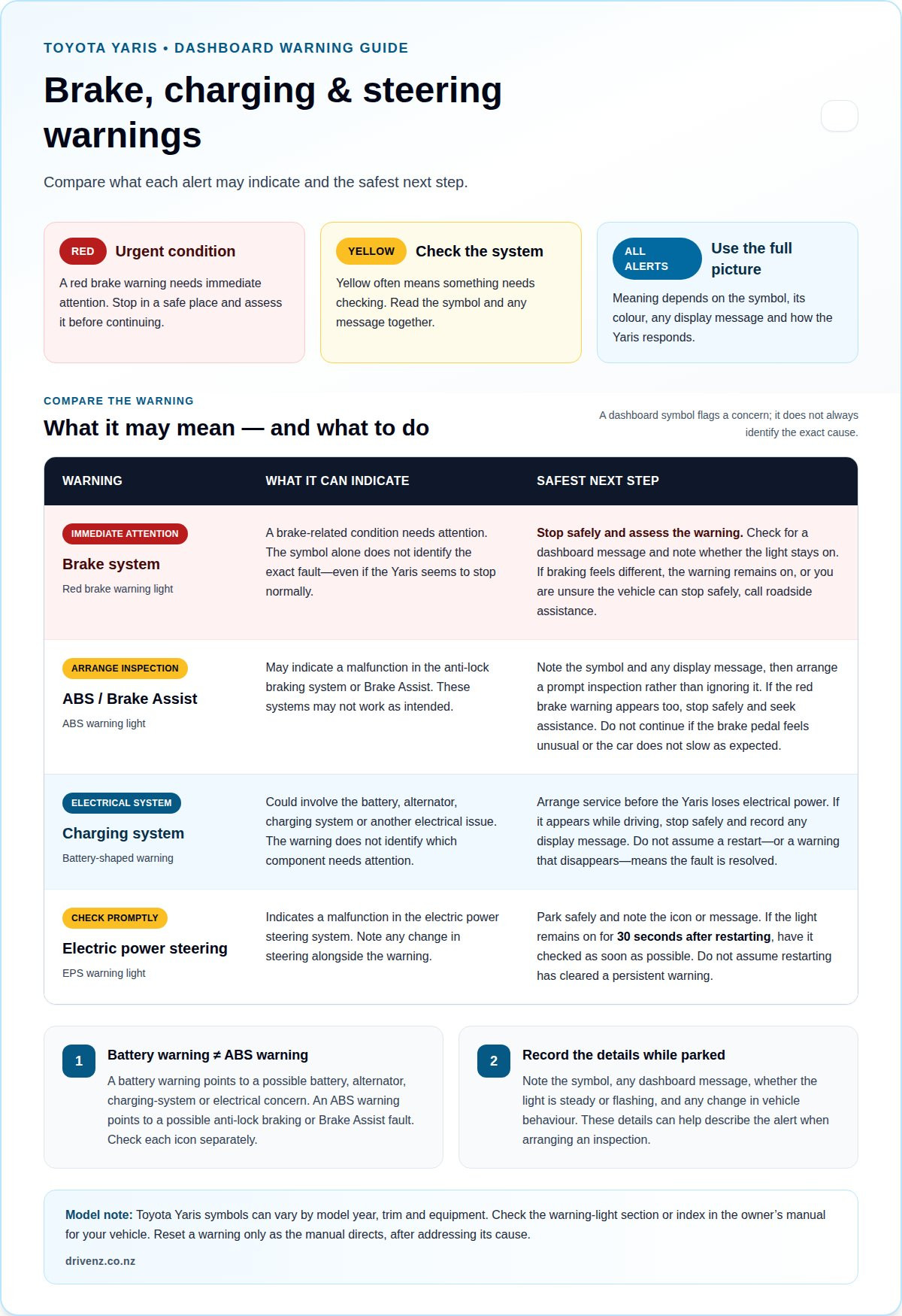
A red brake warning light on a Toyota needs immediate attention because braking is safety-critical. If it appears, stop in a safe place and assess the warning before continuing.
Brake System Warning Light
The brake system warning light signals a brake-related condition that needs attention. A red Toyota brake warning light requires immediate action, even if the Yaris still seems to stop normally. Check the dashboard for a message and note whether the light stays on. If it remains illuminated, take it seriously rather than assuming it is a harmless display issue.
For example, if a red brake symbol appears during a trip, pull over safely. Don’t continue as though the warning were only a reminder. The symbol alone doesn’t identify the exact fault, so consider it alongside any display message and changes in braking.
ABS and Brake-Assist Faults
The ABS warning light indicates a malfunction in the anti-lock braking system or Brake Assist system. ABS helps manage wheel locking during braking, while Brake Assist supports braking in an emergency. A warning can mean one of these systems may not work as intended.
Note whether the ABS light appears with the brake system warning light, and read any message on the Yaris display. These symbols flag a system concern, not its precise cause. If the red brake warning also appears, stop safely and seek assistance. A dashboard warning doesn’t prove that normal braking support remains available.
Driving With a Warning Light
Driving with a Toyota Yaris warning light on means continuing while a fault or system status remains displayed. Continue only if the warning and the car’s behaviour make it safe. A red brake warning needs immediate action: stop somewhere safe and call roadside assistance if braking feels different, the warning stays on, or you’re unsure the vehicle can stop safely.
If only the ABS warning appears, note it and arrange a prompt inspection rather than ignoring it. While parked, record the symbol and any display message. Don’t continue if the brake pedal feels unusual or the car doesn’t slow as expected. In those cases, roadside assistance is the safer next step.
Charging system and electric power steering faults
A charging-system warning points to a vehicle charging fault, while an electric power steering warning identifies an EPS fault. Note the symbol and any Toyota dashboard message to distinguish these alerts from an ABS warning.
Charging-System Warning
The charging-system warning light indicates a malfunction in the vehicle’s charging system. A battery-shaped symbol can signal more than a battery fault. The concern may involve the battery, alternator, charging system or another electrical issue.
Arrange service before the Yaris loses electrical power. If the warning appears while driving, stop safely and record any display message. The warning identifies a system problem, but it doesn’t reveal which component needs attention. Don’t assume a restart or a light that disappears means the fault is resolved.
Battery Warning and ABS Light
A Toyota battery warning can indicate a battery, alternator, charging-system or electrical concern. An ABS warning, by contrast, signals a possible fault in the anti-lock braking or Brake Assist system. These symbols refer to different systems, so a battery warning alone doesn’t identify an ABS fault.
Look at each icon separately and note whether both appear. If the battery warning is on, arrange service before electrical power is lost. If an ABS symbol also appears, record it and the accompanying dashboard message. This distinction helps you describe the alerts accurately when arranging an inspection.
Electric Power Steering Warning
The electric power steering warning light indicates a malfunction in the EPS system. If it remains on for 30 seconds after restarting, have it checked as soon as possible. Note any steering change alongside the warning, since that detail helps explain what happened.
Stop somewhere safe before recording the icon or display message. Don’t assume restarting has cleared the issue if the EPS light remains illuminated. A persistent warning needs timely attention. The exact symbol and message help distinguish steering concerns from charging or ABS alerts.
What Do Toyota Dashboard Light Colors Mean?
Toyota Yaris symbols can vary by model year, trim and equipment, so use the owner’s manual for your vehicle. Reset a warning only as the manual directs, after addressing its cause. Find the symbol guide in the manual’s warning-light section or index.
Traction and Stability Indicators
The slip indicator shows that Toyota’s vehicle stability control (VSC) is operating. A buzzer may sound while the system works, so the indicator can show active control rather than a fault.
A rear differential lock indicator shows that the lock is engaged; keep speed below 5 mph while it’s on. A low-speed four-wheel-drive indicator identifies the low-range mode for steep hills or off-road driving. Don’t use four-wheel drive on dry roads. These symbols appear only on models equipped with the relevant systems.
Lighting and Cruise Control Indicators
A green headlight indicator usually means the exterior lights are on, while a blue one usually means the high beams are active. The cruise control indicator means cruise control has been activated.
These symbols report a feature’s status, not necessarily a fault. For example, a blue high-beam icon means the beams are active; switch them off when you don’t need them. A cruise control icon means the system is on, so check the controls if that wasn’t your intention.
Tire Pressure and ABS Indicators
The tire-pressure warning indicates low tire inflation or a malfunction in the tire-pressure warning system. One or more tires may be underinflated. Check tire pressure and inspect for leaks; the symbol alone doesn’t identify which tire needs attention.
The ABS warning indicates a malfunction in the anti-lock braking or Brake Assist system. It’s different from a tire-pressure alert, even if both appear together. Note each symbol and any dashboard message, then use the matching Yaris manual to interpret the equipment-specific indicator. A warning light that remains on needs attention, not a reset that simply hides it.
Toyota dashboard warning-light colour meanings
On a Toyota dashboard, colour gives an initial clue about a symbol’s urgency or status. Read it alongside the icon, whether it’s steady or flashing, and any message on the Multi-Information Display.
A red icon signals a condition needing immediate attention, such as an open door or low engine oil pressure. The oil-pressure symbol means engine oil pressure is too low: stop safely and turn off the engine. Continuing to drive with low pressure can cause major engine damage. Treat red as a prompt to assess the warning promptly, not as a routine reminder.
A yellow icon highlights an important item, but it isn’t necessarily a warning. Toyota yellow lights generally mean something isn’t working correctly and should be checked. For example, a tire-pressure symbol can indicate low inflation or a fault in the tire-pressure warning system. Check tire pressure and look for leaks. The symbol’s colour doesn’t tell you which tire is affected.
A green Toyota indicator generally shows that a system is working correctly or is in use. For example, a green headlight icon usually means the exterior lights are on. A blue headlight icon usually indicates active high beams. These colours report feature status, so identify the icon before treating it as a fault.
The master warning light adds another useful signal: it flashes and sounds a buzzer when the master warning system detects a malfunction. Read the accompanying message on the Multi-Information Display. Also note whether a symbol stays steady or flashes; this helps distinguish a continuing alert from a changing system status.
Some red indicators are reminders with a clear action. A seatbelt reminder warns the driver or front passenger to fasten a seatbelt; a low-fuel warning means the vehicle needs refuelling. Use colour as a first clue, then identify the symbol and follow its message. Toyota icons vary by model and equipment, so confirm the exact meaning in the Yaris owner’s manual.
Drive NZ Rental Cars
Once you’ve addressed a warning-light concern, Drive NZ Rental Cars can help with the next part of your journey: choosing a practical rental vehicle. Dashboard guidance can help you understand a Yaris symbol, but a rental car isn’t a substitute for resolving a brake, charging or steering fault.
For travel around Auckland, Christchurch and beyond, choose from a Compact Hatchback, Intermediate Sedan or Compact SUV. Snow Chains are also available for hire for winter driving. These options suit different trip needs, but safety warnings must be addressed before driving.
Contact Drive NZ Rental Cars to discuss your rental needs.
Plan Your Next Drive With Confidence
Before your next trip, address any warning that could affect safe operation. Understanding what dashboard symbols mean on a Toyota Yaris can help you explain a concern clearly and decide whether to pause your driving plans.
Once the vehicle is ready, turn your attention to the journey. Choose a rental option that suits your travel plans, and keep this dashboard guidance in mind if a symbol appears along the way. A calm, informed response starts with recognising when a warning needs attention.
For help with your rental plans, contact Drive NZ Rental Cars. Take the next step at your own pace and enjoy a more confident start to your drive.
Frequently Asked Questions
Can I still drive with my engine coolant temperature light on my Toyota?
No. If the high coolant temperature warning appears, stop the Toyota in a safe place immediately. Don’t continue the trip while the warning is showing. Once stopped, check the Yaris owner’s manual for model-specific guidance and arrange help if you can’t safely continue. A temperature warning needs a prompt response, even if the engine still seems to run normally.
What do common dashboard warning lights and symbols mean on a Toyota Yaris?
They show a system status, reminder or fault, and the exact meaning depends on the icon and vehicle equipment. For instance, a seatbelt symbol reminds an occupant to buckle up, while a maintenance reminder indicates scheduled servicing. To identify an unfamiliar icon, note its shape, colour and any display message, then match those details to the Yaris owner’s manual.
Which Toyota Yaris dashboard lights are red, and which require stopping immediately?
Red icons can flag conditions needing immediate attention, including low engine oil pressure or an open door. A low oil-pressure warning requires you to stop safely and turn off the engine, because continued driving can cause major damage. A red brake-system warning also calls for immediate action. If the high coolant temperature warning appears, stop in a safe place immediately.
What does the Toyota Yaris check engine light mean, and what should I do?
A steady check engine light calls for a diagnostic to identify the issue. If it flashes, reduce speed, avoid hard acceleration and arrange prompt service. For example, if the light starts flashing while you’re travelling, ease off the accelerator rather than putting the engine under heavy load. Note any accompanying message and whether the light was steady or flashing. Because an active check engine light will also cause a vehicle to fail emissions inspections, inspection specialists such as autosmog.com recommend diagnosing and repairing underlying issues before undertaking a smog check.
What do the tire pressure, ABS, brake, and airbag warning lights mean on a Toyota Yaris?
The tire-pressure light can signal low inflation or a fault in its monitoring system; check pressures and inspect for leaks. ABS indicates a possible ABS or Brake Assist malfunction, while a red brake warning needs immediate action. On a Toyota hybrid, if the ABS or SRS airbag light fails to illuminate at system start, that safety system may be unavailable; arrange immediate dealer inspection.
What do the Toyota Yaris oil pressure, battery, and engine temperature warning lights mean?
The oil-pressure warning means engine oil pressure is too low; stop safely and turn off the engine to avoid major damage. A battery warning can point to a battery, alternator, charging-system or electrical concern, so arrange service before electrical power is lost. A high coolant temperature warning means stopping the vehicle safely immediately, rather than continuing the journey.


