

A bigger vehicle isn’t automatically the better choice for a New Zealand road trip. So, is an SUV necessary for New Zealand roads? For most main tourist routes, a standard car is enough: many highways are sealed, and an SUV isn’t a requirement for reaching primary attractions.
It’s understandable to want extra room and reassurance, especially when travelling with family, luggage or a changing itinerary. But an SUV’s body style doesn’t necessarily mean it has four-wheel drive, and road conditions can matter more than vehicle size. Narrow, winding roads, gravel access sections and winter weather call for thoughtful planning, not simply a larger car.
This guide will help you match your rental to your travel party, luggage and planned routes. You’ll learn when a compact hatchback or intermediate sedan can do the job, when a compact SUV may offer welcome space, and what to consider for alpine or winter driving, including snow chains. The aim is simple: choose a vehicle that suits your trip without hiring more car than you need.
Key Takeaways
- Is an SUV necessary for New Zealand roads? Not for every itinerary. Let your planned route and conditions guide the choice.
- Many major routes are sealed, but some access roads may have different surfaces or more challenging conditions.
- Choose between a compact hatchback, intermediate sedan and compact SUV by weighing passenger numbers, luggage and route needs.
- Plan alpine or winter sections separately from routine paved travel, and consider snow chains where conditions call for them.
- Before choosing a vehicle, map your route, count your travellers and assess your luggage to find the best fit.
Is an SUV Necessary for New Zealand Roads? Start With Your Route
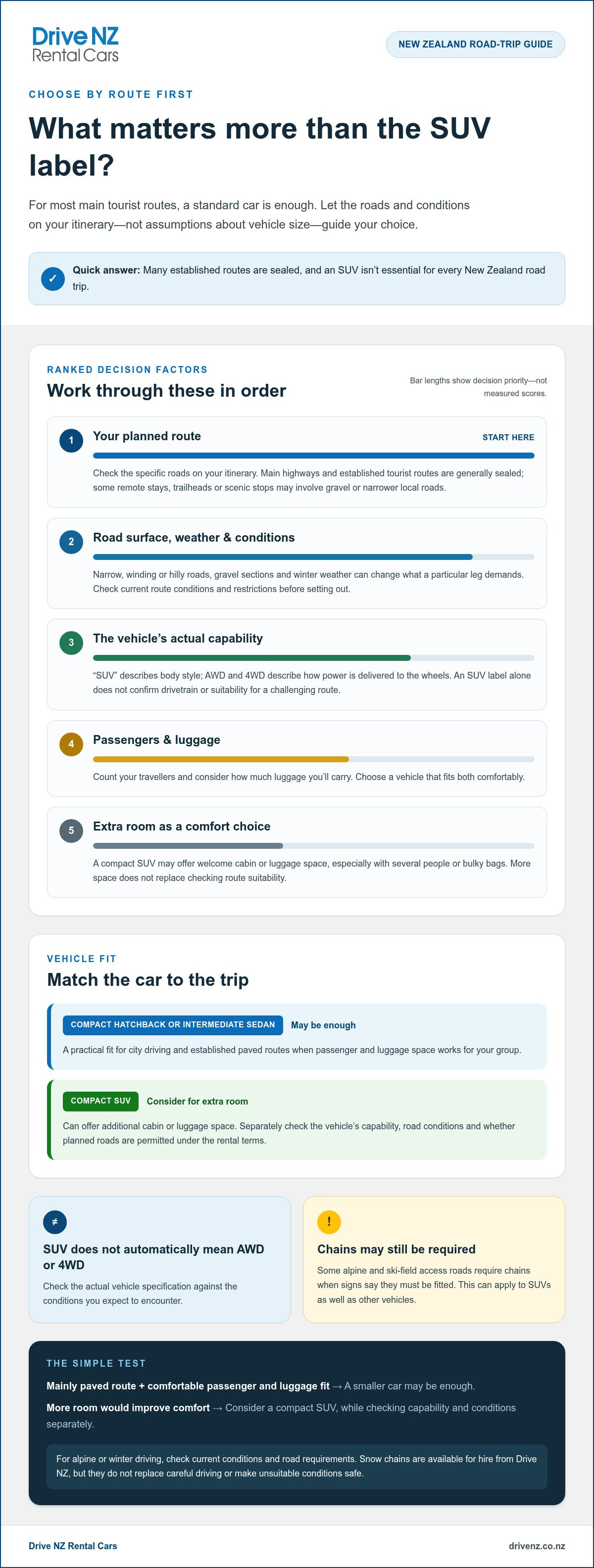
No. An SUV isn’t essential for every New Zealand road trip. If you’re asking, “is an SUV necessary for New Zealand roads?”, start with the roads and conditions on your itinerary, not an assumption that the whole country requires a larger vehicle.
Quick answer: Choose a rental for your itinerary, not assumptions about the whole country. Consider your route, expected weather, passenger numbers, luggage and the vehicle’s actual capabilities before deciding.
Many main routes are sealed, so an urban stay or a trip between established destinations may suit a smaller rental. But conditions can change from one leg to another. A narrow, winding road, a gravel access section or winter weather may affect your plans more than the vehicle’s body style. This applies whether you’re starting from Auckland or Christchurch: check the specific roads on your route rather than judging by the destination alone.
One distinction matters: “SUV” describes a type of vehicle, not proof that it has four-wheel drive. A larger shape doesn’t automatically mean extra traction or suitability for every surface. While dedicated off-road builds often rely on specialised setups like all-terrain tires and rugged rims from retailers like Platinum Wheels, standard rental SUVs are typically outfitted for everyday highway driving. Think about the specific capability your trip calls for, rather than relying on the SUV label alone.
When a smaller rental car may be enough
A compact hatchback or intermediate sedan may be a practical fit for city driving and established paved routes. Match the choice to your travel party: count the passengers, then consider how much luggage you’ll carry and how comfortably it will fit. Before setting out, review the route and road conditions, especially if your plans include remote attractions or access roads. A smaller car may suit your itinerary, but that doesn’t guarantee access to every road.
When an SUV may be worth considering
A compact SUV may be worth considering if you value additional cabin or luggage room, particularly when travelling with several people or bulky bags. Space is a comfort consideration, not a substitute for checking whether the vehicle is suited to a particular route. If your plans include alpine roads or winter travel, factor in conditions and preparation too. Snow chains are available for hire from Drive NZ, but they don’t replace careful driving or make unsuitable conditions safe.
Some alpine roads and ski-field access roads can require chains when signs indicate they must be fitted. That requirement can apply to SUVs as well as other vehicles, so choosing a larger rental doesn’t remove the need to prepare. Check current route conditions before travelling and make sure your planned roads are permitted under the rental terms, especially if any section is unsealed.
Use a simple test: if the route is mainly paved and the passenger and luggage fit is comfortable, a smaller car may be enough. If extra room would make the journey more comfortable, consider a compact SUV while separately checking the vehicle’s capability and conditions for challenging sections. The right choice fits both your people and your plan.
What New Zealand Roads Actually Demand From Your Vehicle
New Zealand’s main state highways and established tourist routes are generally sealed, so routine travel between towns and popular destinations doesn’t automatically call for an SUV. Conditions can change on a specific leg: access to a remote stay, trailhead or scenic stop may involve gravel or a narrower local road. Check the actual route rather than treating every road in the country as the same.
Outside urban areas, you may encounter roads that are narrow, winding or hilly. These are route-specific conditions, not a description of every journey. Allow time to drive at a pace that suits visibility, traffic and the road surface. Weather can also affect exposed or alpine routes. A large vehicle won’t remove the need to adjust your driving to conditions.
SUV, AWD, and 4WD are not interchangeable
An SUV describes the vehicle’s body style; AWD and 4WD describe how power is delivered to its wheels. SUVs vary, and the SUV label alone doesn’t tell you the drivetrain or establish that a vehicle is suitable for a challenging route. Before choosing, look at the actual vehicle specification and compare it with the conditions you expect to encounter. A paved-road itinerary may not need the same capability as a route with more demanding sections, where dedicated four-wheel-drive setups and expertise from specialists like Motortech 4X4 become essential.
Road surface and weather can change the decision
For ordinary sealed-road travel, route planning and safe driving may matter more than vehicle size. Gravel, alpine roads and winter travel call for closer attention to the surface, weather and any current restrictions. Some roads may have rental-agreement limits, so read the terms before including unsealed sections in your plans.
Before setting out on an affected route, check current official NZTA road and traffic information for closures, restrictions or conditions that could change your journey. In winter, pay attention to signs and local guidance about chain requirements. Snow chains can be part of preparation, but they don’t make a road safe in every condition or replace careful driving.
Good preparation also means managing fatigue and speed, not just choosing a vehicle. The Ministry of Transport’s New Zealand Annual Road Crash Statistics provides official road-safety data, including information on contributing factors such as speeding and driver fatigue. Plan breaks on longer drives and leave room in your schedule for slower conditions.
So, is an SUV necessary for New Zealand roads? The useful answer depends on the route and the actual vehicle, not the badge or body shape. Match the drivetrain and permitted road use to your plans, then factor in weather and current notices. For a straightforward paved itinerary, a compact car may suit; if you want extra space, a compact SUV is another option. You can compare compact hatchback, sedan and SUV rental options with your planned route in mind.
SUV vs Compact Car: Compare the Trade-Offs That Matter
The choice isn’t simply between “small and practical” or “large and capable.” Each vehicle category can suit a different combination of passengers, luggage, town driving and planned roads. A compact hatchback, intermediate sedan or compact SUV can all be sensible rental options, depending on what your trip asks of the vehicle.
The best fit depends on your passengers, luggage and the roads you plan to drive. Use this comparison to identify what matters most, then weigh the trade-offs against your actual itinerary.
| Consideration | Compact car | SUV |
|---|---|---|
| Space | May suit a smaller travel party with luggage that fits comfortably. | May offer more cabin or luggage room, depending on the vehicle. |
| Urban practicality | A smaller footprint can be useful for city errands and parking. | A larger body may take more room to manoeuvre or park in tight spaces. |
| Route fit | Can suit established paved routes when passenger and luggage needs are met. | May suit travellers who want extra room; the SUV label alone doesn’t determine route capability. |
| Preparation | Route, weather and road-surface checks still matter. | Route checks and suitable preparation still matter; size doesn’t replace them. |
Space, comfort, and everyday practicality
Think about how you’ll use the car each day, not just how many people it seats. Count bags as well as passengers, and consider whether luggage will stay in the vehicle between stops. Actual cabin and boot room vary by vehicle, so category names aren’t a guarantee of capacity. A compact car may be easier to place in a busy city; an SUV may appeal if extra room is a priority on longer drives.
For example, a couple with light luggage and a city-centred plan may value a compact car’s smaller footprint. A group with more bags may prefer to compare roomier options. Whichever category you choose, leave enough space for everyone and their belongings to travel comfortably.
Capability, cost, and what the SUV label does not promise
Keep vehicle category separate from drivetrain and route requirements. An SUV can have different specifications from another SUV, and its body style doesn’t prove it has AWD or 4WD. Nor does greater ride height, on its own, establish superior safety or access to every road. Compare the actual vehicle details with your route, and review road restrictions and rental terms before planning any unsealed section.
Don’t assume that every SUV costs more, handles better or suits rough roads. Those conclusions depend on the particular vehicle and conditions. A larger vehicle can’t replace current route checks, suitable equipment or careful driving. For winter travel, preparation may include snow chains where required, regardless of whether you’re considering a compact car or an SUV. Compare the whole journey: space for your group, convenience at stops and suitability for the roads you intend to take.
Choose the Right Rental for Your New Zealand Itinerary
A reliable choice starts with a simple sequence: map the route, count the travellers, assess the luggage, then check the conditions. This keeps the decision focused on what the trip actually involves, rather than choosing an SUV just because you’ll be driving in New Zealand.
- Map the route. Mark your overnight stops and planned detours. Separate ordinary paved travel between towns from mountain roads, alpine access, winter driving or unsealed sections.
- Count the travellers. Include everyone who’ll ride in the car during any part of the trip. Think about how comfortable the group will be on longer drives, not just whether everyone can take a seat.
- Assess the luggage. Consider the number and size of bags, and whether they’ll stay in the vehicle between stops. Vehicle capacity varies, so choose a category that suits your actual load.
- Check conditions. Close to departure, review current road information and access guidance for challenging sections. Weather, closures and local directions can affect the plan.
Match the vehicle to passengers and luggage
A compact hatchback may suit a smaller group travelling with a manageable amount of luggage. An intermediate sedan or compact SUV may be worth comparing if the party has more bags or values additional space. These are starting points, not capacity guarantees. Consider how the group will use the vehicle each day, including city parking, sightseeing stops and longer drives between destinations.
If you’re preparing more broadly for a self-drive trip, include the New Zealand Road Code for Tourists: The Ultimate 2026 Safety Checklist in your driving preparation. The vehicle decision is one part of the plan; understanding road rules and allowing time for the journey matter too.
Check the route and season before choosing
Look for specific alpine or mountain sections, winter access roads and unsealed stretches in your itinerary. Then check current official conditions and access information shortly before departure, since the situation can change. Don’t assume an SUV makes every road suitable or that an unsealed road is allowed under your rental terms.
For winter routes, snow chains may be relevant where road signs or directions call for them. Drive NZ offers snow chains for hire, but they’re preparation, not a substitute for safe driving or suitable conditions. If your itinerary includes a chain-controlled road, learn how to fit and use them before you need them. How to Use Snow Chains Correctly is a useful topic to include in that preparation.
Use a simple decision rule
Choose the smaller category if it fits your travellers and luggage and suits the roads and conditions you’ve checked. Consider a compact SUV if added room would make the trip more comfortable or your itinerary supports that choice. Keep drivetrain separate from body style: the SUV label doesn’t establish whether a vehicle has AWD or 4WD. Check the vehicle specification and route conditions as separate parts of the decision.
Ready to match your itinerary with a rental category? Compare rental options for your New Zealand trip.
Plan Your New Zealand Drive With the Vehicle That Fits
An SUV is an option, not a blanket requirement for New Zealand roads. The right rental suits your route, travel party and luggage while matching any specific conditions you plan to encounter. If your itinerary is mainly paved roads and your bags fit comfortably, a smaller category may be all you need. If extra room would make the journey more comfortable, a compact SUV is another practical choice.
Drive NZ offers compact hatchbacks, intermediate sedans and compact SUVs, giving you different categories to compare against your plans. UNLIMITED kilometres included can help keep a longer driving itinerary straightforward, while Free additional drivers can make sharing the driving easier for your group. 24 hour Roadside Assistance is also included.
A straightforward rental choice for different trips
Start with the shape of your trip. A compact hatchback may suit a smaller travel party with a manageable luggage load. An intermediate sedan is another category to consider, while a compact SUV may appeal if you’d value more cabin or luggage room. Actual space and vehicle capability vary, so base your choice on the specific vehicle and what you need to carry, rather than assuming every category fits every group.
Then consider the journey itself. A city-based stay, a series of paved intercity drives and an itinerary with alpine roads have different preparation needs. For any mountain or winter section, check current road information and follow local directions. Snow chains are available for hire when relevant to winter preparation, but they don’t replace safe driving or suitable road conditions.
Make the next step simple
Before booking, put your route, passenger count and luggage needs side by side. If a compact car fits the group and planned roads, there’s no need to choose a larger body style by default. If extra space is important, compare the compact SUV with the other categories. Separately consider drivetrain and road conditions: an SUV label alone doesn’t confirm AWD or 4WD, or guarantee that a vehicle is suitable for every road.
For a closer look at the available categories, the Drive NZ Rental Cars Fleet: Choosing the Perfect Vehicle for Auckland and Christchurch guide can help you compare options with your itinerary in mind. Drive NZ’s off-airport locations serve Auckland Airport and Christchurch Airport, with a free 24/7 shuttle bus. Make your final vehicle choice based on the roads you’ll actually drive, and revisit conditions close to departure if your plans include winter or alpine sections.
Compare Drive NZ rental vehicle options and choose the category that best fits your New Zealand trip.
Set Your Route, Then Choose With Confidence
Before you finalise your rental, take one last look at your itinerary as a whole. A vehicle that suits the first few days should also work for the longest drive, the people travelling with you and the bags you’ll bring. If your plans change, revisit the route and conditions rather than relying on the vehicle’s size or label to answer every question.
Let your actual journey decide. Focus on what will make your trip practical and comfortable, and avoid choosing a larger vehicle unless it meets a real need. A little planning now can make the driving portion of your holiday feel simpler from the start.
Ready to take the next step? Compare Drive NZ’s rental vehicle options for your trip and choose what fits your plans. With your route mapped and priorities clear, you can set off feeling prepared and look forward to the journey ahead.
Frequently Asked Questions
Is an SUV safer than a smaller car on New Zealand roads?
Not automatically. Safety depends on the vehicle, the driver and the conditions, so an SUV’s size or ride height alone can’t establish that it’s safer. Choose a car you can control comfortably and drive at a speed suited to the road and weather. Before setting off, adjust your seat and mirrors, make sure everyone is belted in, and plan breaks if you’re facing a long drive.
Can a compact car handle New Zealand’s main roads?
Yes, a compact car can suit travel on main roads, including routes between Auckland and other established destinations or around Christchurch. Consider the whole trip, not just the highway: city streets, accommodation access and luggage all affect practicality. If your route includes a side trip, check its surface and access conditions separately. A compact car may work well for your plans, but that doesn’t guarantee access to every road.
Is an SUV the same as a 4WD?
No. SUV refers to a vehicle category, while 4WD describes a drivetrain. AWD is another drivetrain description, and the terms don’t mean the same thing as the vehicle’s body style. For example, a vehicle can look like an SUV without being 4WD. If a route makes drivetrain relevant, read the specific vehicle details rather than relying on the category name in a rental listing.
Do I need an SUV for winter driving in New Zealand?
No, an SUV isn’t automatically required for winter travel. The route, forecast, road notices and any chain directions are more useful guides than vehicle size alone. If you’re driving near alpine areas, check conditions before departure and be prepared to change plans if the road is unsuitable. An SUV doesn’t guarantee traction or safe access in snow, ice or other challenging conditions.
Can I drive a rental car on unsealed roads in New Zealand?
Only if your rental terms permit it. An unsealed road can be restricted even if it appears passable, and insurance conditions may also apply. Before adding a gravel access road to your itinerary, read the agreement’s road-use rules and check current access information. Don’t assume that choosing an SUV makes a prohibited road permitted. If the route is restricted, plan an alternative rather than risking a breach of the rental terms.
Do I need a 4WD to travel around New Zealand?
Most visitors travelling between towns and popular destinations don’t need a 4WD. A standard car can suit a trip based on established routes, including journeys around Auckland or Christchurch. The answer may change if you’ve planned a specific demanding road, but check its condition and access rules first. Don’t choose 4WD simply because a destination sounds remote; confirm what the actual route requires and whether your rental can use it.
Are snow chains necessary for driving in New Zealand?
Not for most roads, but some alpine passes and ski-field access roads can require chains when signs or road directions say so. This can apply to any vehicle, including a 4WD. Check official updates for your route before travelling, and don’t treat chains as a reason to drive in unsafe conditions. Snow chains are available for hire from Drive NZ for trips where winter preparation calls for them.


