

You can be a confident driver at home and still face unfamiliar decisions in New Zealand, such as which way to look at a roundabout or how much room to leave a cyclist. Understanding NZ road rules for foreigners means knowing what to do in those moments, not just memorising signs. The time limit for driving on an overseas licence also depends on your arrival date: it changes from 18 months to 12 months for arrivals on or after 1 November 2026.
New Zealand’s keep-left rule, give-way priorities and varied road conditions can take adjustment, especially on narrow, winding or steep routes. A few deliberate checks can help you avoid relying on habits that don’t apply here.
This guide explains the essential rules, what to check about your licence and translation, and how to plan a realistic first drive from Auckland or Christchurch. You’ll find practical guidance for intersections, roundabouts and railway crossings, along with everyday safety rules and a checklist for getting ready. Know the basics before you set off, then leave enough time to make careful decisions along the way.
Key Takeaways
- Understanding NZ road rules for foreigners starts with driving on the left and knowing how that affects turns and joining a road.
- Follow essential safety rules, including seat-belt requirements and the ban on handheld phone use while driving.
- At intersections and roundabouts, identify the layout, read the signs and markings, and apply the correct give-way rule.
- Check your licence and documents, plan a realistic route, and consider road and weather conditions before setting off.
- For your first drive, allow time to rest, get familiar with the rental car and check current NZTA licence rules.
Understanding NZ road rules for foreigners: what feels different first?
The biggest adjustment for many visitors is driving on the left, particularly if you’re used to sitting on the right side of the road and keeping right. After a turn, at a junction or when pulling out of a parking space, pause and check your position before moving on.
Turns can feel unfamiliar because a left turn keeps you near the roadside, while a right turn crosses the path of oncoming traffic. When joining a road, traffic may approach from a direction that doesn’t match your usual routine. Take time to scan, choose your position and move only when it’s safe.
New Zealand journeys can take longer than a map suggests. Outside urban areas, roads may be narrow, winding, steep or unsealed, with few safe places to pull over. A route that looks direct may include slow sections and changing conditions, so plan around realistic driving time, not distance alone.
For your first drive, keep left, take turns slowly and allow extra time for unfamiliar roads.
Which road habits should overseas visitors reset?
Treat “keep left” as a cue to check throughout your journey, not a reminder you can tick off once. Recheck your position after turning, entering traffic or stopping. Before moving off, pause to orient yourself: Which side should your vehicle be on? Where might traffic approach from?
That pause is especially useful when you’re also reading signs, following navigation or adjusting to narrow lanes. Fatigue can make it harder to notice that you’ve drifted towards the wrong side. If you’re tired or uncertain, stop somewhere safe to rest and reset rather than relying on habit.
Can overseas visitors use their current licence?
You need a current, valid overseas car licence or a qualifying permit to drive in New Zealand. A learner permit isn’t treated as a valid licence for driving here. Carry your physical licence whenever you drive. If it isn’t in English, you must also carry an approved English translation or an International Driving Permit (IDP). An IDP doesn’t replace your original licence.
The time limit depends on when you most recently arrived in New Zealand. Under the current 2026 guidance, visitors who arrived before 1 November 2026 can drive on a valid overseas car licence for up to 18 months from their last arrival date. For arrivals on or after 1 November 2026, the period is 12 months. If your trip falls near that change, check the latest NZTA requirements, including eligibility and translation rules.
Essential New Zealand driving rules: keep left, buckle up, and stay focused
On every trip, keep left, make sure everyone is properly restrained and don’t handle a phone while driving. These rules are straightforward, but unfamiliar roads, signs and traffic flow call for extra attention. The Official New Zealand Road Code explains the rules in detail and is a useful reference before you set off.
How does left-side driving affect turns and lane position?
Keep your vehicle on the left side of the road. On a multi-lane road, use the appropriate lane for your direction and manoeuvre. After turning into a new street, check that you’re travelling on its left side rather than drifting across to the right. Recheck your position after junctions and parking stops, when familiar habits can take over.
Before moving off, consider where traffic will approach from and which lane you need. Follow the signs and lane markings, and wait until you can make the manoeuvre safely if you’re unsure. A deliberate pause to orient yourself is a practical way to avoid relying on the wrong driving habit.
What are the seat-belt and phone rules?
Everyone in a moving vehicle must wear a seat belt or use an approved child restraint. Children under 7 must be in an approved child restraint. Before starting, check that each passenger is buckled and that any child is secured in the appropriate restraint. Don’t set off until everyone is ready, even for a short trip.
Using a handheld mobile phone while driving is illegal, including when stopped at traffic lights. Don’t use a brief stop in traffic to read a message, change your route or search for an address. Set your destination before leaving. If you need to use your phone, pull over somewhere safe and stop first. Keeping your attention on the road helps you spot changing traffic and signs in time.
Remember: keep left, ensure every occupant is restrained, and leave handheld phone use until you’re safely parked. Build these habits into every journey, not just the first one, so you’re less likely to rely on familiar reflexes that don’t fit New Zealand conditions.
Keep your first route simple and give yourself time to settle into the car and local traffic. Drive NZ Rental Cars offers compact hatchbacks, intermediate sedans and compact SUVs for trips from Auckland and Christchurch. A rental car for your New Zealand trip lets you make that first drive at your own pace.
NZ intersections, roundabouts, and signs: make the right move
At a junction, don’t assume the priorities are the same as at home. Slow down, read the signs and road markings, and identify who must give way before moving. First work out which type of intersection you’re approaching, because the rules differ by layout.
Uncontrolled intersection: Give way to traffic coming from your right.
T-intersection: If you’re on the road that ends at the bottom of the “T”, give way to traffic on the continuing road.
Roundabout: As you enter, give way to traffic that will cross your path from your right.
Bus pulling out: On a road with a speed limit of 60 km/h or less, give way to a bus pulling out from a stop. This rule took effect on 1 October 2026.
How should visitors approach intersections and roundabouts?
Example, entering a roundabout: Reduce speed as you approach and check for traffic from your right that would cross your path. Give way to that traffic, then enter when there’s a safe opportunity. At an uncontrolled intersection, apply the separate rule about traffic from your right. At a T-intersection, identify which road ends. Don’t apply one layout’s priority rule to another.
Use a steady sequence: slow down, read signs and markings, check for other road users, then proceed only when permitted and safe. If you can’t tell who has priority, wait rather than making a rushed move. For official rule explanations, consult the NZTA Road Code. The New Zealand Ministry of Transport also provides government information on transport policy and safety.
What should drivers know about crossings and road markings?
Take particular care at railway crossings. Not all have active warning systems such as flashing lights or barrier arms, so don’t rely on a warning device being present. Approach attentively, look and listen for trains, and follow the crossing signs and instructions. If a train is approaching or a warning is active, stop and wait until it’s safe to continue.
Signs and markings provide instructions. A stop sign requires you to stop, while a give-way sign tells you to yield as required by the situation. Lane arrows and road lines show where to position your vehicle and which movements are permitted. Speed signs set the posted limit, but conditions may call for a slower speed. Check unfamiliar signs and crossing guidance against the current Road Code rather than relying on memory.
Understanding NZ road rules for foreigners means matching the rule to the situation and taking time to act. If you’re planning a first drive from Auckland or Christchurch, a rental car for your trip can make it easier to choose a manageable route and get familiar with the vehicle before setting off.
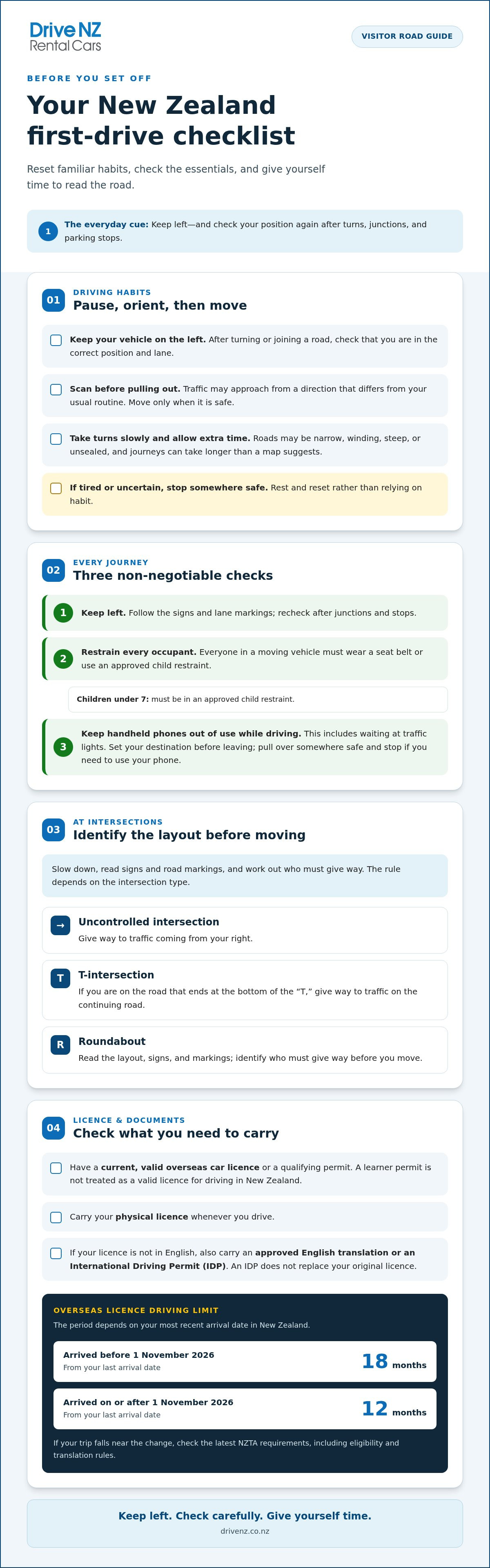
Before your first drive in New Zealand: a practical visitor checklist
Preparation can make your first journey feel more manageable. Use this checklist before setting off, then keep your plans flexible once you’re on the road.
- Confirm your licence. Check that your overseas car licence is valid for your trip dates and that you have any required English translation or International Driving Permit. Time limits depend on your arrival date, so verify current NZTA rules before you travel.
- Choose a realistic route. Look beyond the distance on the map. Roads can be narrow, winding or steep, and a direct route may take longer than expected. Choose a manageable first journey and leave room in your schedule for stops or delays.
- Check conditions before departure. Review the weather, route and current road conditions. Rain, poor visibility, busy traffic or a changing road surface can affect travel time and the speed that feels safe.
- Set yourself up to stay alert. Rest before a long drive and plan breaks rather than pushing through tiredness. If you feel drowsy, stop somewhere safe and take a break before continuing.
- Get familiar with the vehicle. Before moving off, adjust your seat and mirrors, locate the indicators, lights and wipers, and learn the gear selector and parking brake. Set your route while parked, not while navigating traffic.
How can visitors plan realistic drive times?
Distance alone is a poor guide to journey time on roads with tight bends, hills or slower sections. A route from Auckland or Christchurch that looks short on screen may still require careful driving and breaks. Check the route and current travel advisories before leaving, then allow extra time instead of scheduling activities back-to-back. Official NZTA traffic and journey-planning information can help you spot delays or disruptions.
What should drivers do when conditions change?
A posted speed limit is the maximum permitted speed, not a target for every situation. Reduce speed if rain, low visibility, traffic or the road surface makes it harder to see, stop or steer safely. If conditions worsen, leave more space and time rather than trying to keep to your original schedule. Check official NZTA updates for road closures and safety advice before setting out, and again if you need to reconsider your route.
Keep the first day simple. A shorter drive gives you time to settle into the vehicle and adjust plans if conditions change. Drive NZ has off-airport locations serving Auckland Airport and Christchurch Airport, with a free 24/7 shuttle bus to those locations. Plan your first drive with a practical rental car from Drive NZ.
Ready to drive? Check your documents and plan your rental pick-up
You’ve reviewed the key rules; now bring your licence, route and vehicle plan together before travelling. Understanding NZ road rules for foreigners also means checking that you’re legally ready to drive and giving yourself a calm start.
What should visitors have ready before collecting a car?
Use this checklist to prepare. Requirements can vary with your licence and circumstances, so check current NZTA guidance before you travel.
- Bring your physical, valid overseas car licence or qualifying permit. A learner permit isn’t valid for driving in New Zealand.
- Check whether you need an English translation or International Driving Permit. If your licence isn’t in English, NZTA requires an approved translation or IDP as well as your original licence.
- Confirm the time limit that applies to your arrival date. Under the 2026 rules, visitors who arrived before 1 November can drive on a valid overseas car licence for up to 18 months from their last arrival date. For arrivals on or after 1 November, the limit is 12 months.
- Save your planned route and review conditions. Check road information before leaving, and keep the first drive manageable rather than packing the day with several long stops.
- Allow time to get familiar with the car. Adjust your seat and mirrors, locate the main controls and make sure passengers are settled before setting off.
Licence rules can change, and eligibility may depend on your documents. Check NZTA’s current overseas-licence requirements close to your travel date, especially if you’ll arrive around the November 2026 change. Keep required documents with you while driving, not packed away where you can’t access them.
How can a simple rental plan support a smoother first drive?
Choose a straightforward first route from your arrival point, and allow time to collect the car, review the route and take a break if needed. Drive NZ serves Auckland Airport and Christchurch Airport from off-airport locations, with a free 24/7 shuttle bus to those locations.
Drive NZ rentals include UNLIMITED kilometres included and 24-hour roadside assistance. The fleet includes compact hatchbacks, intermediate sedans and compact SUVs. Keep your first outing within your comfort level, and allow time to adjust if traffic or road conditions slow the journey.
With your documents ready and a realistic route in mind, you can focus on making safe decisions from the first turn. View Drive NZ rental options for your New Zealand trip.
Make your first New Zealand drive your own
Good preparation doesn’t mean planning every kilometre. Leave room to pause, adjust your route or choose an easier drive if the day feels demanding. That flexibility helps turn understanding NZ road rules for foreigners into confident decisions behind the wheel, rather than a checklist you’re trying to remember all at once.
Before you travel, review current NZTA guidance and match your plans to your licence, arrival date and comfort level. Then choose a rental that suits your trip. Drive NZ serves visitors arriving through Auckland Airport and Christchurch Airport, with off-airport locations and a straightforward, no-frills rental experience.
Explore Drive NZ car rentals and start planning a manageable New Zealand drive. With a sensible plan and time to settle in, you can enjoy the journey at your own pace.
Frequently Asked Questions
Is it difficult for foreigners to drive in New Zealand?
Many visitors adapt by learning to keep left and preparing for roads that may be narrow, winding or steep. Understanding NZ road rules for foreigners is a useful start, but unfamiliar conditions still call for attention and sensible breaks. Avoid planning a long, tightly scheduled first day. Check current official travel and road advice, then choose a manageable route that gives you time to adjust.
Can I drive in New Zealand with my overseas licence?
Generally, you need a current, valid overseas car licence or a qualifying permit. A learner permit isn’t valid for driving here. If your licence isn’t in English, you also need an approved English translation or an International Driving Permit. Under 2026 guidance, the limit is 18 months from your last arrival for arrivals before 1 November, and 12 months for arrivals on or after that date. Check current NZTA rules for your circumstances.
Do I have to drive on the left in New Zealand?
Yes, traffic keeps to the left. This takes deliberate attention if you usually drive on the other side, especially when you start a journey, turn into a new street or rejoin traffic after stopping. Before moving off, pause and check which side you should be on and where traffic may approach from. That brief reset can help prevent familiar habits from taking over.
Are seat belts compulsory in New Zealand?
Yes, everyone in the vehicle must wear a seat belt or use an approved child restraint. As the driver, check before starting, particularly if passengers have changed seats or joined the trip. Ask everyone to buckle up and confirm they’re ready before you move, even for a short drive.
Can I use my phone while driving in New Zealand?
No. Using a mobile phone while driving is illegal, including when you’re stopped at traffic lights. Enter your destination and review the route before setting off, so you aren’t tempted to adjust it in traffic. If you need to read a message or change a setting, stop somewhere safe first. Don’t divide your attention while the road situation can change.
Why do New Zealand journeys take longer than the map suggests?
A short distance can still involve narrow, winding, steep or unsealed roads, and many routes have one lane in each direction. These conditions can mean slower progress than a map estimate suggests. Weather, traffic and breaks also affect arrival time. Plan conservatively, leave space between activities and check current route information before departure, rather than treating distance alone as a reliable guide.
Does every New Zealand railway crossing have warning lights or barriers?
No. Some railway crossings don’t have active warning systems such as lights or barriers, so their absence doesn’t mean the crossing is clear. Approach attentively and follow the signs, signals and road markings. Don’t proceed based only on a quiet track or the lack of flashing lights. For precise instructions on how to approach and cross, follow current official NZTA guidance.


