

Did you know that a standard rental car excess in New Zealand can reach as high as $7,200 in 2026? It's a daunting figure that can turn an exciting holiday into a source of constant anxiety. You've likely felt that familiar sense of dread at the rental desk, wondering if you're being pushed into a bad deal or if your credit card can even handle a massive bond hold. It's frustrating when you just want to find the best rental car excess insurance NZ provides without getting lost in a maze of CDW, LDW, and hidden administration fees.
We understand that you value transparency and efficiency. You want to know that if a stray gravel chip hits your windshield on a scenic backroad, you won't be left with a surprise bill. This guide promises to simplify the process, helping you find the perfect balance between cost-effective premiums and comprehensive protection. We'll compare rental company waivers against third-party alternatives and reveal the smartest strategies for a stress-free pickup at Auckland or Christchurch airports. You'll learn exactly how to bypass the confusion and hit the open road with total confidence.
Key Takeaways
- Understand why standard New Zealand rental excesses often range from $3,000 to $5,000 and how this impacts your credit card bond at pickup.
- Discover how to identify the best rental car excess insurance NZ offers by comparing rental company waivers with standalone travel insurance options.
- Learn to spot common policy exclusions for unique local risks, such as damage from gravel chips and unsealed road surfaces.
- Save money by using our 2026 checklist to verify if your gold or platinum credit card already includes sufficient rental vehicle cover.
- Master the strategy for calculating the true total cost of your hire to ensure a transparent, stress-free experience in Auckland or Christchurch.
Rental Car Excess Insurance in NZ: Why You Need It
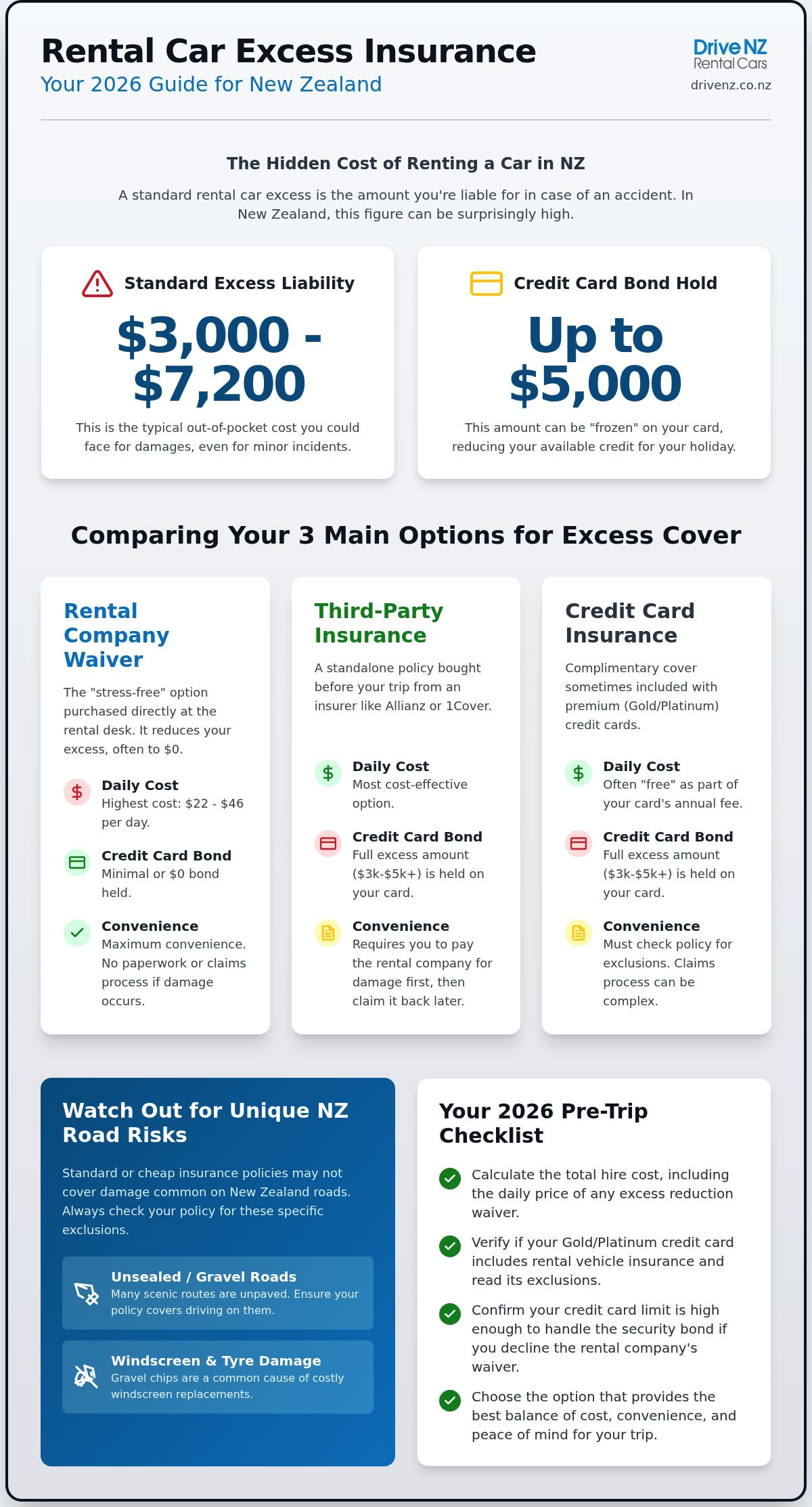
Picking up your keys in Auckland or Christchurch should be the start of an adventure, not a financial gamble. Most travelers assume their daily rental rate includes full protection, but that rate usually leaves you with a "Standard Excess." This is the out-of-pocket amount you're liable for if your vehicle is damaged or stolen. In New Zealand, this figure is significantly higher than in many other countries. It's common to see standard excesses ranging from $3,000 to $5,000 for standard vehicles like a compact hatchback or intermediate sedan.
When searching for the best rental car excess insurance NZ has to offer, you're essentially looking for a safety net that protects your travel fund from these high local liabilities. High repair costs and the logistics of shipping parts to an island nation mean rental companies must protect their assets. Identifying the best rental car excess insurance NZ provides requires looking at both the premium cost and the speed of reimbursement. This secondary policy doesn't replace basic cover; it simply ensures that if you're charged $4,000 for a dent, the insurer pays you back. It turns a potential $5,000 loss into a manageable risk of $0 or $100.
The Difference Between Insurance, Waivers, and Excess
The terminology at the rental desk can be overwhelming. To keep it simple, you'll generally encounter three layers of protection:
- Collision Damage Waiver (CDW): This is the basic cover already included in your rental price. It ensures you aren't liable for the full value of the car, only the "excess" amount.
- Excess Reduction: This is a daily fee you pay directly to the rental company. It's a "stress-free" option that lowers your liability to $0, meaning no large bond is held on your card.
- Standalone Excess Insurance: Policies from companies like Allianz or 1Cover. You pay the rental company's excess first if damage occurs, then claim that money back from your insurer later.
The Role of the Credit Card Bond
A major pain point for travelers is the credit card bond. If you choose not to buy a waiver directly from the rental desk, the company will usually "freeze" the full excess amount on your credit card as security. This "hold" can be up to $5,000. It isn't a charge, but it reduces your available credit significantly. For many, this is a dealbreaker. It limits your ability to pay for hotels, dinners, or tours during your NZ holiday. Travelers with lower credit limits often find they must choose the rental company's waiver just to keep their card usable for the rest of the trip.
Comparing the 3 Best Ways to Get Excess Cover in 2026
Choosing the right protection depends on your budget and how much credit you want to keep available for your trip. In 2026, the market offers three distinct strategies for handling New Zealand's high rental liabilities. You can opt for direct waivers from the rental provider, rely on your existing travel insurance, or purchase a tactical standalone policy from a specialist insurer.
Each method has its own set of trade-offs regarding cost, convenience, and the amount of money held on your credit card. Identifying the best rental car excess insurance NZ has available for your specific situation requires looking past the daily premium and understanding the "Rental Desk Reality" at pickup.
Rental Company Waivers: Pros and Cons
Buying a waiver directly from the company is the "Full Koru" approach to travel. The primary benefit is the immediate removal of the credit card bond. When you purchase this reduction, the rental firm usually drops the security hold to a few hundred dollars or removes it entirely. You don't have to worry about filing claims or waiting for a reimbursement check if an accident happens. The company simply handles it.
However, this convenience comes at a higher daily cost. Verified data shows these products can range from $22 to $46 per day depending on the provider. It's often the most expensive way to secure the best rental car excess insurance NZ has to offer, but it guarantees peace of mind at the desk. This is the ideal choice for short-term hires or anyone who doesn't want $5,000 of their holiday budget frozen on a credit card.
Third-Party Insurance & Travel Insurance
Third-party options are the tactical choice for savvy travelers. Companies like Allianz or 1Cover provide cover that is significantly cheaper than rental desk waivers. These policies often include extras like personal gear protection, which a standard rental waiver won't cover. You can learn more about how these costs fit into your overall trip in our How Much to Rent a Car in NZ? 2026 Pricing Guide.
The catch is that the rental company still views you as having a standard excess. They will hold a large bond on your card, sometimes exceeding $5,000. If damage occurs, you must pay the rental company out of your own pocket and then file a claim with your insurer to get reimbursed. According to Consumer Protection NZ guidelines, you should always compare the total cost of the hire plus insurance before making a final decision. If you prefer a more direct approach, you can book a vehicle with clear terms to avoid hidden surprises at the airport.
For most travelers, the decision comes down to your profile. Budget-conscious drivers with high credit limits benefit most from third-party insurance. Those prioritizing speed and simplicity during a quick weekend getaway in an intermediate sedan should stick with the rental company waiver.
NZ Road Risks: Why 'Cheap' Insurance Might Not Be Enough
New Zealand's geography creates a driving environment that differs significantly from the sprawling highways of Australia or the United States. While those regions deal with high-speed motorway incidents, NZ "Category A" risks involve winding mountain passes, narrow rural bridges, and unpredictable livestock. Finding the best rental car excess insurance NZ offers means looking for a policy that specifically accounts for these local realities rather than relying on generic global cover.
One of the most common pitfalls for international visitors is the "Gravel Road" trap. Many budget third-party policies explicitly exclude damage sustained on unsealed roads. Since many of New Zealand's most iconic trailheads and scenic lookouts are only accessible via gravel tracks, this exclusion can leave you completely unprotected when you need it most. Animal strikes are another frequent concern; hitting a wandering sheep or deer on a dark South Island road can cause extensive damage that quickly exceeds a standard $3,000 excess.
Underbody damage refers to any harm caused to the chassis, suspension, or drivetrain of the vehicle by contact with the road surface or debris, which is a frequent claim in New Zealand due to rugged terrain.
Windscreens and Tyres: The Most Common NZ Claims
Loose stone chips on State Highway 1 or the scenic routes of the South Island lead to frequent windscreen cracks. New Zealand uses a "chip seal" road surface that provides excellent grip but often results in flying stones when vehicles pass. When you're evaluating the best rental car excess insurance NZ provides, check if glass and tyres are included. Some basic policies exclude these, treating them as separate categories or maintenance issues. For a complete look at staying safe on our roads, see our Driving in New Zealand for Tourists: 2026 Safety Checklist.
Winter Driving and Snow Chain Risks
Traveling through the Southern Alps or around Christchurch in winter requires specialized gear. While we provide snow chains for alpine safety, damage caused by incorrectly fitted chains is a common area of dispute with insurers. Many standalone policies won't cover damage to the wheel arches or suspension if the chains weren't installed according to the manufacturer's instructions. At Drive NZ, we don't just provide the gear; we offer the local expertise to ensure you're confident using it. This local support is something a global insurer simply can't match from a call center overseas. It's about having a partner who understands the specific conditions you'll face between Christchurch and the mountain passes.
Selecting Your Policy: A 2026 Checklist for NZ Travelers
Finding the right coverage requires a systematic approach to ensure you aren't paying for protection you already have or leaving yourself exposed to local risks. Before you finalize your booking, run through these four essential steps. First, check your existing credit card benefits. Platinum and Gold cards often include rental vehicle excess cover as a standard feature. If your card provides this, you might already have the best rental car excess insurance NZ for your needs without spending an extra cent on premiums.
Second, compare the total daily cost. Don't just look at the vehicle rate; add the daily rental price to the daily waiver or the third-party insurance premium to see the true figure. Third, verify the bond requirement with your provider. Remember that using external insurance usually means the rental company will hold a significant security bond, often between $3,000 and $5,000, on your credit card. Finally, read the exclusions carefully. New Zealand's unique terrain means you must ensure your policy covers single-vehicle accidents, gravel road damage, and roof repairs.
Short Trip vs. Long Trip Strategy
Your length of stay should dictate your insurance strategy. For short trips of one to four days, the rental company's direct waiver is usually the most efficient choice. It removes the stress of a high bond and eliminates the need for any claim paperwork if a minor scratch occurs. While it carries a "convenience tax" in the form of a higher daily rate, the time saved at the desk is often worth it.
On longer hires of ten days or more, third-party insurance specialists become the clear winners for cost savings. The cumulative daily savings can easily exceed several hundred dollars over a two-week road trip. You just need to ensure your credit limit can handle the bond hold for the duration of your holiday. If you prefer a simple, local approach, you can explore our range of hatchbacks and SUVs to see how our transparent terms fit your travel plans.
What to Look for in the Fine Print
The best rental car excess insurance NZ offers must provide protection where it counts. Many budget policies only cover "multi-vehicle" accidents, which is a major trap. In New Zealand, many incidents are single-vehicle events, such as sliding on a loose gravel corner or hitting a stray animal. If your policy doesn't cover single-vehicle damage, you'll be left paying the full excess yourself.
You should also look for "Loss of Use" coverage. This protects you against the daily revenue the rental company loses while the vehicle is in the workshop being repaired. Finally, ensure the policy is valid for your specific vehicle category. A policy that covers a compact hatchback might have different terms or higher premiums for a compact SUV. Checking these details now prevents expensive surprises later.
Stress-Free NZ Hire: How Drive NZ Simplifies the Process
At Drive NZ, we believe that your road trip should start with clarity rather than confusion. Our philosophy is built on transparent pricing, ensuring you never face hidden insurance surprises when you arrive at the desk. We know that finding the best rental car excess insurance NZ offers is often the most stressful part of travel planning. That's why we've designed our service to be as straightforward as possible, whether you're hiring a compact hatchback for a city break or a compact SUV for a mountain adventure.
We've been operating as a local New Zealand provider since 2005, which gives us two decades of experience in helping travelers manage our country's unique road risks. We don't believe in a one-size-fits-all insurance approach. Instead, we offer the flexibility you need to feel secure. If you've done your research and found the best rental car excess insurance NZ provides via a third-party specialist, we respect that choice. We'll handle the standard excess and bond process with professional efficiency. If you prefer the absolute security of our own full waiver, we'll get that sorted in minutes without any high-pressure sales tactics.
Our fleet of compact hatchbacks, intermediate sedans, and compact SUVs is specifically chosen for New Zealand conditions. These vehicles offer the perfect balance of fuel efficiency for long drives and the reliability needed for rugged coastal roads. By focusing on these core categories, we maintain a fleet that is modern, easy to drive, and fully compatible with all major insurance and waiver products. We even provide snow chains for those heading into the Southern Alps, ensuring you have the right gear for every season.
Auckland and Christchurch Airport Efficiency
Picking up your car in Auckland or Christchurch shouldn't feel like a negotiation. Our local team understands the specific conditions of New Zealand roads, from the bustling motorways of the North Island to the quiet alpine passes near Christchurch. We prioritize efficiency during your airport pickup, moving quickly through the "excess conversation" so you can get on your way. Unlike global call centers, our staff can give you real-time advice on local conditions and how they might affect your cover. For more local tips on starting your journey right, check out our 2026 Car Rental Auckland: Local’s Guide to Stress-Free Hire.
Ready to Explore? Book Your Reliable NZ Rental
Choosing a local partner means you're supported by people who actually live and drive here. We've built our reputation on being a dependable and innovative partner for the modern traveler. We value your time and your peace of mind, which is why we keep our process logical and our terms honest. Whether you need a fuel-efficient sedan for a business trip or a spacious SUV for a family holiday, we have the local expertise to help you choose the right vehicle for your specific insurance strategy. Explore our fleet and book your NZ adventure today.
Start Your New Zealand Road Trip with Confidence
You now have the tools to navigate the high standard excesses and unique road risks that define the New Zealand driving experience. Whether you choose the immediate convenience of a rental desk waiver or the tactical savings of a standalone policy, the goal is always the same: protecting your holiday budget from unexpected costs. Identifying the best rental car excess insurance NZ offers is about matching your risk tolerance with the practicalities of your travel itinerary and your credit card limit.
As a New Zealand owned and operated business since 2005, we've optimized our fleet of hatchbacks and SUVs to handle local conditions perfectly. Our dedicated teams at Auckland and Christchurch airports are ready to help you hit the road without the stress of hidden fees or complex jargon. We prioritize your time and peace of mind, ensuring that the paperwork is the easiest part of your journey. Book your stress-free NZ rental with Drive NZ today and enjoy the peace of mind that comes with genuine local expertise. The open road is calling; make sure you're ready for every scenic mile.
Frequently Asked Questions
Is it worth getting excess insurance for a rental car in NZ?
Yes, securing additional cover is highly recommended because New Zealand's standard rental excesses typically range from $3,000 to $5,000. Without it, even a minor scrape on a compact SUV or hatchback could result in a significant financial loss. The best rental car excess insurance NZ provides ensures that your holiday budget remains protected. It allows you to explore remote areas like the West Coast or Southern Alps without the constant fear of high out-of-pocket costs.
Does travel insurance cover car rental excess in New Zealand?
Most comprehensive travel insurance policies include a specific benefit for rental vehicle excess. This usually covers you for the standard excess amount if you're involved in an accident. However, it's a reimbursement model. You must pay the rental company first and then file a claim with your insurer. Always verify that your policy limit matches the high excesses common in New Zealand to ensure you have full protection during your stay.
What is the difference between CDW and excess insurance?
Collision Damage Waiver (CDW) is the basic protection that limits your financial liability to a set amount, known as the excess. Excess insurance is a separate policy designed to cover that specific excess amount. While CDW ensures you aren't liable for the car's total value, the best rental car excess insurance NZ offers goes a step further by removing the burden of that remaining $3,000 to $5,000 liability entirely.
Are tires and windscreens typically covered by NZ excess insurance?
Coverage for glass and tires varies significantly between providers. While many standard rental waivers exclude these items, high-quality excess insurance policies often include them because they are the most frequent claims on New Zealand's chip-seal roads. When you're picking up a vehicle in Auckland or Christchurch, it's vital to check the fine print. Ensuring these common risks are covered prevents small stone chips from turning into expensive repair bills at the end of your trip.
Can I use my credit card's insurance for a rental car in NZ?
Many premium credit cards offer rental car insurance as a complimentary benefit. This can be an effective way to secure coverage, but you must read the policy wording carefully. Some cards only cover specific vehicle types or have exclusions for certain road conditions. You'll also need to decline the rental company's waiver to trigger the card's insurance, which means a large security bond will be held on your card during the hire.
What happens if I have an accident in NZ without excess insurance?
If you have an accident without any form of excess reduction or insurance, you'll be responsible for paying the full excess amount stated in your contract. The rental company will typically charge this amount to your credit card immediately after the damage is assessed. This can be a major financial blow, especially if the damage is minor but the excess is high. You'll also be liable for any associated administration fees or loss-of-use charges.
Will I still need to pay a bond if I have third-party excess insurance?
Yes, you'll still need to provide a security bond at the rental desk. Rental companies don't have a direct relationship with your third-party insurer, so they must secure the excess amount against your credit card. This bond can be several thousand dollars. If you want to avoid this large hold on your funds, your only option is to purchase an excess reduction waiver directly from the rental provider at the start of your hire.
Are gravel roads covered by most NZ rental insurance policies?
Many standard insurance policies and third-party products explicitly exclude damage that occurs on unsealed or gravel roads. This is a critical point for New Zealand travelers, as many scenic lookouts and trailheads are located at the end of gravel tracks. If you plan to explore beyond the main highways, ensure your policy specifically covers these surfaces. At Drive NZ, we understand these local risks and provide vehicles and advice suited for New Zealand's diverse terrain.


