

The bigger car isn’t automatically the better choice for a New Zealand road trip. A compact hatchback may be easier to park in town, while an intermediate sedan offers a separate boot and may suit passengers who prioritise that layout. The right answer to compact vs sedan for NZ driving depends on your itinerary, passengers and luggage, not assumptions about the roads.
Think about comfort, especially if your trip combines city stops with longer drives or you’ll be travelling with a full car. Passenger numbers, bag size, route and season all matter. For winter or alpine travel, plan for the conditions too: the vehicle category alone doesn’t determine whether a route is suitable.
This guide compares compact hatchbacks and intermediate sedans against the details of your trip, so you can choose a rental category with more confidence. You’ll see what to weigh up for urban driving, longer journeys, passengers and luggage, plus what to consider before booking for New Zealand roads. Drive NZ Rental Cars offers both categories, making it easier to match your choice to the journey ahead.
Key Takeaways
- Choose between a compact hatchback and an intermediate sedan based on your trip’s actual needs, not a general rule about New Zealand roads.
- When comparing compact vs sedan for NZ driving, weigh passenger comfort, luggage shape and loading practicality alongside the route.
- Think about where you’ll drive: urban stops, main-road touring and alpine or winter plans can call for different preparations.
- Use a simple decision sequence before booking: map your route, count passengers, assess luggage, then choose your category.
- Drive NZ offers compact hatchbacks and intermediate sedans for different travel priorities.
Compact vs Sedan for NZ Driving: What Changes on Your Trip?
Start with your itinerary, not a blanket idea of what New Zealand roads demand. The compact vs sedan for NZ driving decision is a choice between a compact hatchback and an intermediate sedan, and neither suits every trip by default. The useful question is which body style works best for your passengers, luggage, route and season.
Those factors interact. A couple travelling between city stops with soft bags has different needs from a group carrying bulky cases on a longer intercity trip. Even the same travellers might choose differently for an urban break than for a journey with extended drives. Consider the whole plan before settling on a category.
What does “compact” mean compared with an intermediate sedan?
These are rental categories, not promises of a particular make, model or set of dimensions. A compact hatchback has a rear hatch that opens to the luggage area, while an intermediate sedan has a separate boot. For general background on the category, see Compact car definition and characteristics. For your rental choice, focus on how each layout suits your actual bags and travel plans.
Which trip details should guide the choice?
Count the people travelling, consider the shape of your luggage, and think about how long you’ll spend in the car on a typical day. A few large suitcases can take up space differently from several soft bags, even with the same passenger count. Frequent city parking and stops may make a compact hatchback appealing; longer intercity drives may put passenger comfort higher on your list.
- Passengers: Consider how much room everyone needs for the length of each drive, not just the first trip from the airport.
- Luggage: Picture loading your largest bags and keeping smaller items accessible. A hatch and a separate boot work differently.
- Route: Separate time spent in towns from longer stretches between destinations. New Zealand journeys can include winding roads, so plan around the actual route rather than its label.
- Season: If your plans include alpine areas in winter, factor seasonal conditions into your route planning. A body style alone doesn’t determine whether a vehicle is suitable for those conditions.
Weigh these details together. If easy urban parking and a simpler fit for a lighter load are priorities, a compact hatchback may suit your plan. If passenger comfort and a separate luggage compartment matter more, an intermediate sedan may be a better match. Drive NZ offers both categories, so you can choose around the journey you’ve planned rather than defaulting to one type.
How Passenger Space, Luggage and Comfort Affect the Choice
Passenger numbers are only part of the space question. Two travellers with small backpacks may have very different needs from two travellers carrying large suitcases, sports equipment or other awkwardly shaped gear. Before choosing a category, picture everything you’ll bring in the car, including the bags you’ll want to reach during the journey.
Will your passengers and luggage fit comfortably?
A hatchback’s rear opening gives you access to the luggage area, while a sedan keeps its boot separate from the passenger cabin. These layouts affect how you load and organise bags, but don’t guarantee that a particular set of luggage will fit. Compare your actual items with the category you’re booking, especially if you’re travelling with bulky cases or carrying fewer passengers but plenty of gear.
Use this quick packing check before booking:
- Count passengers and bags: Include day bags and any items you’ll want to keep close at hand.
- Check the largest pieces: A wide or rigid case can be harder to arrange than several soft bags.
- Think about access: Consider whether you’ll need to retrieve items during the day, rather than loading everything just once.
- Allow for the full group: Don’t plan around an empty seat if it will be occupied for most of the trip.
If you’re uncertain, write down your luggage list and note the size of your largest pieces. Compare those details with the vehicle category you’re booking. That’s more useful than relying on a general claim that one body style always has more room.
Does the trip involve long driving days?
Space can feel more important after hours on the road. Passengers may value room to settle in, while a cramped luggage arrangement can make the cabin less comfortable to share. If your itinerary includes long intercity drives, weigh those needs alongside how often you’ll park and unload in busy towns. Short city journeys may put convenience first; a full day of driving may shift your priorities.
For broader context on vehicle categories, Drive NZ’s rental car fleet guide can help you consider how different options fit a trip. Route conditions matter too. For official guidance as you plan, refer to New Zealand driving regulations and road conditions, particularly if your journey includes unfamiliar roads.
In the compact vs sedan for NZ driving decision, let your packing list and typical drive day guide you. If a compact hatchback suits your group and bags, it may keep the choice straightforward. If the sedan layout better matches your passengers’ comfort and luggage arrangement, consider that category instead. Explore Drive NZ’s compact hatchback and intermediate sedan options with your itinerary in mind.
Compact Hatchback vs Sedan: Compare the Trade-Offs for NZ Roads
For compact vs sedan for NZ driving, focus on what you need the rental to do. A compact hatchback may suit a city-focused itinerary and lighter luggage, while an intermediate sedan may suit travellers who prioritise passenger comfort on longer drives or prefer a separate boot. These are trade-offs, not guarantees: the right fit depends on your group and plans.
| Trip factor | Compact hatchback may suit you if… | Intermediate sedan may suit you if… |
|---|---|---|
| Itinerary | Your plans centre on towns, city stops or shorter drives. | You expect longer intercity drives and want to prioritise passenger comfort. |
| Passengers | Your group is comfortable with the space offered by the category. | Your passengers would value a sedan layout during extended time in the car. |
| Luggage | Your bags are manageable through a hatch opening and suit your planned load. | You prefer luggage kept in a separate boot, and that layout works for your bags. |
| Parking | You expect frequent parking in busy areas such as central Auckland or Christchurch. | Parking is less central to your plans than passenger and luggage priorities. |
| Drive length | Most drives are short, with regular stops and time outside the car. | Longer days on the road make passenger comfort a stronger consideration. |
The core trade-off: a compact hatchback may favour everyday convenience, while an intermediate sedan may suit travellers who prefer a separate luggage area or place more weight on comfort during longer trips.
When does a compact hatchback make more sense?
Consider a compact if you’re travelling with a light load, spending much of your time in town, and expect to park regularly. In Auckland or Christchurch, parking needs may influence your preference, especially if your itinerary includes frequent stops. The category doesn’t guarantee that every compact will be easier to park in every space, so treat it as one factor in your decision, not a promise of a particular driving experience.
When might an intermediate sedan suit the itinerary?
A sedan may fit better if your passengers value comfort on longer drives or you’d rather keep luggage in a separate boot. For a South Island itinerary with extended touring between destinations, those priorities may matter more than frequent city parking. Use this South Island road trip guide as you plan your route and driving days.
Neither category determines whether a road is suitable or makes one option automatically safer. Road conditions, season and driver preparation matter separately. Check current information for your planned journey and choose a vehicle category that fits your passengers and bags. If a compact hatchback or intermediate sedan matches your priorities, explore Drive NZ rental categories for your trip.
Choose for Your NZ Route, Season and Driving Plans
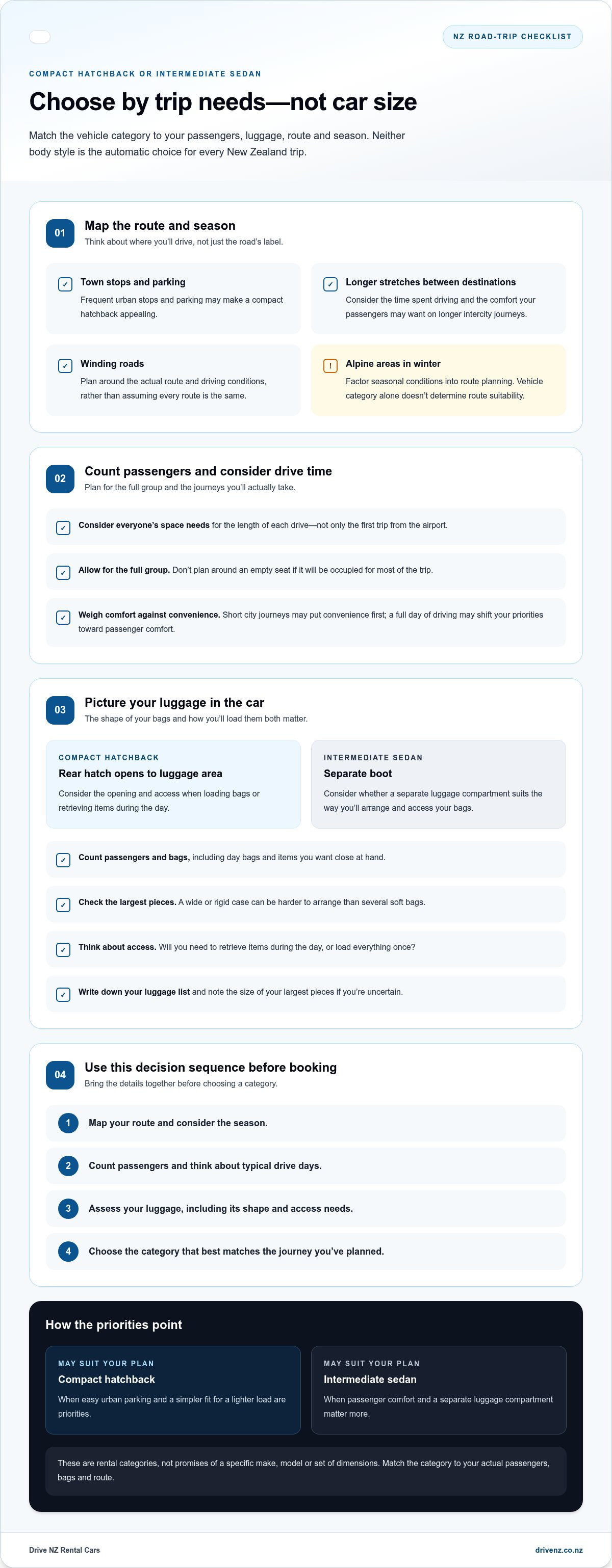
A practical way to settle the compact vs sedan for NZ driving question is to work through your itinerary in order. A city break, a main-road tour and a winter trip over alpine routes call for different planning. The vehicle category is one part of the decision; route conditions and preparation matter too.
- Map the route: Mark city days, longer intercity drives and any alpine sections. Allow for the actual roads you plan to take, not just the distance between stops.
- Count your passengers: Think about how many people will be in the car for most of the trip and how they may feel on longer drives.
- Assess your luggage: Consider the number, shape and size of your bags, and how often you’ll load or unload them.
- Choose the category: Weigh those needs together. A compact hatchback may suit city-focused travel and a lighter load; an intermediate sedan may suit plans that prioritise passenger comfort or a separate boot.
How should Auckland and Christchurch travel plans affect the choice?
If your days are mostly in Auckland or Christchurch, consider where you’ll park and how often you’ll move luggage between the car and accommodation. A compact may fit your priorities if you expect frequent urban stops, while a sedan may appeal if you’re using the city as a starting point for longer drives. Neither city automatically calls for one category. Let the mix of parking, passengers and touring days guide you.
For example, a trip with several nights in one city and short outings may put parking convenience high on your list. If you’ll leave the city soon after collecting the car and spend more time travelling between destinations, passenger comfort and luggage arrangement may carry more weight. For broader preparation, use this New Zealand tourist driving safety guidance alongside your route planning.
What changes for winter or alpine routes?
Winter travel adds a separate planning step. Before setting out, check current route conditions and relevant official guidance from Waka Kotahi, the New Zealand Transport Agency. Drive NZ offers snow chains for hire, but don’t assume chains fit every vehicle or that choosing a compact or sedan makes a route suitable. Follow current road guidance for the roads on your itinerary.
Keep the decision grounded in your actual plans: urban stops may make parking a priority, longer main-road touring may shift attention to passenger comfort, and alpine travel calls for careful checks of conditions and preparation. Once you’ve mapped the route and assessed your group and bags, choose a Drive NZ rental category that fits the journey.
Book the Drive NZ Category That Fits Your Journey
The choice is straightforward once you match the car to your priorities. A compact hatchback may suit a lighter load, city stops and a preference for a practical hatch layout. An intermediate sedan may suit travellers who place more value on a separate boot or passenger comfort during longer drives. Neither category is right for every itinerary, so use your route, group and luggage to guide the booking.
Drive NZ offers both compact hatchbacks and intermediate sedans for travel in New Zealand. Choose the category that best fits your plans without assuming a particular make, model or specification. Every rental includes UNLIMITED kilometres, and Free cancellation up to 48 hours before pick-up, giving you flexibility as your plans take shape.
What is included with a Drive NZ rental?
Drive NZ keeps its rental terms clear. These inclusions can help you understand what comes with your booking:
- NO hidden costs and NO credit card fees.
- All applicable taxes included.
- Insurance with applicable excess.
- Free additional drivers.
- 24 hour Roadside Assistance.
- UNLIMITED kilometres included and Free cancellation up to 48 hours before pick-up.
- Low or NO Bond required.
- A FREE 24/7 Shuttle Bus serving the off-airport locations.
Review the rental information as you book so you understand the terms that apply to your trip. Clear details make it easier to compare the categories based on what matters most: fit for your itinerary and the rental conditions.
How do you take the next step?
Compare the available compact hatchback and intermediate sedan categories against your passenger count, luggage and planned driving days. If your trip includes both city time and longer journeys, decide which consideration matters most across the whole itinerary rather than choosing based on one day alone.
Drive NZ’s off-airport locations serving Auckland Airport and Christchurch Airport are not inside the terminals. A FREE 24/7 Shuttle Bus operates 365 days a year to serve these locations. Include the transfer in your arrival plans, then select the category that suits your journey.
For the compact vs sedan for NZ driving decision, keep it practical: choose the hatchback if its layout and category fit your travel priorities, or the intermediate sedan if that better suits your passengers and plans. Book your Drive NZ rental with the category that matches your trip.
Make Your Booking Fit the Trip Ahead
Your rental choice can make travel days feel simpler when it reflects how you’ll actually use the car. Before booking, picture a typical day on your itinerary: where you’ll start, how much you’ll carry, who’ll be travelling with you and how long you’ll spend on the road. Use that picture to make a confident final choice, rather than trying to find one category that suits every possible journey.
Drive NZ offers compact hatchbacks and intermediate sedans, with UNLIMITED kilometres included in every rental. For airport travel, its off-airport locations serving Auckland and Christchurch airports are connected by a FREE 24/7 Shuttle Bus. These details can help you plan the booking as well as the drive.
Once you’ve settled on the category that fits your plans, take the next step and choose a Drive NZ rental car for your trip.
Frequently Asked Questions
Can a compact hatchback handle a New Zealand road trip?
Yes, a compact hatchback can suit a New Zealand road trip, particularly if you’re travelling light and plan a mix of city driving and manageable daily distances. For example, a couple staying in Auckland or Christchurch and taking shorter outings may find this category fits their plans. Before you book, consider everyone travelling, the bags you’ll carry and the roads you intend to use. Check current route conditions before setting off.
Is a sedan more comfortable than a compact for long drives?
Not for everyone. Comfort depends on the passengers, the particular vehicle and how well your luggage fits the trip. An intermediate sedan may appeal if you prefer a separate boot or its cabin arrangement, while a compact hatchback could be a better fit for a simpler itinerary with frequent city stops. Consider who’ll be in the car and how the days are planned, rather than assuming one body style feels better to every traveller.
Do I need an SUV for driving in New Zealand?
No, an SUV isn’t necessary for every New Zealand itinerary. A compact hatchback or intermediate sedan may fit your plans, while a compact SUV may suit travellers with different needs. Choose around your passengers, luggage and route, not simply a broad idea of the terrain. If your trip includes winter or alpine driving, check official road-condition guidance and prepare for the route. A larger vehicle category alone doesn’t replace that preparation.
Should I choose a compact or sedan for a South Island trip?
Either may suit a South Island trip, depending on your itinerary and travel group. Look at the actual route, how long you’ll drive each day and the luggage you’ll carry. A city stay in Christchurch followed by shorter outings has different demands from a multi-stop tour with long stretches between destinations. For alpine or winter sections, check current official updates before departure. Don’t assume the whole island calls for one particular vehicle category.
Are snow chains relevant when choosing between a compact and sedan?
They may be relevant if your winter or alpine route has conditions where chains are required or advised. Drive NZ offers snow chains for hire. Chain suitability depends on the vehicle and fitment, so follow the relevant road guidance and any instructions provided with the chains rather than assuming they will suit every car. Check conditions for your planned route before setting out. Choosing a compact hatchback or sedan doesn’t, by itself, determine whether chains are needed.
What should I compare before booking a compact or sedan rental?
Compare how many people are travelling, the bags you’ll bring, your city-driving plans and the length of your driving days. If your route includes winter or alpine sections, factor in conditions and preparation as well. Then review the rental terms so they fit your plans. With Drive NZ, UNLIMITED kilometres are included in every rental, and Free cancellation up to 48 hours before pick-up is available.


