

If you’re wondering what happens if you damage a rental car tyre in NZ, you may have to pay for the damage if it occurs while the car is in your care. A puncture, blowout or damaged rim is generally the renter’s responsibility unless it results from a clear manufacturing fault. Your rental agreement and any applicable cover affect what you may owe.
It’s understandable to worry that any tyre problem will mean a large bill. But the type of damage, how it happened and the terms of your cover all matter. Pre-existing damage is different from damage caused during your trip, so inspect the tyres before driving away and photograph any marks or wear.
This guide explains what may count as tyre damage, how cover and excess can apply, and what to do if you get a flat. You’ll also learn what to document and how to report the problem, so you can understand who may pay and what affects the charge.
Key Takeaways
- Inspect and photograph each tyre before setting off so you can record any damage that was already there.
- Read the rental agreement to understand what your cover includes, which tyre-related damage may be excluded, and how excess applies.
- If a tyre goes flat, stop safely, contact the rental company, and follow its instructions rather than driving on or attempting a repair yourself.
- Keep photos and records of the damage, its location, and your communications to help clarify what happened and how costs are assessed.
- Responsibility may depend on how the damage occurred, whether it was pre-existing or a manufacturing fault, and the terms of your cover.
1. Checking rental agreements and insurance coverage
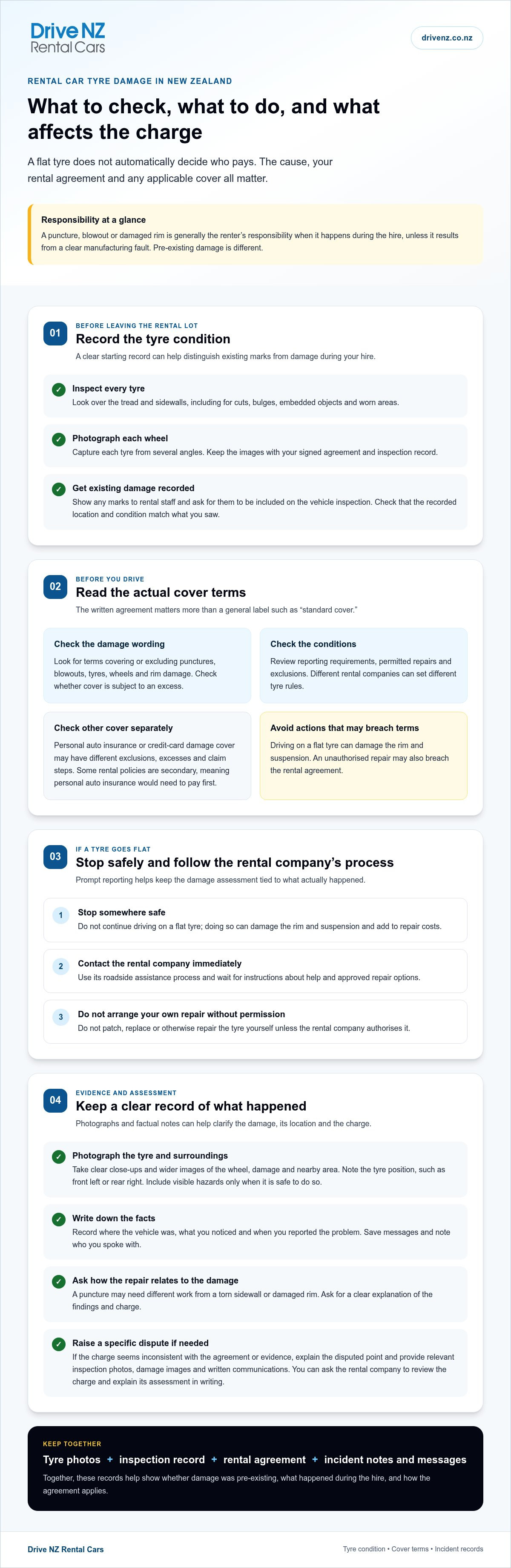
Before leaving the rental lot, inspect every tyre and photograph its tread and sidewalls. Capture each wheel from several angles, including any cuts, bulges, embedded objects or worn areas. If you spot damage, show it to the rental staff and ask them to record it on the vehicle inspection. That record helps distinguish an existing mark from damage that occurs during your hire.
Check the agreement’s damage section, insurance terms, exclusions and excess before driving. Look for wording about punctures, blowouts, tyres, wheels and rim damage. A policy may cover some vehicle damage while excluding tyre repairs, or cover them subject to an excess. The exact wording matters more than a general description such as “standard cover.”
Rental agreements set different conditions, so tyre rules can vary between New Zealand rental companies. Compare the clauses for tyre damage, excess, reporting and permitted repairs rather than assuming one company’s terms apply elsewhere. An agreement that excludes tyre damage can lead to a different outcome from one that includes it under vehicle damage cover.
What does rental car insurance in New Zealand cover for tyre damage? Your rental agreement determines whether punctures, blowouts or rim damage are covered, excluded or subject to an excess. Many rental-car insurance policies are secondary, meaning a renter’s personal auto insurance would need to pay first.
Check whether the cover applies to the tyre itself, not just other vehicle damage. Note whether the agreement distinguishes accidental damage from wear, and whether a damaged rim affects the assessment. If you rely on personal auto insurance or credit-card damage cover, read those terms too. They may have different exclusions, excesses and claim steps from the rental agreement.
Cover may be affected if you breach the agreement’s conditions. For example, driving on a flat tyre can damage the rim and suspension, while attempting an unauthorised repair may breach the rental terms. Follow the company’s reporting and repair instructions. Keep the relevant clause and contact details handy so you can act promptly if a tyre problem arises.
Keep a copy of the signed agreement and inspection record with your photos. If the paperwork notes tyre damage, make sure the location and condition match what you observed. Whether you have a Compact Hatchback or Compact SUV, inspect every tyre and check the written cover terms.
2. Who Pays for a Flat Tire on a Rental Car?
A flat tyre doesn’t automatically determine who pays. Damage that happens while the vehicle is in your possession is generally the renter’s responsibility. The cause, rental agreement and applicable cover help determine the final charge. A puncture, blowout or rim damage is generally the renter’s responsibility unless it results from a clear manufacturing fault.
Act promptly when you discover a flat. Stop somewhere safe and contact the rental company immediately. Don’t continue driving, because that can damage the rim and suspension and add to repair costs. A problem that might have needed only tyre attention can lead to wider vehicle repairs if the wheel or suspension is also affected.
Wait for instructions before arranging help. Follow the rental company’s roadside assistance process and use an approved repair option. Don’t try to patch, replace or otherwise repair the tyre yourself without permission. An unauthorised repair could breach the rental agreement and create extra costs, even if you’re trying to get back on the road quickly.
The assessment should connect the observed damage with the repair needed. A puncture may require different work from a torn sidewall or damaged rim. Ask for a clear explanation of the findings and how they relate to the charge. Keep your tyre photos, incident details and rental paperwork together so you can compare the assessment with what happened.
Can you dispute a rental car tyre damage charge in New Zealand? Yes. You can raise a dispute with the rental company if the charge seems inconsistent with the agreement or evidence. Explain the specific issue and provide relevant inspection photos, damage images and written communications.
Keep your account factual. Note where the vehicle was, what you noticed and when you reported the flat. Save messages and record the names of people you speak with. If the car already had damage at collection, compare your evidence with the original inspection record. If the damage followed an impact, describe that clearly rather than guessing about the cause.
If the company’s explanation doesn’t address your evidence, ask it to review the charge and explain its assessment in writing. Focus on the disputed point, such as whether the damage was pre-existing, whether the repair matches the observed damage, or whether the agreement applies cover. For a future trip, you can review rental car options while planning your vehicle needs.
3. Documenting damage and reporting incidents
If a rental tyre is damaged, stop somewhere safe, photograph the damage and surrounding area, then contact the rental company immediately. Don’t drive on a flat tyre or arrange your own repair before receiving instructions. Record what happened while the details are fresh.
Take clear photos from several angles, including the full wheel and close-ups of cuts, punctures, bulges or rim damage. Note the tyre’s position on the car, such as front left or rear right. A wider image showing the vehicle and nearby road features can help connect the damage to its location.
Photograph the surroundings as well as the tyre. Include visible hazards, such as a pothole, kerb or debris, and show where you stopped if it’s safe. Don’t put yourself in danger to get an image. If traffic or weather makes photography unsafe, move to safety first and explain why you couldn’t capture the scene.
What should you do immediately if you damage a rental car tyre in NZ? Stop safely, contact the rental company and follow its instructions. Photograph the tyre and surrounding area, then note the time, location and events leading to the damage.
Write a brief timeline while you remember the sequence. Note when you last saw the tyre intact, when you noticed the problem and when you reported it. Describe what you observed without guessing at the cause. For example, write “rear right tyre flat after stopping beside the road,” rather than claiming it was punctured by an object you didn’t see.
Keep a record of each conversation with the rental company. Note the time, staff member’s name, instructions and any reference number. Save messages and emails with your photos. If roadside assistance attends, record when it arrived and what action it took, such as changing the wheel or arranging a tow.
Before the vehicle is moved or repaired, follow the rental company’s directions for documenting its condition. Don’t remove an embedded object or alter the tyre yourself. If an approved repairer handles the vehicle, keep any paperwork they provide. These records can help show what was inspected and what work was completed.
At return, ask the rental staff to record the tyre’s condition and incident details on the inspection form. Keep a copy or photograph the completed record. Compare it with your original images and incident notes. If a later assessment differs from what you documented, your dated photos, timeline and written communications give you a clear basis for asking questions.
4. Rental bond and excess
A rental bond and an excess are related, but they serve different purposes. The bond is security held for the hire, while the excess is the amount you may have to contribute for covered damage. Check your agreement to see how the bond is held, when it may be used and how tyre damage is treated.
A bond isn’t automatically the final repair bill. If a tyre is damaged, the rental company assesses it and applies the agreement’s terms. The excess may limit your contribution for covered damage, but an exclusion can affect whether that limit applies. Read the tyre and wheel clauses alongside the excess section, not in isolation.
The amount held as a bond and the amount charged for damage can differ. That example concerns a windscreen, not a tyre. It shows why the bond amount alone doesn’t establish what you’ll owe for tyre damage.
For a tyre claim, compare the assessment with the agreement before accepting a deduction. Ask what damage was found, what repair or replacement was required, and how the excess was applied. A puncture, sidewall tear or rim damage may require different work. The cause and cover terms also affect the calculation.
Keep the paperwork together. Save the rental agreement, bond record, inspection notes, damage photos, repair assessment and any charge notice. Match the dates and details across those records. If the bond is used toward a charge, ask for an itemised explanation showing the amount applied and any remaining balance.
If the assessed charge is lower than the bond, the unused amount is handled under the agreement’s bond-release process. If the charge is higher, the agreement and cover terms explain how the balance is assessed. Don’t assume the bond sets a maximum liability. Check whether that limit is linked to the excess or specific cover.
Before signing the return paperwork, read any tyre-damage entry and keep a copy. If a charge seems inconsistent with the inspection photos or stated excess, raise the specific discrepancy in writing. For example, point to a documented pre-existing mark or ask how a tyre exclusion affects the amount retained. A clear record makes the calculation easier to follow.
5. Who may pay for rental-car tyre damage
Payment depends on who had the car, what caused the damage and what the agreement covers. If damage happens while the vehicle is in your possession, you’re generally responsible. But responsibility can change if the tyre was already damaged, a manufacturing fault caused the problem or applicable cover responds.
A puncture, blowout or damaged rim is generally the renter’s responsibility unless it results from a clear manufacturing fault. The type of damage alone doesn’t determine who pays. The assessment also considers how it happened and whether the rental agreement excludes tyres or applies an excess.
For example, a tyre was ripped after a driver ran a wheel onto a kerb. In one reported case, the rental company made no surcharge when the car was returned. That example shows a charge isn’t automatic in every situation, but it doesn’t establish a general rule. The company’s assessment and rental terms still matter.
If the damage existed before collection, you may have evidence that you shouldn’t be charged. An inspection note or timestamped photo can help show the tyre’s condition at pickup. If a clear manufacturing fault caused the damage, you may not be responsible under the stated exception. The cause needs to match the evidence and assessment.
Cover can also affect who ultimately pays. The rental company may assess the damage under its agreement, while eligible personal auto insurance or credit-card cover may respond under separate terms. Many rental-car insurance policies are secondary, meaning a renter’s personal auto insurance would need to pay first. Check the rental agreement and relevant policy for exclusions, claim steps and excess.
Responsibility may become less clear if you drive on a flat tyre. Continuing can damage the rim or suspension, adding harm beyond the original puncture. Depending on the agreement and evidence, you may be assessed for that additional damage. Contact the rental company immediately, stop driving and follow its instructions before arranging repairs.
To understand who may pay, compare the pickup inspection, incident photos, reported cause, repair assessment and relevant cover terms. If those records show pre-existing damage or a manufacturing fault, explain the connection in writing. If the evidence points to damage during your hire, ask how the agreement applies and whether cover reduces your share.
Planning a New Zealand trip? Plan your rental car journey with time to review tyre cover and reporting steps before setting off.
Drive NZ Rental Cars: Compact Hatchback
Drive NZ Rental Cars offers a Compact Hatchback for travellers planning a practical New Zealand road trip, including journeys from Auckland or Christchurch. Choose a vehicle suited to your route and luggage needs, then review the rental agreement’s tyre damage, reporting and excess terms before setting off. Knowing where to find those details helps you act quickly if a tyre problem interrupts your trip.
Drive NZ Rental Cars also offers an Intermediate Sedan and Compact SUV, as well as snow chains for hire for winter driving. These options can help you plan for your vehicle and equipment needs in Auckland, Christchurch and beyond. Before setting off, inspect the tyres, understand your cover and report any damage promptly.
Visit drivenz.co.nz to explore your rental options or contact Drive NZ Rental Cars.
Plan your next New Zealand drive with confidence
Understanding what happens if you damage a rental car tyre in NZ can help you prepare for your next trip. Choose a vehicle suited to your itinerary, allow time to read the rental terms and keep key documents easy to access while travelling. A little preparation can make it easier to respond calmly if plans change on the road.
Drive NZ Rental Cars offers a Compact Hatchback, Intermediate Sedan and Compact SUV, giving you different vehicle types to consider for your journey from Auckland or Christchurch. Choose one that fits your travel plans, then review the rental details before departure so you know how to report a tyre issue.
Contact Drive NZ Rental Cars to discuss your rental needs and take the next step towards your New Zealand trip. With a suitable vehicle and a clear plan, you can focus on enjoying the drive.
Frequently Asked Questions
What counts as damage?
Damage includes physical harm to a tyre or wheel, such as a puncture, blowout, sidewall tear or bent rim. A mark documented before collection is different from damage first found during the hire. Compare the tyre’s condition with the pickup inspection record and photos. This helps distinguish existing damage from a new incident, and visible marks from problems that need repair.
What happens if I damage a rental car?
If you’re asking what happens if you damage a rental car tyre in NZ, the rental company assesses the damage against your agreement and any cover attached to the hire. It may arrange an inspection or repair, then apply relevant exclusions and excess. Tyre and rim damage may be assessed as separate repair needs. Keep the assessment and charge details so you can see how each item relates to the incident.
What if a tyre blows?
Stop as soon as it’s safe, switch on your hazard lights and keep clear of moving traffic. Don’t continue to the next town on a blown tyre, even if the car still moves. Contact the rental company and follow its roadside instructions. A blowout can affect the wheel as well as the tyre, so explain whether the car pulled, struck something or developed other noticeable damage.
What if the damage wasn’t your fault?
Explain what happened and provide evidence to support your account. For example, a tyre issue caused by a manufacturing fault is treated differently from damage caused by an impact during the hire. The rental company assesses the cause and the agreement’s terms. Collection photos, a clear timeline and any repair findings can help explain why you believe the charge shouldn’t apply.
What if you have extra insurance?
Extra cover may reduce what you pay only if its terms include the specific tyre damage and circumstances. Read the policy for tyre and rim exclusions, excess, claim deadlines and required evidence. Personal auto insurance may be secondary, meaning it needs to pay after other applicable cover. Credit-card damage cover also has its own eligibility rules, so check which payment method and documents it requires.
When is damage NOT covered?
Damage may fall outside cover if the agreement excludes tyres or rims, or if you don’t follow its reporting and repair process. For example, arranging an unauthorised repair can breach rental conditions. Driving on a flat tyre can also cause additional rim or suspension damage. Separate the original tyre problem from any later damage, and compare each item with the agreement’s exclusions.
Who Pays for a Flat Tire on a Rental Car?
The renter is generally responsible for a flat tyre that occurs during the hire, unless it results from a clear manufacturing fault. To understand what happens if you damage a rental car tyre in NZ, consider the agreement and applicable cover alongside the cause. An impact may damage both tyre and wheel, while a documented pre-existing defect changes the assessment. Evidence and repair findings help distinguish these situations.
Are tyres and windscreen damage excluded from rental car insurance in NZ?
Tyre and windscreen cover aren’t automatically the same. Rental agreements may treat them separately, and tyre damage can be excluded or subject to specific terms. A windscreen repair example doesn’t prove that tyre damage is covered or that windscreen damage is excluded. Read both clauses in your agreement and identify whether each has its own excess, exclusion or reporting requirement.


