

The most confidence-boosting car for driving in Auckland is one that feels easy to place on narrow streets and simple to park, while remaining comfortable on motorways and in wet weather. A manageable size, clear visibility and helpful parking features can make city driving feel less demanding.
It’s understandable to want a car that feels reassuring in busy traffic, at tight intersections and when parking. The right choice depends on where you’ll drive and what you find challenging. This guide explains what to look for in a confidence boosting car for driving in Auckland, including visibility, parking and a composed feel on motorways and in the rain. You’ll learn how to compare vehicle types and decide which features matter for your trip, so you can choose a practical option without feeling overwhelmed.
Key Takeaways
- Choose a vehicle size that feels manageable for Auckland streets and parking, and consider visibility when judging how easy it is to position.
- Think about whether an automatic or manual transmission will help you focus on traffic, intersections and road positioning.
- For greater confidence, practise parking and intersection decisions, then build up to motorway and wet-weather driving at a comfortable pace.
- Compare a Compact Hatchback, Intermediate Sedan and Compact SUV against your trip needs to find a practical vehicle fit.
City driving and parking skills
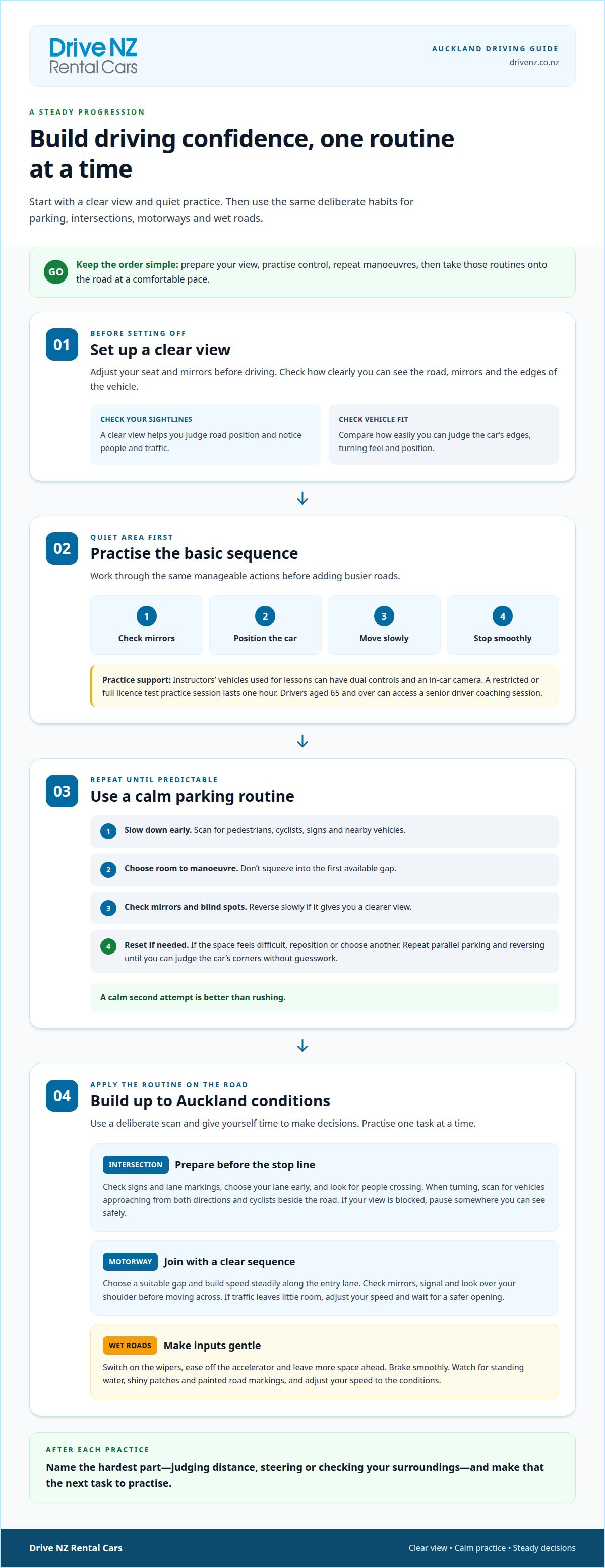
Auckland city driving means managing traffic, turns, pedestrians and parking in quick succession. A car that feels easy to position can make these tasks simpler. Before choosing a vehicle, sit in the driver’s seat and check how clearly you can see the road, mirrors and vehicle edges. A compact shape may feel easier to judge on a narrow street, but your comfort behind the wheel matters just as much.
Use a consistent routine when approaching a parking space. Slow down early and scan for pedestrians, cyclists, signs and nearby vehicles. Choose a space with room to manoeuvre instead of squeezing into the first gap. Check your mirrors and blind spots before moving, then reverse slowly if that gives you a clearer view. If the space feels difficult, reset your position or choose another. A calm second attempt is better than rushing.
Visibility matters at intersections, too. Before turning, check road markings, crossing pedestrians and traffic approaching from both directions. Adjust your seat and mirrors before setting off to help keep your view clear. When parked beside a busy road, look for passing cyclists and vehicles before opening a door. These habits give you more information to make decisions, especially on crowded streets.
Practice can turn unfamiliar manoeuvres into a predictable sequence. Choose a quiet area first, then work through mirror checks, positioning, slow movement and stopping. Repeat parallel parking and reversing into a space until you can judge the car’s corners without guesswork. Instructors’ vehicles used for lessons can have dual controls and an in-car camera, which can support structured practice. A restricted or full licence test practice session lasts one hour. Drivers aged 65 and over can access a senior driver coaching session.
- For parking: prioritise a space with enough room to enter and leave calmly.
- For intersections: set your position early and scan for people and traffic.
- For vehicle choice: compare sightlines, turning feel and how easily you judge the car’s edges.
After practising a parking manoeuvre, note what felt hardest: judging distance, steering or checking your surroundings. Use that to decide what to practise next. If tight spaces are challenging, work on slow manoeuvres. If visibility is difficult, adjust your seat and mirrors before driving. Focusing on one specific task at a time can build confidence without feeling overwhelming.
Are automatic cars easier for learner drivers in Auckland?
An automatic can feel simpler for a learner because it removes clutch control and manual gear changes. That leaves one less task to coordinate while watching Auckland traffic, signals and road position. In stop-start traffic, for example, you can focus on leaving space and responding smoothly rather than changing gears.
An automatic still takes practice. You need to manage speed, braking, steering, mirrors and observation. Learn the gear selector, how the car responds when moving off and how its brakes feel. While parked, check the controls and adjust the seat and mirrors. Then practise starting, stopping and making low-speed turns in a quiet area.
A manual may suit someone who wants to learn clutch control and gear selection. These skills require coordination between the clutch, accelerator and gear lever. Practise in a calm setting before adding busier roads. The best transmission is the one that supports your goals and feels manageable on real journeys, not simply the one that seems easier in theory.
Use this short comparison to guide the choice:
- Automatic: fewer gear-related actions can leave more attention for traffic and road decisions.
- Manual: clutch and gear practice builds familiarity with those controls, but adds tasks to coordinate.
- Either type: a familiar seating position, clear view of controls and consistent practice help build useful routines.
Try the transmission in situations you expect to encounter. For Auckland journeys, choose a practice route with a quiet street, a controlled intersection and changing traffic flow. Notice whether gear changes distract you or whether you’d prefer to learn manual control from the start. After driving, identify one task to practise next, such as smoother stops or steady changes in speed.
Consistency matters more than switching between unfamiliar controls. Use the same transmission during practice when possible, and give yourself time to learn how that specific car responds. If an automatic helps you concentrate on observation, it may be a practical fit. If manual control is part of your learning goal, choose practice that builds those skills gradually. Explore Auckland driving options as you consider which kind of car suits your plans.
With confidence
Confidence comes from knowing what to do in specific Auckland situations. Before joining a motorway, choose a suitable gap and build speed steadily along the entry lane. Check your mirrors, signal and look over your shoulder before moving across. If traffic leaves little room, adjust your speed and wait for a safer opening. Following a familiar sequence gives each decision a clear order.
Rain can reduce visibility through the windscreen and make roads slippery. Switch on the wipers, ease off the accelerator and leave more space ahead. Brake smoothly instead of waiting until the last moment. Watch for standing water, shiny patches and painted road markings, and adjust your speed to the conditions. These steps help you steer and brake smoothly.
At an Auckland intersection, prepare before reaching the stop line. Check signs and lane markings, choose your lane early and look for people crossing. When turning, scan for vehicles approaching from both directions and cyclists beside the road. If your view is blocked, pause somewhere you can see safely. A deliberate scan helps you avoid rushed decisions.
- Motorway entry: check mirrors, signal, assess the gap and merge smoothly.
- Wet roads: reduce speed, increase space ahead and brake gently.
- Intersections: select your lane early and scan for traffic and pedestrians.
- Unexpected situations: ease off, reassess and choose a safe response.
Build confidence by practising one demanding situation at a time. Drive a familiar route in light rain before adding unfamiliar turns, for example. On a motorway, focus on joining and leaving safely before tackling a longer journey. After each drive, note what felt clear and what needs practice. That reflection gives you a useful plan for your next trip.
A predictable car can help you make calmer decisions. Notice whether the seating position gives you a useful view, the controls feel straightforward and you can judge the vehicle’s movement comfortably. During a short drive, pay attention to how it accelerates, brakes and steers. These impressions can help you choose a vehicle that suits your needs, rather than relying on appearance alone.
Put the steps into practice on your next Auckland journey. Plan your Auckland drive around familiar roads first, then add a motorway merge, a wet-weather trip or a complex intersection as you feel ready.
Drive NZ Rental Cars: Compact Hatchback
Drive NZ Rental Cars offers a Compact Hatchback for travellers looking for a practical option for Auckland trips. When comparing vehicle types, consider your itinerary, how much space you need and which driving situations you expect. A Compact Hatchback may suit a city-focused plan, while an Intermediate Sedan or Compact SUV offers another category to consider. Choose for your trip, rather than assuming one type suits every driver.
For winter travel beyond the city, Drive NZ also offers Snow Chains for hire. Consider your route and whether snow chains are appropriate for the conditions. Matching your vehicle category and equipment to your plans can help you prepare for city streets, parking and journeys farther afield.
Visit drivenz.co.nz to explore the available options.
Make your next Auckland drive your own
Choosing a confidence boosting car for driving in Auckland starts with matching the vehicle to your actual plans. Consider who’s travelling, what you’ll carry and whether your route stays in the city or extends farther. Those details can help narrow your choice without letting extra features distract from what matters to you.
Drive NZ Rental Cars offers a Compact Hatchback, an Intermediate Sedan and a Compact SUV. Consider which category is most practical for your journey, then choose the option that fits your travel needs. You can also plan a familiar first drive before exploring busier routes, giving yourself time to settle into the vehicle and your surroundings.
A clear next step can make planning easier. Contact Drive NZ Rental Cars to discuss your Auckland car rental, then set out with a plan that feels manageable. Each trip is an opportunity to build familiarity and enjoy more confidence on the road.
Frequently Asked Questions
What features make a car confidence-boosting for driving in Auckland?
Clear sightlines, accessible controls and a natural-feeling driving position can make a car easier to manage. Before setting off, adjust the seat and mirrors, then check whether you can judge the car’s edges from the driver’s seat. While parked, locate the lights, wipers and gear selector so you won’t need to search for them in traffic.
Which cars have the best visibility, parking sensors, and reversing cameras for city driving?
Look for a driving position where the mirrors and windows give you a useful view around the vehicle. Parking sensors and reversing cameras can provide extra information, but features vary by vehicle. If you use these aids, stay aware of your surroundings and check your mirrors and directly around the car, too. This is especially useful when reversing slowly into a tight space.
What Auckland driving conditions should nervous drivers consider, such as motorways, hills, and parallel parking?
Consider the situations on your route and practise them separately. For a motorway trip, learn the entry and exit points before setting off. On a hill, focus on smooth control when moving off and slowing down. For parallel parking, choose a quiet street and practise positioning and reversing at low speed. This helps you get familiar with each task before combining them on a busy journey.


