

Buying a cheap car can become more cost-effective than renting when your New Zealand trip lasts more than a couple of months, while a rental avoids buying and reselling for a shorter stay. On the market, car rental prices typically range from US$21 to US$99 per day, with a median of about US$55. The cost of renting a car for a month versus buying a cheap car in NZ depends on how long you need a vehicle and the extra costs and effort of ownership.
It’s easy to focus on the rental rate or a car’s purchase price, but neither tells the whole story. This guide covers typical daily, weekly and monthly rental costs in New Zealand, then compares them with the costs of owning a cheap car, including registration, warranting, insurance, repairs and resale. You’ll also see how trip length and the flexibility you need can shape the decision, making it easier to compare the overall commitment, not just the upfront cost.
Key Takeaways
- Compare daily, weekly and monthly rental rates, since the vehicle type and rental period can change the total.
- Look beyond a cheap car’s purchase price: registration, warranting, insurance and repairs also affect ownership costs.
- Weigh how long you need a car against the time and effort involved in buying and reselling one.
- Use your trip length and preferred vehicle size to decide which option is the more practical fit.
Average monthly, weekly and daily rental costs in New Zealand
Rental prices vary across New Zealand, so compare the total for your dates and vehicle category, not just a daily quote. Season and fuel use also affect your budget.
Rental Costs by Duration
A monthly rate can make a longer rental easier to budget, while daily pricing may suit a brief stay. To compare renting with buying, weigh the full rental cost against the costs and effort of owning a car for the same period.
Rental Costs by Vehicle Type
These are different vehicle categories, not prices for the same rental. Match the vehicle type to your trip, then compare equivalent dates and rental terms. A compact car and an SUV, for example, can have different totals for the same rental period.
Season can affect the comparison. Rental prices are especially high during summer, from December to February. Queenstown’s winter ski rush can also affect planning, so set your travel dates before comparing seasonal rentals.
Fuel adds to the cost of any vehicle. Estimate fuel use based on your planned distance and chosen vehicle. Longer drives make fuel a larger part of your budget, so include it alongside the rental total.
Factors to consider when comparing renting with buying
Compare your full trip plan, not just vehicle costs. Your route, accommodation needs, licence conditions and the tasks involved in owning a car can all affect which option suits you.
Driving and Vehicle Choice
For a road trip, include route-related costs when weighing your options. A campervan can combine transport and accommodation, while a car suits trips with separate places to stay.
Compare the purchase price with your travel plans, accommodation budget and likely resale effort, rather than assuming a campervan is always cheaper.
Cheap-Car Ownership Costs
Budget for registration, warranting, insurance and maintenance when assessing a used car. Repairs can cost hundreds to thousands of dollars, so inspect the vehicle’s condition and service history before buying. For diesel and electric cars, include road user charges in your ownership budget. The applicable amount depends on the vehicle class and distance travelled.
Drivers must be over 21 to legally rent a car in New Zealand. Visitors can use a valid overseas licence for up to 12 months; if it isn’t in English, they need an International Driving Permit or approved translation. Credit-card conditions are set by the rental company and affect the booking’s upfront payment.
Before buying, inspect the car’s condition and service history, and arrange an independent mechanical inspection. Buying and selling a cheaper car usually takes about one week. Allow time to agree on the sale, complete payment and ownership-transfer steps, and prepare the car for resale.
For a trip where a standard vehicle suits your route and accommodation plans, compare rental vehicle options as part of your decision.
What are the costs of registering, warranting, insuring, and maintaining a cheap car in New Zealand?
A low purchase price is only the starting point for a used-car budget. Add registration, warranting, insurance, routine servicing and repairs as separate costs. The total depends on the car’s condition, the cover you choose and how long you keep it. Compare these expenses with your rental estimate for the same travel period, rather than treating the purchase price as the full cost.
Before buying, identify the registration and warranting renewal dates and costs for that vehicle. Include any costs due during your planned ownership period, as their timing affects the comparison. Budget separately for insurance, taking into account the cover you intend to carry, the car’s details and your circumstances. Don’t assume an older, cheaper vehicle will automatically be inexpensive to insure.
Allow realistically for maintenance. Repairs to a used vehicle in New Zealand can cost hundreds to thousands of dollars. A pre-purchase inspection and review of service records can help reveal condition issues before you commit. Check the tyres, brakes, warning lights and visible damage, then account for any work needed. A vehicle needing repairs soon after purchase may cost more overall than its asking price suggests.
Build a simple ownership budget before deciding: list the purchase price, registration, warranting, insurance, servicing and likely repairs. Separate known expenses from costs that depend on the car’s condition, then compare the total with renting for your planned dates. Factor in the time needed for inspections, maintenance and resale, too. If you’ll keep the car only briefly, these tasks are part of the practical cost, even if they don’t appear in the advertised price. For a longer stay, compare recurring ownership expenses across the full period you expect to drive.
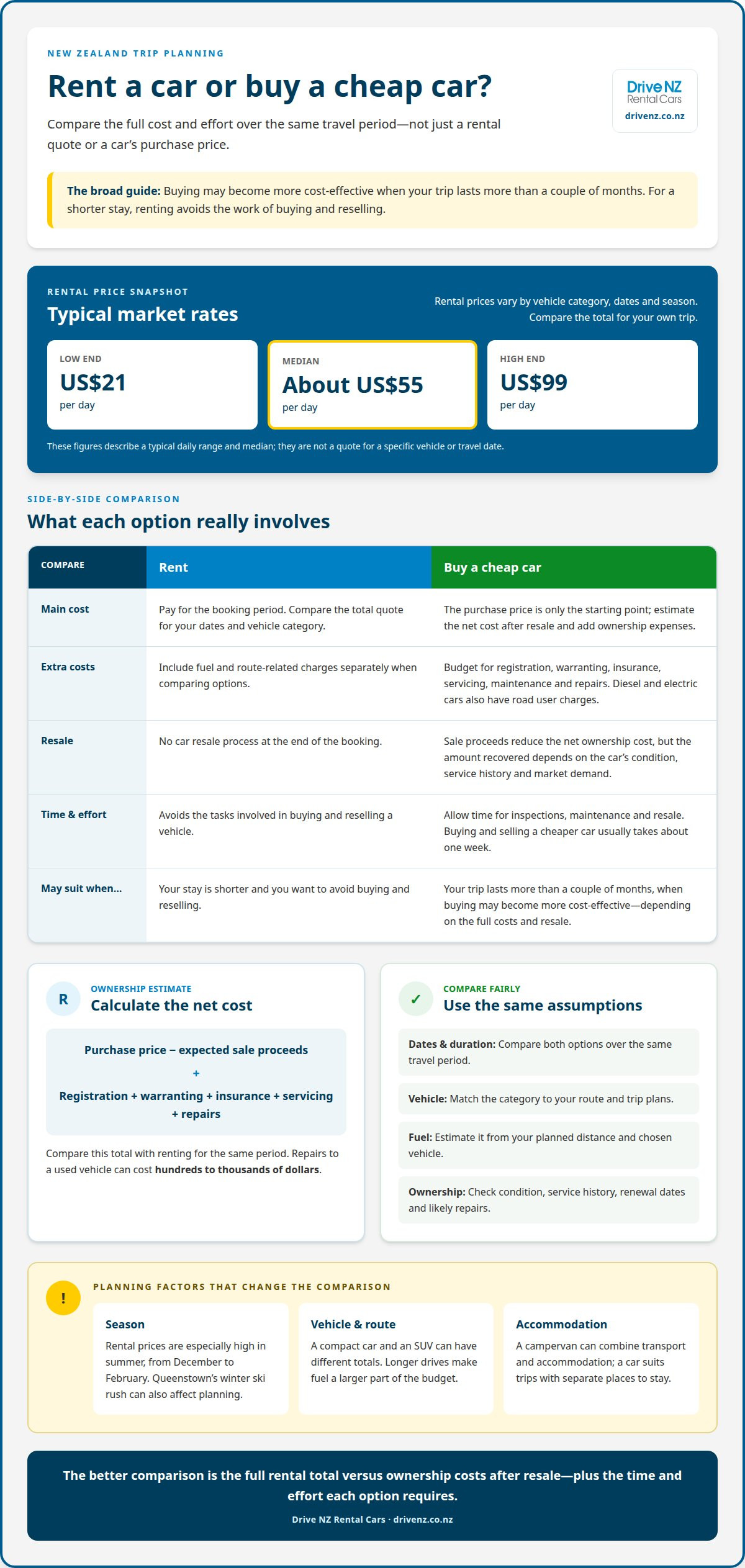
How does monthly rental cost compare with buying and reselling a cheap car in New Zealand?
Compare total costs over the same travel dates, rather than treating a car’s purchase price as its final cost. Renting costs money for the booking period; buying ties up money until resale and adds ownership expenses. The decision depends on trip length, the car’s condition and how much you recover when you sell.
The purchase price is the upfront amount, not the net cost of using the car. Estimate ownership cost by subtracting expected sale proceeds from the purchase price, then adding registration, warranting, insurance, maintenance and repair expenses. Use the same period for both options.
For renting, compare the total quote for your dates and vehicle category with your ownership estimate. Keep fuel and route-related charges separate so both options use the same assumptions. A daily rate can obscure the full rental total, just as a low asking price can obscure upcoming repairs. Compare the same trip duration before deciding.
Resale affects the calculation. The amount you recover depends on the car’s condition, service history, market demand and the time you have to sell. Buying and selling also involves arranging viewings, handling payment and completing ownership-transfer steps. These tasks take time, even if they don’t appear as a dollar amount in your budget.
A clear comparison uses three figures: total rental cost, total ownership expenses and expected resale proceeds. For a short trip, buying and reselling may mean extra work for limited use. For a longer stay, compare accumulated rental costs with ownership expenses after resale. Allow for the time needed to buy and sell, too.
Ready to compare a rental with the cost of owning a car for your trip? Explore rental options for your travel plans.
Drive NZ Rental Cars: Compact Hatchback
Drive NZ Rental Cars offers Compact Hatchback rentals for travellers who want a standard car to get around New Zealand. Renting can avoid the work of buying, maintaining and reselling a vehicle for a shorter stay. Other options include an Intermediate Sedan and Compact SUV. Snow Chains are also available for winter driving.
Use your route and passenger needs to choose a vehicle category. A Compact Hatchback may suit everyday travel, while a Compact SUV offers another option. Compare your trip length with the ownership costs above, then choose what fits your budget and travel plans.
Contact Drive NZ Rental Cars to discuss your rental plans.
Choose the option that fits your next move
The right choice fits both your travel budget and how you want to spend your time. Before deciding, consider whether you’d rather manage buying and reselling a car or focus on the trip. That practical preference can help settle the cost of renting a car for a month versus buying a cheap car in NZ.
If renting suits your plans, choose a vehicle category that matches your route and passengers. Drive NZ Rental Cars offers a Compact Hatchback, Intermediate Sedan and Compact SUV. Consider which option fits your travel needs, then book when you’re ready.
Contact Drive NZ Rental Cars to discuss your rental plans and move forward with confidence.
Frequently Asked Questions
How much does it cost to rent a medium car in New Zealand?
A medium rental car averages $55 per day in New Zealand. Your total depends on travel dates, rental length and vehicle category. Compare the complete booking total for your dates rather than assuming the lowest advertised daily rate applies.
How to save?
Book around 6 days before your trip to improve your chance of a below-average rental price. For December to February and Queenstown’s winter ski rush, plan further ahead, around 3-6 months. Compare the same vehicle type across matching dates, then consider whether you need a larger vehicle for the whole trip. This makes it easier to spot a suitable deal without choosing a car that doesn’t fit your plans.
Should You Rent or Buy a Vehicle to Travel New Zealand?
Renting often suits shorter trips, while buying may become more cost-effective when travel lasts more than a couple of months. To compare the cost of renting a car for a month versus buying a cheap car in NZ, include resale proceeds and ownership expenses, not just the purchase price. Consider how much time you want to spend arranging a purchase and sale, and whether you need a vehicle throughout your itinerary.
What is the average cost to rent a car for one month in New Zealand?
Use this as a broad comparison point, not a guaranteed quote for a specific vehicle or travel period. For a useful monthly budget, match your dates and vehicle type, then account for fuel and your route. A monthly average won’t show how seasonal demand or a particular booking affects the total.
What are the cheapest monthly car rental deals in New Zealand, including insurance and fees?
The best-value option is the one with the lowest total for your dates after you account for insurance and included costs. Drive NZ includes all applicable taxes, has no hidden costs or credit-card fees, and includes insurance with an applicable excess. The rental price depends on the vehicle, dates and duration. Compare what’s included as well as the headline rate.
What risks come with buying a cheap car in New Zealand for only one month?
Buying for a brief stay can mean repair costs and uncertainty about resale. To compare the cost of renting a car for a month with buying a cheap car in NZ, consider the risk of a fault emerging or a sale taking longer than planned. A delayed sale can disrupt your travel plans, while a lower resale price reduces how much you recover. Decide whether you have time to manage either setback.


