

You're pulling into a tight parking spot in Auckland when you hear that heart-sinking sound of a curb meeting your alloy wheel. It's a moment of pure dread, and your mind immediately jumps to the potential cost. Knowing exactly what to do if you scratch a rental car NZ is essential for protecting your bond and your holiday budget. We understand that the fear of hidden fees and the confusion surrounding insurance excess can be overwhelming. It's a valid concern, especially when standard excess amounts in 2026 typically range from $3,000 to over $7,200 depending on the vehicle class.
At Drive NZ Rental Cars, we prioritize transparency and a stress-free experience for every driver. This guide provides a clear action plan to help you handle the situation with confidence. You'll learn how to distinguish between fair wear and tear and chargeable damage using specific 2026 industry measurements, such as the 20mm length threshold. We also explain how to document the issue correctly and how to dispute any charges you believe are unfair. By following these steps, you can move from feeling overwhelmed by technicalities to feeling fully supported and in control of your rental experience.
Key Takeaways
- Follow a precise four-step documentation protocol to create a reliable record of any vehicle marks before contacting the rental agency.
- Understand the specific 2026 industry standards for fair wear and tear to know exactly what to do if you scratch a rental car NZ.
- Learn how the bond system operates at Auckland and Christchurch depots and the financial differences between standard and reduced excess packages.
- Master practical driving and parking techniques tailored for New Zealand’s unique chip-seal roads and narrow urban car parks.
- Discover how a transparent, photo-backed damage assessment process protects your bond and ensures a stress-free vehicle return.
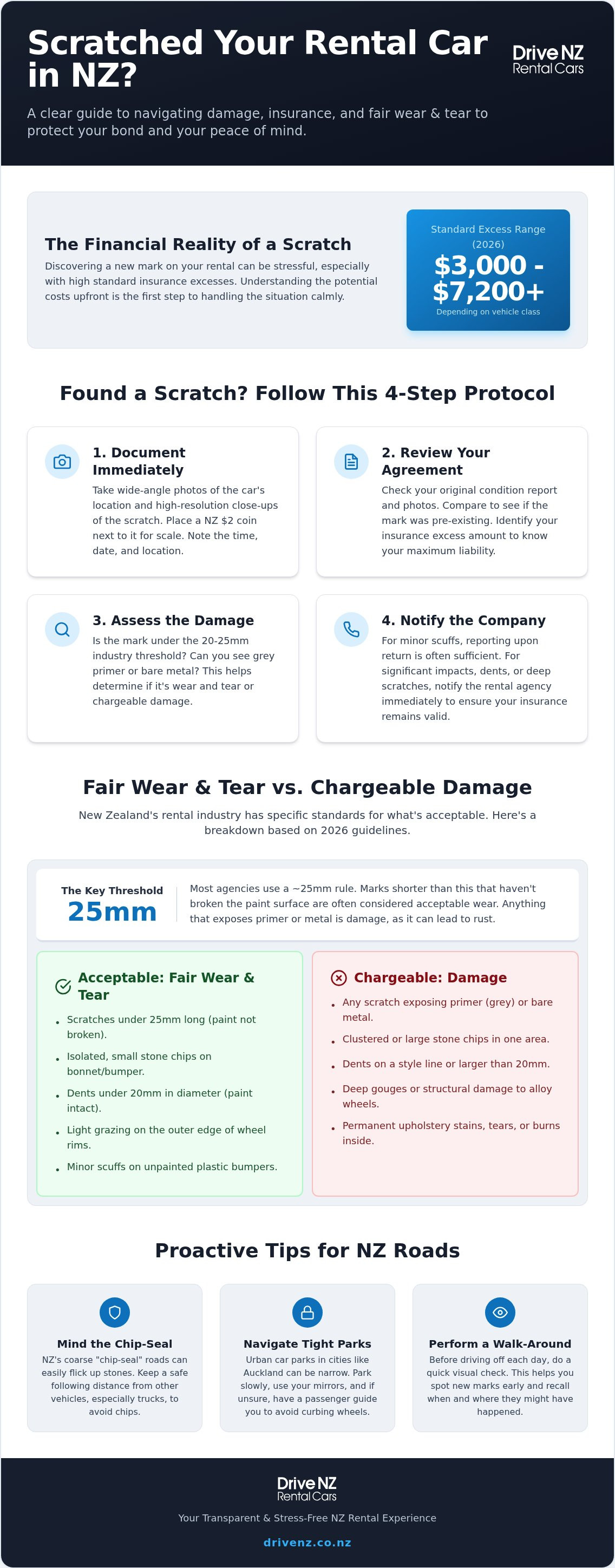
Found a Scratch? Follow This 4-Step 'Don't Panic' Protocol
Discovering a fresh mark on your vehicle can instantly dampen your holiday mood. Your first instinct might be to call the rental agency in a rush of adrenaline, but taking a breath and following a structured process is much more effective. Knowing exactly what to do if you scratch a rental car NZ starts with gathering evidence while the car is still in the same light and location where the mark was found. This documentation protects you from overcharges and ensures the assessment remains fair and transparent.
Step 1: Document the Scene Immediately
Start by capturing the context of the vehicle. Take wide-angle photos that show the car's surroundings, such as the parking bay or the curb where the contact occurred. This helps establish the environment. Next, move in for high-resolution close-ups. Use a common object like a NZ $2 coin or a ruler placed next to the scratch to provide a clear scale. This is vital because many agencies use specific measurements, often 20mm, to distinguish between fair wear and tear and chargeable damage. Check the depth of the mark; if you can see grey primer or bare metal, it is likely beyond a simple polish. Write a quick note in your phone with the exact time, date, and location to keep your records precise.
Step 2: Review Your Rental Agreement
Once you have your photos, find your original condition report. Most modern providers in Auckland and Christchurch use digital reports with time-stamped images from the moment of pickup. Compare your new photos to those original files. It is possible the mark was a pre-existing blemish that was overlooked during the initial inspection. If the scratch is definitely new, identify your specific liability. Look for the section detailing your Damage Waiver (DW) and the standard excess amount. This figure represents the maximum you might have to pay toward repairs if you didn't purchase an excess reduction product. Knowing this number early removes the fear of an "open-ended" repair bill.
The final steps involve a calm assessment of the damage type. If the scratch is minor, under 20mm, and hasn't broken the paint surface, it may fall under "Fair Wear and Tear" standards. If the damage is significant, such as a deep gouge or a dent on a style line, you should notify the company according to your agreement terms. While some minor scuffs can be reported at the return depot, significant impacts usually require immediate notification to ensure your insurance coverage remains valid. This proactive approach keeps you in control of the narrative and protects your bond.
Fair Wear and Tear vs. Damage: What NZ Rental Companies Charge For
New Zealand's roads are notoriously rugged. From the coarse "chip-seal" highways to the gravel tracks of the South Island, vehicles face constant environmental pressure. Because of this, the local industry uses a "Fair Wear and Tear" standard. This recognizes that a car won't return in showroom condition after a week of exploring. Understanding these benchmarks helps you determine what to do if you scratch a rental car NZ without overreacting to a minor scuff. Knowing your rights when renting a car ensures you aren't billed for standard deterioration.
The 2026 Industry Standards for Scratches and Dents
Most agencies use the "25mm Rule" as a primary threshold. If a scratch is under 25mm long, hasn't penetrated the paint to reveal bare metal or plastic, and can be polished out, it's generally classified as wear. However, any mark that exposes the primer or metal is considered damage because it leads to rust. On NZ rural roads, stone chips are almost inevitable. Most local operators forgive isolated chips on the bonnet or front bumper, provided they are small and not clustered in a single area. Dents are typically acceptable if they are under 20mm in diameter and the paint remains unbroken.
Common 'Grey Areas' You Should Know
Wheel rim "curbing" is a frequent point of contention. Light grazing on the very edge of a rim is often accepted as wear in tight city environments like Auckland. Deep gouges that affect the structural integrity or aesthetics of the alloy, however, will likely result in a charge. Similarly, scuffs on unpainted plastic bumpers are treated more leniently than scratches on a painted door panel. Inside the cabin, light carpet wear is expected, but permanent upholstery stains or tears are strictly classified as damage. Knowing exactly what to do if you scratch a rental car NZ can save you from unnecessary stress at the return counter.
If you find a mark, don't assume the worst. Modern digital tools mean assessments are more objective than they used to be. For a transparent experience with no hidden surprises, consider booking your next compact SUV or hatchback through a local provider who understands these road conditions.
Navigating Insurance Excess and Bonds: The Financial Reality
The bond system is a standard part of the rental process at our Auckland and Christchurch depots. When you collect your vehicle, the agency places a pre-authorization on your credit card. This isn't an immediate charge; it's a "pending" transaction that ensures funds are available if damage occurs. If you return the car in its original condition, this hold is released by your bank. However, if you are figuring out what to do if you scratch a rental car NZ, understanding how this bond interacts with your chosen insurance level is vital for your peace of mind.
Standard Excess packages often carry a high liability, with industry-wide figures in 2026 typically ranging from $3,000 to over $7,200. Choosing an Excess Reduction package lowers this liability significantly, often to a few hundred dollars or even zero. Under the Consumer Guarantees Act (CGA), you have the right to ensure any repair costs charged against your bond are "reasonable." This means an agency cannot charge you the full excess for a minor scratch that only costs a fraction of that amount to repair. Our local support teams are always available to explain these details clearly.
How Much Will a Scratch Actually Cost?
You aren't automatically liable for your full excess just because a scratch exists. You only pay the actual cost of the repair, up to your excess limit. To keep things transparent and efficient, many companies use standardized repair matrices. These are pre-set price lists for common minor issues like small paint chips or scuffs. This system removes the guesswork and ensures every customer is treated fairly regardless of the repair shop used. For a broader look at market rates, our 2026 pricing guide provides context on how these costs fit into the overall rental landscape in Auckland and Christchurch.
Third-Party Travel Insurance Claims
Many travelers opt for external coverage through a travel insurance policy or a premium credit card. If you go this route, you'll typically pay the rental agency for the damage first and then seek reimbursement from your insurer later. To make this process seamless, ensure you collect all necessary paperwork before leaving the return depot. You'll need the final damage report, a copy of your rental agreement, and a tax invoice for the repair costs. Having these documents ready is the most important part of what to do if you scratch a rental car NZ when dealing with third-party providers. It ensures your claim is processed quickly without unnecessary back-and-forth.
Avoiding Scratches: Practical Tips for NZ Road Conditions
Prevention is always superior to repair. While the previous sections explained exactly what to do if you scratch a rental car NZ, taking a proactive approach to the local environment can save you from the hassle of a claim entirely. New Zealand’s road network is diverse, ranging from high-speed motorways to narrow, unsealed tracks that require a different set of driving habits. Our goal is to ensure you feel confident behind the wheel, regardless of the terrain.
One of the biggest risks to your vehicle's paintwork is the "chip-seal" surface common across the country. These roads consist of small stones embedded in bitumen. When tires pass over them at speed, loose chips can easily become projectiles. Choosing the right vehicle, such as a compact hatchback, makes it easier to maintain a safe distance from these hazards and navigate the tighter turns found in our rural regions.
Safe Driving on Gravel and Rural Roads
Driving on unsealed or gravel roads requires patience and a specific technique. When you see oncoming traffic, slow down significantly. This reduces the force of any stones kicked up by the other vehicle. Maintain a four-second following distance at all times; this gives any flying debris time to lose momentum before hitting your windscreen or front bumper. On South Island rural routes, watch for the "vegetation trap." Overhanging gorse or manuka branches can cause long surface scratches if you drive too close to the shoulder. Always prioritize the center of the lane when it's safe to do so, especially on narrow bridges where wing mirrors are most vulnerable.
Smart Parking Strategies in NZ Cities
Urban environments like Auckland and Christchurch present their own challenges, particularly in multi-story car parks. These facilities often have tight turns and narrow bays designed for smaller vehicles. To minimize the risk of door-to-door contact, look for "end of row" spots that only have a neighbor on one side. In leafy Auckland suburbs, avoid parking directly under large trees. Falling fruit, heavy sap, or bird droppings can damage the clear coat if not cleaned immediately. Understanding what to do if you scratch a rental car NZ is helpful, but these parking tips reduce the likelihood of needing that knowledge. If you're staying in a hotel with a basement garage, always use a spotter when reversing. A second pair of eyes is the best defense against concrete pillars and low-hanging pipes.
Ready to explore the country with confidence? Book a compact SUV or sedan from our local experts today and enjoy a transparent rental experience.
Transparent Returns: The Drive NZ Approach to Damage
At Drive NZ, we believe the end of your journey should be as smooth as the start. Instead of an adversarial approach to vehicle inspections, we focus on clarity and fairness. If you are concerned about what to do if you scratch a rental car NZ, our process is designed to remove the guesswork and the stress. We use detailed, time-stamped photos from both the start and end of your rental to ensure every assessment is accurate. This photo-backed evidence means you only ever pay for damage that actually occurred during your hire, protecting your bond from unfair or hidden charges.
Our commitment to "no-surprises" billing is a core part of our service model. We prioritize local service because it allows for a more personalized and efficient experience. When you return your vehicle to our Auckland or Christchurch airport locations, our streamlined process ensures you move quickly from the drop-off to your check-in counter. By providing a clear action plan and transparent documentation, we empower you to enjoy your travels without the fear of unexpected costs lingering over your holiday.
Why Local Expertise Matters
Our teams in Auckland and Christchurch understand the reality of driving in New Zealand. We know that a tiny stone chip from a rural highway is different from a significant scrape in a multi-story parking building. Because we drive these same routes every day, we apply a local's perspective to our "fair wear and tear" standards. Our fleet is maintained to high standards, ensuring that any pre-existing marks are clearly logged in our system before you drive away. This local support is invaluable if an incident occurs. You can speak directly to our staff who are empowered to help you resolve issues quickly and fairly, rather than dealing with a remote call center.
Your Next Steps for a Stress-Free Rental
To ensure a completely stress-free experience, we recommend choosing a reputable local provider who values transparency over hidden fees. Before you leave the depot at the start of your trip, always perform your own "walk-around" video with your smartphone. This provides you with personal, date-stamped evidence of the vehicle's condition. If you do notice a new mark later, remember the documentation steps we’ve covered in this guide. Knowing what to do if you scratch a rental car NZ starts with having the right partner by your side.
Ready for a better way to explore our beautiful country? Book your transparent, local NZ rental with Drive NZ today and travel with the peace of mind that comes from a partner who truly has your back.
Drive with Confidence on New Zealand Roads
A minor mark on your vehicle doesn't have to derail your holiday. By following a clear documentation protocol and understanding the difference between fair wear and tear and actual damage, you remain in control of the situation. Knowing exactly what to do if you scratch a rental car NZ ensures you can handle returns with quiet confidence rather than anxiety. Documentation is your best defense; always keep your pickup photos and time-stamped evidence of any new marks to ensure a fair assessment of repair costs.
Choosing a local partner makes all the difference in navigating these situations. At Drive NZ, we've been local experts since 2005, offering personalized support through our convenient Auckland and Christchurch locations. We prioritize a transparent, "no-surprises" damage policy because we value your time and peace of mind. Our modern approach to rentals focuses on efficiency and honesty, so you can spend less time worrying about technicalities and more time enjoying the stunning scenery.
Drive with confidence-Book your Auckland or Christchurch rental with Drive NZ today. We're here to support your journey every step of the way.
Frequently Asked Questions
Is a small scratch considered damage on a rental car in NZ?
Light surface scratches under 25mm that don't penetrate the paint are usually classified as fair wear and tear. However, any mark exposing bare metal or plastic is considered damage because it invites rust and requires professional treatment. If you are unsure what to do if you scratch a rental car NZ, check your agency’s specific 2026 measurement thresholds. These guides provide an objective way to distinguish between minor scuffs and chargeable repairs.
Can a rental car company charge for a scratch that was already there?
No, you should not be charged for pre-existing marks, provided they were documented at the time of pickup. This is why a thorough inspection and a digital condition report are essential before leaving our Auckland or Christchurch depots. If you find a mark later that matches your pickup photos, you can easily dispute the charge. Always keep your own time-stamped photos as a secondary record to ensure total transparency during the return process.
How much does a rental car company charge for a scratch?
The cost depends on the severity of the mark and your specific rental agreement. For minor issues, many NZ companies use a standardized repair matrix to calculate a fair, flat-rate fee. If the scratch is deep, you are typically liable for the actual repair cost up to your insurance excess limit. These limits vary significantly between standard and reduced excess packages, so checking your contract early is a key part of what to do if you scratch a rental car NZ.
What happens if I scratch a rental car and don't have extra insurance?
If you haven't purchased an excess reduction product, you are liable for the repair costs up to the standard excess amount stated in your contract. In 2026, these standard amounts often range from $3,000 to over $7,200. The rental agency will typically hold this amount from your bond or charge your credit card for the assessed repair value. You still retain rights under the Consumer Guarantees Act to ensure these repair charges remain reasonable and fair.
Do I need to call the police for a minor scratch on a rental car?
Police involvement is not required for minor cosmetic scratches or scuffs that don't involve another party or property damage. You only need to contact the police if there is a significant accident, an injury, or a dispute with another driver. For simple scratches, your primary responsibility is to document the mark and notify the rental provider in Auckland or Christchurch as per your agreement terms. This ensures the incident is logged correctly for insurance purposes.
Will a scratch on a rental car affect my credit score?
A scratch itself will not impact your credit score. However, failing to pay the agreed-upon repair costs or insurance excess can lead to debt collection, which may eventually affect your credit rating. As long as you follow the proper protocol and settle the repair bill or insurance claim through the rental agency, your credit history remains unaffected. Transparency and prompt communication are the best ways to resolve these financial matters efficiently without any long-term consequences.
What is the 'fair wear and tear' policy for NZ car rentals?
This policy defines the level of cosmetic deterioration that is acceptable after a vehicle has been used on New Zealand's unique roads. It typically covers very small stone chips, light surface scuffs that can be polished out, and minor carpet wear. It does not cover deep scratches, dents, or interior stains. Most local operators provide a clear guide at pickup so you know exactly how marks will be assessed when you return to Auckland or Christchurch.
How long does it take to get my bond back if there is no damage?
If the vehicle is returned in its original condition, the bond pre-authorization is usually released immediately by the rental agency. However, your bank may take between 3 to 10 working days to process this and show the funds as available in your account again. If you are renting in Auckland or Christchurch, our local teams ensure the release is triggered promptly to minimize any delay in your travel funds becoming available for the rest of your journey.


