
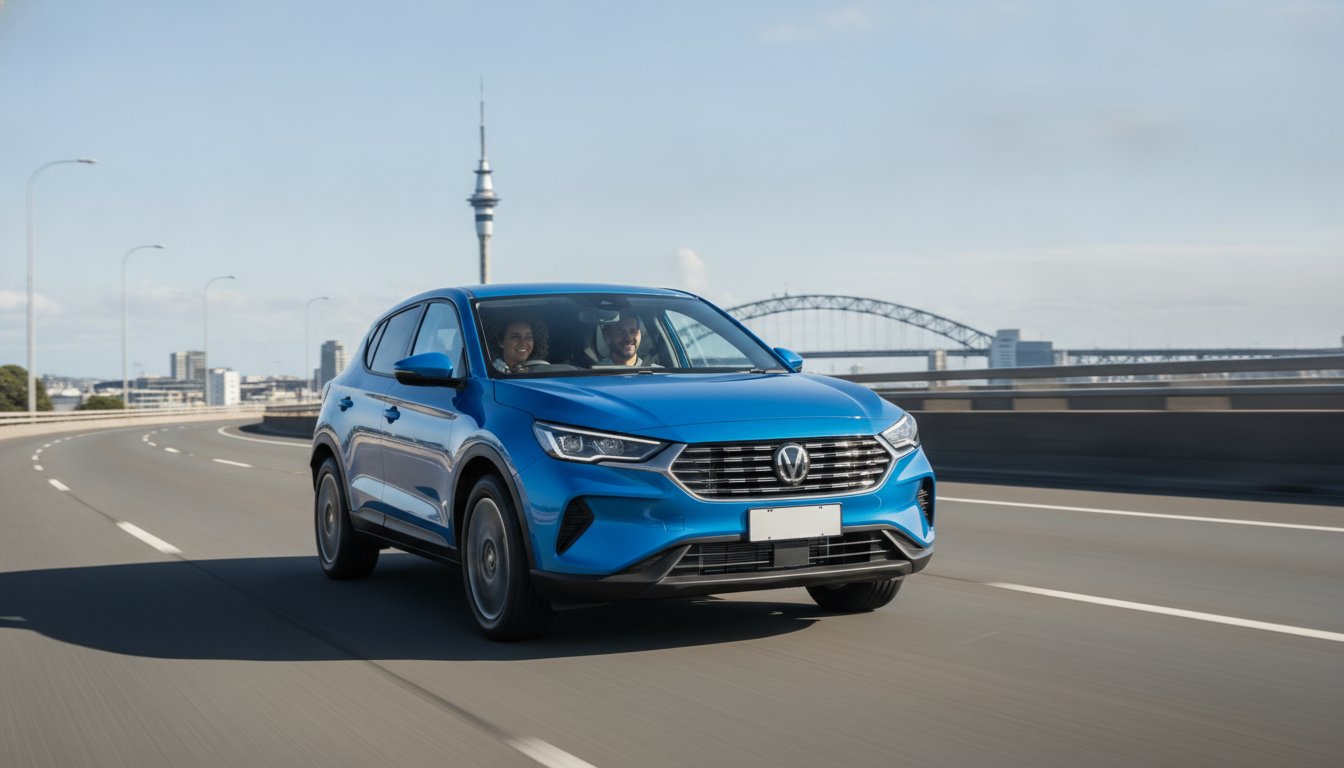
You've just landed at Auckland Airport after a long flight, the keys to your rental car are in hand, and suddenly the reality of navigating multi-lane motorways on the left side of the road hits you. It's a common feeling for many visitors who worry about missing a complex exit or accidentally triggering a $150 bus lane fine because they aren't familiar with Auckland traffic rules for tourists. We understand that your New Zealand holiday shouldn't be about the stress of deciphering local signage. You're here for the views, not the paperwork.
This 2026 guide is built to help you master the city's unique driving environment so you can travel from the airport to your hotel with total confidence. We'll walk you through the essential updates from the April 2026 Road Code, explain the new toll road structures, and show you how to avoid common parking mistakes. You'll gain the practical knowledge needed to stay safe and fine-free while exploring the city and its surrounding regions.
Key Takeaways
- Learn the fundamental Auckland traffic rules for tourists, including the non-negotiable "keep left" policy and the latest 2026 speed limit updates for urban and open roads.
- Avoid unexpected $150 fines by mastering the 50-metre rule for bus lanes and identifying when you can legally use T2 or T3 transit lanes on the motorway.
- Simplify your city visits by understanding the "Pay by Plate" parking system and using the AT Park app to manage your stay without stress.
- Prepare for the transition from multi-lane motorways to winding rural roads, including how to safely navigate one-lane bridges using the red and black arrow system.
- Discover why a compact hatchback or intermediate sedan is often the most efficient choice for navigating Auckland's unique urban landscape and parking requirements.
Mastering the Essentials: New Zealand Road Rules for Every Visitor
Driving in a new country is a significant part of any holiday adventure. While the New Zealand landscape is world-class, the first priority for any visitor is understanding how local regulations keep everyone safe. Auckland traffic rules for tourists focus heavily on predictability and safety, ensuring that everyone on the road knows exactly what to expect from other drivers. Whether you've just picked up your keys or you're planning your route from the airport, mastering these basics is the first step toward a stress-free journey.
The most important rule is that traffic in New Zealand always travels on the left-hand side of the road. This can be a major adjustment if you're used to driving on the right. You must also carry a valid driver's license at all times. If your license isn't in English, you're legally required to carry an International Driving Permit or an accurate English translation. To better understand the visual cues you'll encounter, it's helpful to review a guide to New Zealand road signs before you start your engine.
Left-Side Driving: Practical Tips for Staying Centred
The first 15 minutes of your drive are the most critical for habit-building. A simple mental trick is to remember that the driver should always be positioned toward the middle of the road, while the passenger stays closer to the curb. When you're making turns, remember that left turns are "tight" and right turns are "wide". This ensures you don't accidentally drift into oncoming traffic. Stay extra vigilant when pulling out of parking lots or petrol stations, as these are the moments when old habits are most likely to take over.
Speed Limits and Speed Cameras in Auckland
Auckland has implemented a "Safe Speed" programme that has changed many traditional limits. While 50km/h remains the standard for most urban areas and 100km/h for open roads, many city center streets and school zones are now restricted to 30km/h. Speed is monitored through a network of fixed cameras and mobile police vans. During holiday periods, New Zealand police often enforce a strict "no tolerance" policy, meaning even being slightly over the limit can result in a fine. Always look for the circular signs with red borders to confirm the current limit for the stretch of road you're on.
Intersections and roundabouts also require specific attention. The golden rule at roundabouts is to give way to traffic coming from your right. Always signal your intentions clearly: signal left for your first exit, right if you're going past the halfway point, and always signal left as you're about to exit the roundabout. These Auckland traffic rules for tourists are designed to keep the city's busy intersections moving efficiently and safely for everyone.
Navigating Auckland City: Bus Lanes, Motorways, and Transit Zones
Driving through Auckland's city centre and its sprawling motorway network requires a different set of skills than cruising through rural New Zealand. While the basic rules of the road apply, the urban environment introduces specific Auckland traffic rules for tourists that can be confusing for the uninitiated. Understanding these local nuances is the key to avoiding frustration and heavy fines during your stay.
One of the most common pitfalls for visitors is the strict enforcement of bus lanes. In Auckland, bus lanes are reserved for buses, cycles, and motorcycles during specific hours. You are allowed to enter a bus lane only to make a turn, and even then, you must not travel more than 50 metres in the lane before turning. Using a bus lane incorrectly will result in a $150 fine, often captured by automated enforcement cameras. If you're unsure about the rules for a specific stretch of road, you can always consult the Official New Zealand Road Code for the latest legal definitions.
Auckland drivers also follow a social contract known as "merging like a zip." When two lanes of traffic merge into one, vehicles from each lane take turns to move forward, one after the other. This keeps traffic flowing smoothly and reduces the road rage often seen in other major cities. On the Auckland Harbour Bridge, pay close attention to the overhead lane signals. Green arrows indicate open lanes, while red crosses mean the lane is closed or moving in the opposite direction. Moveable barriers are frequently shifted to manage peak traffic, so never assume the lane configuration is the same as your last trip.
Auckland’s Motorway System: SH1, SH16, and SH20
The "Central Motorway Junction", locally known as Spaghetti Junction, is where SH1 and SH16 meet. It can be intimidating, but clear signage and GPS will guide you through. When using the Waterview Tunnel on SH20, keep a steady speed and stay in your lane; lane changing is prohibited inside the tunnel for safety reasons. Depending on your destination, SH1 (the Southern Motorway) is the main artery, but the Western Route (SH16) often provides a faster alternative during peak hours.
Transit Lanes (T2/T3) Explained
Transit lanes are designed to reward carpooling and reduce congestion. T2 lanes are lanes requiring at least two occupants including the driver. T3 lanes require three or more occupants. These lanes are usually active during morning and afternoon peak hours, but they are open to all vehicles outside of these times. For families or groups travelling in a rental car, these lanes can save significant time. If you need a vehicle that fits the whole group comfortably while remaining easy to park, consider an intermediate sedan for your city explorations.
Parking in Auckland: Avoiding Fines and Understanding Signage
Finding a spot in the CBD doesn't have to be a headache if you understand the local system. Auckland traffic rules for tourists include specific parking protocols that differ from other regions in New Zealand. Most on-street parking in the central city operates on a "Pay by Plate" system. Instead of displaying a paper ticket on your dashboard, you enter your vehicle's license plate number into the machine. For a more seamless experience, we recommend downloading the AT Park app. It allows you to pay for only the exact minutes you use and sends alerts before your session expires, which is much easier than rushing back to a meter while you're enjoying a meal.
Always look closely at the times listed on every parking sign you encounter. A standard parking spot can transform into a clearway or tow-away zone during peak traffic hours to help the city's flow. If you're parked in a clearway when it becomes active, your car will be towed almost immediately. This is a common trap for visitors who aren't yet familiar with Auckland traffic rules for tourists. Checking the Auckland driving and parking regulations can help you identify these zones and the current hourly rates before you leave your vehicle.
Decoding Auckland Parking Signs
Signs marked "P60" or "P120" indicate the maximum time allowed in minutes. If a sign says "At All Times," the restriction applies 24 hours a day, seven days a week. Be particularly careful in inner-city suburbs like Grey Lynn or Freemans Bay. Many streets are designated as resident-only parking zones. Your rental car isn't eligible for these spots, and you'll likely receive a fine if you park there. Mobility parking spaces are also strictly enforced and require a valid permit; parking here without one is a fast way to receive a significant infringement notice.
CBD Parking Buildings vs. On-Street Parking
While on-street parking is convenient for quick stops, major hubs like the Civic, Victoria St, or Britomart car parks offer more security and protection from the elements. Off-street parking is often a safer choice for an intermediate sedan because it protects the vehicle from the high-traffic flow and narrow lanes of the central city. If you're heading to Parnell or Ponsonby on the weekend, you can often find occasional free spots on side streets away from the main shopping strips. Regardless of where you park, keep your valuables out of sight. Put shopping bags or luggage in the boot before you arrive at your destination to ensure a worry-free sightseeing experience.

Beyond the City Limits: Driving from Auckland to Rural NZ
Once you leave the multi-lane motorways of the city, the driving environment changes drastically. Auckland traffic rules for tourists are just the starting point; rural New Zealand requires a different level of focus. You'll move from smooth highways to narrow, winding roads that often lack a shoulder or a median barrier. One-lane bridges are a common feature of the rural landscape. Look for the signage before you cross: if you see a small red arrow pointing your way, you must give way to oncoming traffic. If the larger black arrow points in your direction, you have the right of way, though you should still slow down and proceed with caution.
You might also encounter unsealed or gravel roads during your explorations. These surfaces provide much less grip than asphalt, and it's essential to check your rental agreement as some contracts restrict where you can take your vehicle. If you find yourself behind a flock of sheep or a herd of cattle, stay in your car and wait. Turn off your engine if the wait looks long and let the farmer or their dogs guide the animals past. It's a classic "Kiwi traffic jam" that requires patience rather than a horn.
The Auckland to Coromandel or Northland Route
Many visitors underestimate travel times when heading north toward the Bay of Islands or east to the Coromandel Peninsula. While a distance might only be 100km, the winding terrain and steep gradients mean it will likely take much longer than an hour to complete. Don't feel pressured by local drivers who may be more familiar with the bends. Use designated passing lanes every few kilometres rather than trying to overtake on blind corners or solid yellow lines. You can check our driving in New Zealand for tourists checklist for a full breakdown of rural safety requirements.
Weather Conditions and Road Safety
Auckland is famous for having four seasons in one day, and this volatility impacts road grip significantly. NZ roads are often "chip-seal," which can be slippery when wet compared to smooth asphalt. This texture requires a longer following distance, especially during the sudden downpours common in the upper North Island. If your journey extends into the winter months or includes South Island extensions, you may need to carry snow chains to handle icy alpine passes. Being prepared for these shifts in condition ensures your holiday remains focused on the scenery rather than the hazards.
Ready to start your adventure? Secure your vehicle with Drive NZ Rental Cars today and experience the freedom of the open road with a dependable local partner.
Choosing Your Auckland Rental: Why Drive NZ Rental Cars Makes the Journey Easier
Selecting the right vehicle is just as critical as understanding the local driving laws. While you now have a handle on the essential Auckland traffic rules for tourists, the physical car you drive determines how comfortably you'll navigate the city's tight corners and busy motorways. Drive NZ Rental Cars focuses on providing a fleet that matches the specific demands of New Zealand roads, ensuring your focus remains on the journey rather than the mechanics of the rental process. We understand that your priority is reaching your destination safely and without unnecessary stress.
For city-centric trips, a compact hatchback is often the smartest choice. These nimble vehicles are the undisputed kings of Auckland parking, fitting easily into the smaller on-street spaces found in Parnell or the CBD. Our Auckland Airport pickup service is designed for maximum efficiency. We know you've likely just finished a long flight, so we've streamlined our hand-over process to get you behind the wheel and toward your hotel with zero friction. It's about removing the technicalities so you can enjoy the drive.
As a Kiwi-owned business, we provide a "Local Advantage" that larger international chains often lack. We don't just hand over the keys; we offer the reassurance of local expertise and a commitment to tourist education. Our vehicles undergo rigorous maintenance checks to ensure they handle the transition from city asphalt to rural chip-seal with ease. This proactive approach to safety gives you the quiet confidence needed to explore every corner of the region without worrying about your vehicle's reliability.
The Right Vehicle for Your Auckland Itinerary
If your plans include heading west to the Waitakere Ranges or exploring the rugged coastline, our compact SUVs provide the extra ground clearance and visibility you'll appreciate on winding elevation changes. City driving also demands high fuel efficiency, helping you manage your holiday budget against local petrol prices. Families travelling with multiple suitcases will find that our intermediate sedan options offer the necessary boot space without sacrificing the ease of handling required for Auckland's multi-lane motorway junctions. We help you match the car to your specific route.
Booking Your Stress-Free Experience
We prize transparency and honesty in our business model. When you book with us, you'll find transparent pricing with no hidden fees for airport collections or weekend pickups. Every rental includes 24/7 roadside assistance, providing a vital safety net for international visitors unfamiliar with local terrain. This support system ensures that even a minor hiccup won't derail your travel plans. Book your Auckland car rental today and start your NZ adventure with a partner who values your time and peace of mind.
Start Your New Zealand Adventure with Confidence
Navigating a new city is much simpler when you have the right local knowledge. By mastering the fundamental Auckland traffic rules for tourists, you've taken the most important step toward a safe and enjoyable holiday. Whether you're carefully merging like a zip on the motorway or identifying the correct right-of-way at a one-lane bridge, your preparation will pay off in a stress-free driving experience. You're now ready to transition from the busy city streets to the beautiful winding roads of the coast.
Since 2005, we've served as local Auckland and Christchurch experts, helping thousands of visitors find their way. We specialize in compact and intermediate vehicles that are perfectly suited for both tight urban parking and efficient rural travel. Our team is here to provide the modern, transparent service you deserve so you can focus on making memories. Explore our Auckland rental fleet and book your 2026 trip today. We look forward to being a part of your New Zealand journey.
Frequently Asked Questions
Can I drive in Auckland with a US or UK driver’s licence?
Yes, you can legally drive for up to 12 months on a current US or UK licence as long as it's printed in English. If your licence is in another language, you're required to carry an International Driving Permit or a certified English translation at all times. It's a simple process that ensures you're compliant with New Zealand's transport regulations from the moment you arrive.
What happens if I accidentally drive in an Auckland bus lane?
You'll likely receive a $150 fine if you travel more than 50 metres in a restricted bus lane. Auckland uses an extensive network of automated enforcement cameras to monitor these lanes, especially in the city centre. Understanding the 50-metre rule for turning is one of the most important Auckland traffic rules for tourists to remember to avoid unexpected costs during their holiday.
How much are the fines for speeding in New Zealand?
Speeding fines operate on a graduated scale, starting at $30 for speeds less than 10km/h over the limit and reaching $630 for speeds up to 50km/h over. During holiday periods, police often enforce a strict 4km/h tolerance. Staying within the posted limits is the best way to ensure your journey remains safe and your budget stays on track.
Are there tolls on the motorways in or around Auckland?
There are two primary toll roads in the Auckland region: the Northern Gateway on SH1 and the O Mahurangi (Penlink) route. The Northern Gateway costs $2.60 for light vehicles, and the new Penlink road uses a variable pricing model for peak and off-peak travel. You can pay these tolls online within five days of your trip to avoid additional administration fees.
What should I do if I get into a minor car accident in Auckland?
Stop your vehicle immediately in a safe location and check if anyone requires medical assistance. You must exchange names, addresses, and vehicle registration numbers with any other drivers involved. If there are injuries or the road is blocked, call 111 for emergency services; otherwise, you should report the incident to your rental provider as soon as possible.
Is it difficult to find parking in downtown Auckland?
Finding a spot on the street can be difficult due to high demand and strict time limits of 60 to 120 minutes. Understanding parking availability is a key part of Auckland traffic rules for tourists, so we recommend using major parking buildings like the Civic or Victoria Street for longer stays. These facilities offer more space and are often more convenient than searching for rare on-street gaps.
Do I need to carry my physical driver’s licence while driving?
You're legally required to carry your physical driver’s licence on your person whenever you're behind the wheel. New Zealand law does not currently recognize digital licences or photographs of licences as valid proof of your right to drive. Keeping your physical card in your wallet ensures you're prepared for any routine police checks or rental requirements.
What is the blood alcohol limit for drivers in New Zealand?
The limit for drivers aged 20 and over is 250 micrograms of alcohol per litre of breath or 50 milligrams per 100 millilitres of blood. If you're under the age of 20, there is a strict zero-alcohol limit. We always recommend choosing a designated driver or using public transport if you plan on enjoying Auckland's local craft beer or wine scene.


