

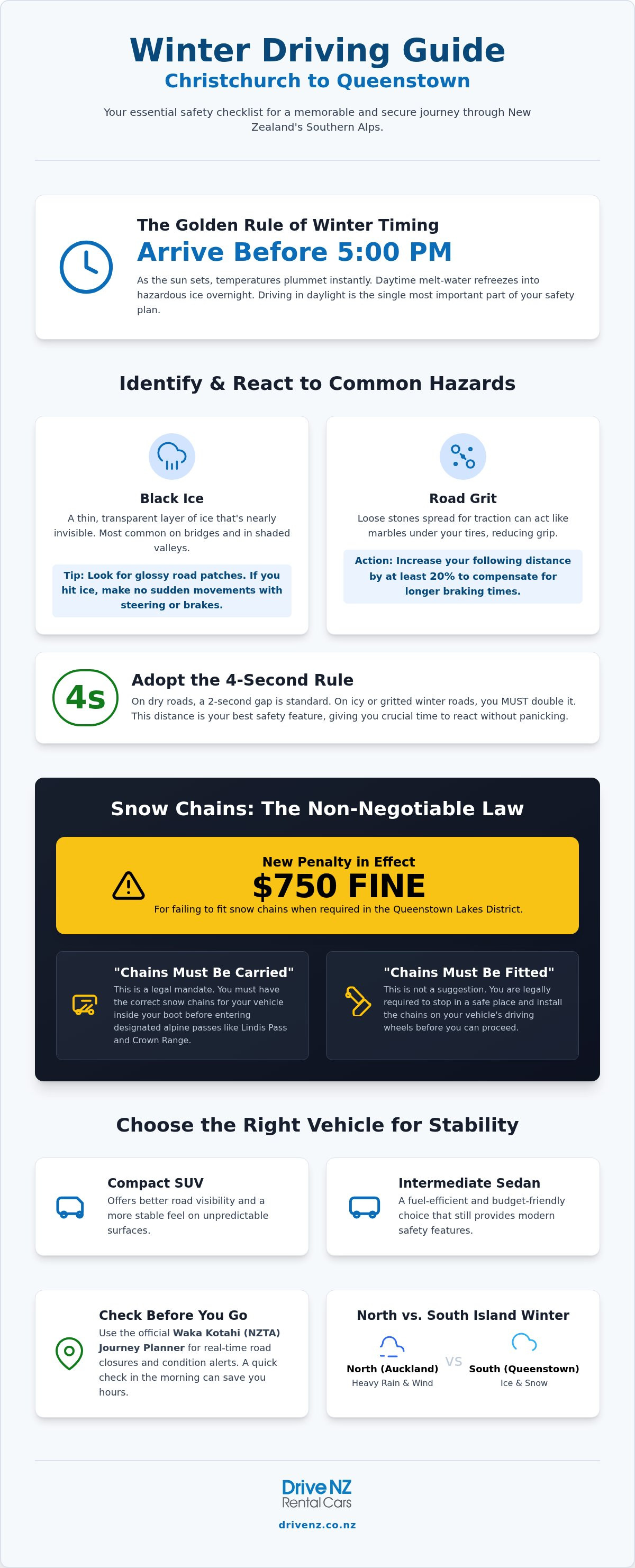
Did you know that failing to fit snow chains when required in the Queenstown Lakes District can now result in a $750 fine? As you plan your journey, driving from christchurch to queenstown in winter requires more than just a sense of adventure; it demands modern safety awareness and the right equipment. It's completely natural to feel a bit of anxiety about navigating the Southern Alps, especially with the threat of invisible black ice or the perceived complexity of fitting snow chains during a flurry on the Lindis Pass.
We’re here to replace that stress with quiet confidence. This guide promises to help you master the nuances of New Zealand’s winter roads, ensuring you feel well-supported from the moment you leave Christchurch. We'll provide a clear breakdown of when to use chains, how to monitor road closure alerts in real-time, and how to select a stable rental car, such as a compact SUV or intermediate sedan, that fits your budget. By the end of this article, you'll have a practical roadmap for a safe, efficient, and truly memorable alpine expedition.
Key Takeaways
- Learn to identify "invisible" hazards like black ice on shaded corners and why road grit requires increasing your following distance by at least 20%.
- Optimize your schedule when driving from christchurch to queenstown in winter by reaching your destination before the 5:00 PM sunset to avoid the coldest road temperatures.
- Understand the 2026 legal mandates for carrying and fitting snow chains on alpine passes like the Crown Range and Lindis Pass to ensure safety and avoid penalties.
- Discover how to select the most stable vehicle for your group, from fuel-efficient compact hatchbacks to compact SUVs designed for better visibility.
- Prepare for a seamless journey with expert advice on vehicle pickups at Christchurch Airport and accessing real-time road condition updates.
Understanding the New Zealand Winter Driving Season
Many travelers assume winter is a strict three month window. In reality, the conditions affecting your drive from christchurch to queenstown in winter often begin in May and can stretch well into September. The State Highway 8 (SH8) route is the backbone of this journey, and it demands peak caution as you move from the relatively dry Canterbury Plains into the high altitude Southern Alps. Understanding these regional shifts is the first step toward a stress free trip.
Timing is your best safety asset. New Zealand's winter sun sets remarkably early; you should aim to reach Queenstown by 5:00 PM at the latest. Once the sun dips behind the peaks, temperatures plummet instantly. This creates a dangerous cycle where daytime thaws turn into overnight sheets of ice. Driving in the dark significantly increases the risk of hitting black ice that hasn't had a chance to melt, making daylight planning a non negotiable part of your itinerary.
Auckland vs. Christchurch: Two Very Different Winter Climates
If you've driven in the North Island, don't assume the South is the same. Auckland winters are typically characterized by heavy rain and wind. However, as you cross the Cook Strait, the hazard shifts from surface water to solid ice and snow. Your driving style must adapt to these lower friction surfaces. It's essential to consult the New Zealand Road Code to refresh your knowledge on winter intersections and braking distances. For a more tailored guide, our driving in New Zealand for tourists safety checklist provides a modern breakdown of these regional differences and core rules.
The Role of Waka Kotahi in Your 2026 Trip
Waka Kotahi (the NZ Transport Agency) actively manages alpine passes like the Lindis Pass to keep travelers safe. Throughout your journey, you'll encounter specific signage that requires immediate action. "Chains Must Be Carried" means they must be in your boot, ready for use. "Chains Must Be Fitted" is a legal requirement to stop and put them on before proceeding. In 2026, real time monitoring via the official Journey Planner is the most efficient way to track road closures on the Christchurch to Queenstown route. We recommend checking this before you leave your morning coffee spot to ensure your path is clear.
Identifying Common Winter Road Hazards in NZ
The journey through the Southern Alps is visually stunning, but the environmental conditions can change in a heartbeat. When driving from christchurch to queenstown in winter, you aren't just managing snow; you're managing a variety of low-traction surfaces that require a shift in your driving mindset. Identifying these hazards from the driver’s seat is the best way to maintain control and ensure your trip remains enjoyable.
Black ice is perhaps the most notorious threat. It’s a thin, transparent layer of frozen moisture that takes on the color of the asphalt beneath it, making it nearly invisible. You'll most frequently encounter it on bridges, which freeze faster than the surrounding road, and in deep shaded valleys where the sun never reaches. Similarly, road grit can be deceptive. While maintenance crews spread these small stones to improve traction, they often act like marbles under your tires. This loose surface requires at least 20% more following distance than you would need on a dry, clear road.
Sun glare and hydroplaning also play significant roles. The winter sun stays low on the horizon, reflecting off wet asphalt and creating a blinding effect. Meanwhile, heavy rain in the alpine regions can lead to hydroplaning, where your tires lose contact with the road surface. Following the official NZ Transport Agency winter driving guide ensures you are prepared for these shifting conditions. Choosing a vehicle with modern safety features, like an intermediate sedan or compact SUV, provides the stability needed for these unpredictable surfaces.
How to Spot and React to Black Ice
Look for glossy or wet-looking patches on the road, especially if the rest of the surface appears matte or dry. These are your primary visual cues for black ice. If you find yourself on a slippery patch, remember the "no sudden movements" rule. Don't slam on the brakes or jerk the steering wheel. High-risk zones between Lake Tekapo and Omarama often stay frozen all day, so maintain a steady, cautious pace through these stretches.
The 4-Second Rule: Why Distance is Your Best Safety Feature
Distance is your best safety feature. On icy or gritted South Island roads, use a four-second following rule instead of the standard two. This extra time allows you to react without panic if the vehicle ahead loses traction. Maintaining a safe distance is particularly vital when driving from christchurch to queenstown in winter, as stopping distances can increase significantly on frozen pavement. Give heavy trucks and grit-spreaders plenty of space, as they can kick up stones. As you approach the steep hills around Queenstown, focus on smooth deceleration well before you reach the corners.
Snow Chains: When and How to Use Them
Having the right gear is only half the battle; knowing how to use it is what ensures a safe arrival. When driving from christchurch to queenstown in winter, snow chains are your most critical piece of safety equipment. On high-altitude routes like the Lindis Pass and the Crown Range, carrying chains is a legal requirement. Police and road crews frequently set up checkpoints during heavy weather, and you won't be allowed to proceed without them in your boot. It's a simple standard that keeps the alpine passes moving efficiently.
Understanding your rental car's drivetrain is essential for correct chain placement. For most compact hatchbacks and intermediate sedans, chains must be fitted to the front wheels to provide both traction and steering. If you've selected a compact SUV with All-Wheel Drive (AWD), you should still prioritize the front wheels for steering control unless the specific vehicle guide suggests otherwise. We strongly advise a "dry run" strategy. Practice fitting your chains at your Christchurch accommodation before you hit the road. It's much easier to learn the process in a dry driveway than on a freezing mountain pass in a blizzard. Once fitted, never exceed 40km/h. Driving faster can damage the chains or your vehicle's wheel arches. For more general preparation, reviewing AA's winter driving tips can provide extra peace of mind for your journey.
How to Fit Snow Chains on Your Rental Car
Start by laying the chains flat on the ground to ensure there are no tangles or twists in the links. Drape the chain over the top of the tire, ensuring it’s centered across the tread. Move the car forward slightly to tuck the chain under the wheel, then connect the inner and outer hooks. Use the tensioning device to pull the chain tight. A key rule for a secure fit is the 50-metre check. Drive a short distance, stop in a safe spot, and re-tighten the chains to account for any settling. Always check for clearance to ensure the metal doesn't strike the wheel arches during sharp turns.
Identifying "Chain Fitting Areas"
Alpine passes feature designated safety pull-offs marked with "Chain Fitting Area" signs. These are level, widened sections of road designed to keep you well away from moving traffic. Never attempt to fit chains in the middle of a live lane; it’s incredibly dangerous for you and other motorists. If you see someone struggling, local etiquette encourages offering a hand if it's safe to do so. Keep your hazard lights on while stopped to ensure you're visible to snowplows and other travelers. This small step makes the entire mountain pass safer for everyone driving from christchurch to queenstown in winter.
Choosing the Best Rental Car for NZ Winter Conditions
Choosing the right vehicle for driving from christchurch to queenstown in winter doesn't have to be a complex decision. While social media threads often insist you need a massive 4WD to survive the Southern Alps, the reality is quite different. In New Zealand, safety is defined by your equipment and your driving habits, not just the number of wheels receiving power. A standard vehicle equipped with high quality snow chains is frequently more stable on an icy Lindis Pass than a 4WD without them. Your focus should be on finding a car that balances visibility, stability, and enough room for your group.
For solo travelers or couples sticking to the main highways, a compact hatchback offers excellent fuel economy and easy handling. However, if you're carrying more passengers or luggage, an intermediate sedan is often the "Goldilocks" choice. These vehicles provide a lower center of gravity, which helps with stability on the winding corners of State Highway 8. If you prefer a higher seating position to spot alpine hazards early, a compact SUV offers superior visibility and slightly better ground clearance for navigating slushy car parks. Each of these categories is fully compatible with our snow chain kits, ensuring you're prepared for any sudden weather shifts.
Hatchback vs. SUV: Stability and Comfort Comparison
Weight distribution plays a huge role in how a car handles icy corners. Sedans and hatchbacks often feel more planted on the road because of their lower profile. This can be reassuring when navigating the tight bends of the Crown Range. Conversely, a compact SUV allows you to see over roadside snow banks and anticipate oncoming traffic more effectively. To see the specific dimensions and features of our available models, you can consult the Drive NZ fleet guide. This resource helps you match the vehicle's capabilities to your group's specific needs before you arrive.
Luggage Space for Winter Gear
Don't underestimate the volume of winter clothing. Bulky ski jackets, boots, and thermal layers take up significant room. While hatchbacks are convenient for city driving, an intermediate sedan often provides more secure, hidden trunk space for your valuables while you're off exploring. If you're bringing your own skis or snowboards, consider how they will fit alongside your suitcases. Keeping the interior cabin clutter-free isn't just about comfort; it's a safety measure that ensures the driver has an unobstructed view through the rear window. Ready to secure your winter ride? You can browse our Christchurch rental fleet to find the ideal match for your Southern Alps adventure.
Planning Your 2026 Winter Itinerary with Drive NZ
Your journey begins at the gateway to the Southern Alps. For most travelers, Christchurch Airport is the primary starting point for driving from christchurch to queenstown in winter. Picking up your vehicle here allows you to transition quickly from the terminal to the open road. If your winter adventure starts further north, our Auckland Airport location ensures you're equally prepared for North Island road conditions. Regardless of your starting point, we focus on providing a seamless experience that removes the typical complexities of winter car rentals. Even if you aren't in New Zealand, looking at high-standard providers like a professional limo service winnipeg can show how expert transport makes navigating icy conditions much safer and more comfortable.
Preparation goes beyond the vehicle itself. We recommend keeping a few essentials in your rental car for peace of mind. A warm blanket, plenty of fresh water, and a high-powered torch are small additions that make a big difference if you're delayed by weather. Flexibility is the secret to a successful 2026 trip. Building "weather days" into your itinerary allows you to wait out a heavy snow dump without the stress of missing a non-refundable booking in Queenstown. This patient approach ensures you're always driving when conditions are at their best.
Essential Winter Travel Apps for NZ Road Conditions
- Waka Kotahi: Use their real-time maps for instant notifications on road closures or "chains required" warnings. Check this before leaving your accommodation each morning.
- MetService: This is the most reliable tool for tracking snow dumps on the Lindis Pass and Crown Range. It helps you decide if you should delay your departure.
- Gaspy: Use this app to find the best fuel prices before you head into remote alpine stretches where services are limited.
Booking Your Snow Chains with Drive NZ Rental Cars
Adding safety equipment to your reservation is straightforward. When you book your car hire Christchurch service, you can select snow chains as a dedicated add-on. We consider these a non-negotiable standard for anyone driving from christchurch to queenstown in winter. During your pickup, our team provides a concise winter safety briefing at the rental desk. We'll show you exactly where the chains are stored and confirm they're the correct size for your specific vehicle. Since 2005, we've focused on helping travelers navigate these roads with confidence. Our commitment to modern, reliable vehicles means you can head into the mountains feeling empowered and well-supported.
Ready for Your Southern Alps Winter Expedition?
Success on New Zealand's alpine roads comes down to three things: the right timing, the right gear, and the right partner. You now have the knowledge to navigate the unique challenges of driving from christchurch to queenstown in winter with confidence. By choosing to travel during daylight hours and carrying the necessary safety equipment, you're setting yourself up for a smooth and spectacular journey through the heart of the South Island.
Our team is dedicated to making your trip as efficient as possible. We provide expert safety briefings with every winter hire, ensuring you feel fully supported before you even leave the airport. With a modern fleet of compact hatchbacks, intermediate sedans, and compact SUVs available at our Christchurch and Auckland Airport locations, we have the perfect fit for your budget and group size. Book your winter-ready rental car and snow chains with Drive NZ today. We're here to help you experience the magic of the Southern Alps with total peace of mind. Safe travels on your 2026 adventure!
Frequently Asked Questions
Do I really need to hire snow chains for the South Island in winter?
Yes, snow chains are a non-negotiable safety requirement for anyone driving from christchurch to queenstown in winter. Alpine passes like the Lindis Pass often have legal mandates requiring chains to be carried or fitted during the snowy season. Even if the road looks clear in the morning, conditions can change rapidly. Carrying chains ensures you don't face a $750 fine in districts like Queenstown Lakes where enforcement is strict.
Is it difficult to drive on the left side of the road in icy conditions?
Driving on the left in winter is straightforward as long as you maintain a high level of concentration and reduce your speed. The most important factor is avoiding sudden braking or sharp steering on slippery surfaces. Using a 4-second following distance gives you plenty of time to react. If you're used to driving on the right, take extra care at intersections where road markings might be partially obscured by grit or slush.
Can I drive over the Crown Range or Lindis Pass in a rental car?
Yes, you can certainly drive these routes in a rental vehicle, provided you follow all safety signs and carry snow chains. These passes are the highest sealed roads in New Zealand and are well-maintained by road crews. However, they are often the first to receive "Chains Must Be Fitted" orders. Always check the real-time Waka Kotahi maps before you start your ascent to ensure the pass is open to light vehicles.
What should I do if I get stuck in the snow in New Zealand?
Stay with your vehicle to keep warm and remain visible to road maintenance crews or other travelers. If you have mobile coverage, call for roadside assistance or emergency services if the situation is urgent. It's helpful to keep the engine running periodically for heat, but ensure the exhaust pipe is clear of snow to prevent carbon monoxide buildup. This is why we recommend keeping blankets and water in your rental car.
Are winter tyres standard on New Zealand rental cars?
Winter tyres are not a standard feature on rental cars in New Zealand. Instead, the industry relies on high-quality all-season tyres paired with snow chains for traction in extreme conditions. This combination is effective for the varied terrain found when driving from christchurch to queenstown in winter. We provide chains for all our vehicle categories, ensuring you have the necessary grip when you transition from dry plains to snowy alpine passes.
How do I know if a road is closed due to snow?
The most reliable way to check road status is through the Waka Kotahi Journey Planner website or app. You'll also see large electronic signs at the start of major alpine passes indicating if the road is open, closed, or requires chains. Local radio stations and MetService weather warnings also provide frequent updates. We suggest checking these sources before you leave your accommodation to avoid being turned back at a checkpoint.
Does rental insurance cover damage caused by fitting snow chains incorrectly?
Standard rental insurance typically does not cover mechanical damage or bodywork scratches caused by incorrectly fitted snow chains. This is why we emphasize the importance of our "dry run" strategy and the 50-metre tension check. Taking five minutes to ensure the chains are secure and have proper clearance around the wheel arches protects both your safety and your financial liability. Always follow the step-by-step guide provided at the rental desk.
Is it safe to drive to the ski fields in a compact hatchback?
Driving to ski field base buildings in a compact hatchback is perfectly safe as long as the access road is open and you use snow chains when instructed. While a compact SUV offers more ground clearance, a hatchback's smaller size can actually make it easier to maneuver in tight, icy car parks. The key is driving to the conditions and ensuring your chains are fitted to the front wheels for maximum steering control on steep gradients.


